Why Burn 15% of Your Natural Gas... Just to Turn It Into Liquid?
Cooling natural gas down to -162°C for maritime transport (LNG) ranks among the most energy-intensive thermodynamic processes in modern industry. On small-scale operations and Floating LNG (FLNG) facilities—where safe, inert nitrogen expansion cycles (Reverse Brayton) replace hazardous flammable refrigerants—the efficiency penalty is staggering:
Between 12% and 16% of the feed gas is burned right at the wellhead, purely to drive giant refrigeration compressors.
The root problem lies in the traditional mechanical driveline:
Combustion ➔ Rotating Shafts ➔ Heavy Gearboxes ➔ Electric Motors ➔ Multi-stage Dynamic Compressors ➔ Expansion.
Every mechanical link extracts a tax in friction losses, downtime, and massive parasitic power loads.
With Hydro Puls Direct Drive (HPDD), we invert that design entirely:
Why build and power a sprawling external compressor station when high-pressure compression is the natural, native byproduct of a controlled combustion pulse?
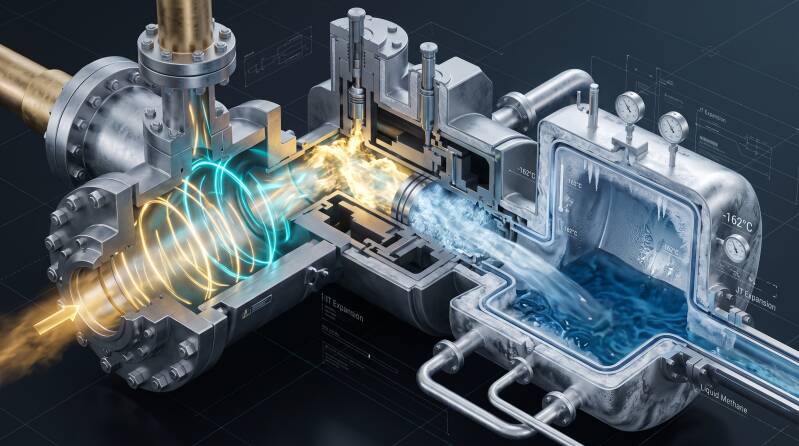
• Direct-Drive Pulse Compression: HPDD generates a native hydro-pneumatic pressure regime of up to 600 bar directly from the isolated combustion stroke. No rotating drivelines, intermediate generators, or bulky turbocompressors required.
• Integrated Isentropic & Joule-Thomson Drop: The pressurized working stream expands within the dynamic stroke architecture, delivering an immediate, deep cryogenic temperature drop.
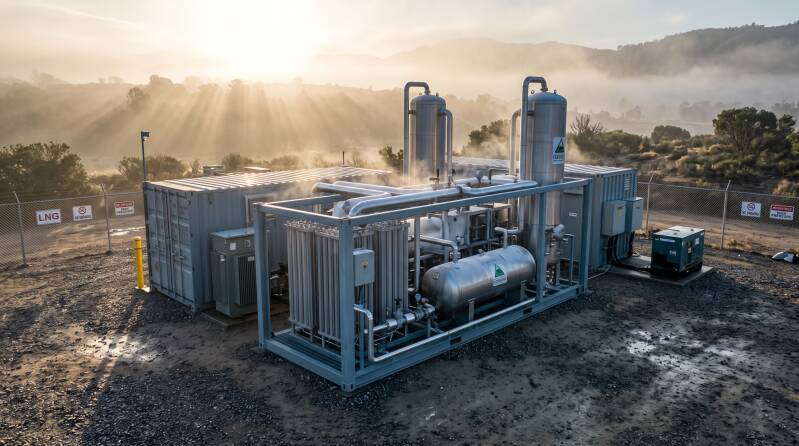
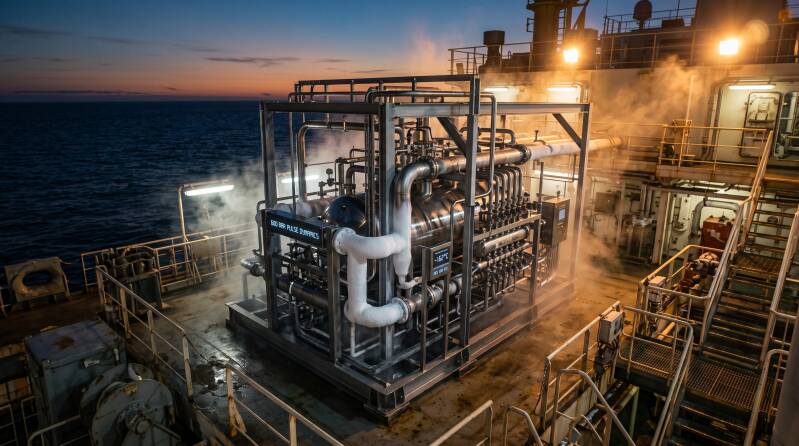
• Halving the Physical Footprint: Eliminating megawatt-class compressor skids cuts topside deck footprint by more than 50% on FLNG units and remote wellhead skids.
The project-level impact (100,000 tpa LNG facility):
• 35% to 45% reduction in primary refrigeration energy
• Parasitic feed-gas consumption cut from ~14% down to 7–9%
• +5% to +7% additional saleable LNG recovered for export (~$3M/year extra revenue)
• 16,000 to 18,000 tons of CO2 emissions avoided annually
By decoupling combustion physics from rotating machinery, modular LNG and remote flare-gas monetisation finally become economically compelling.
How is your engineering team approaching parasitic compressor loads in offshore and small-scale cryogenics?
#LNG #Cryogenics #FLNG #Decarbonization #EnergyTransition #ProcessEngineering #HPDD #CleanTech #IndustrialInnovation