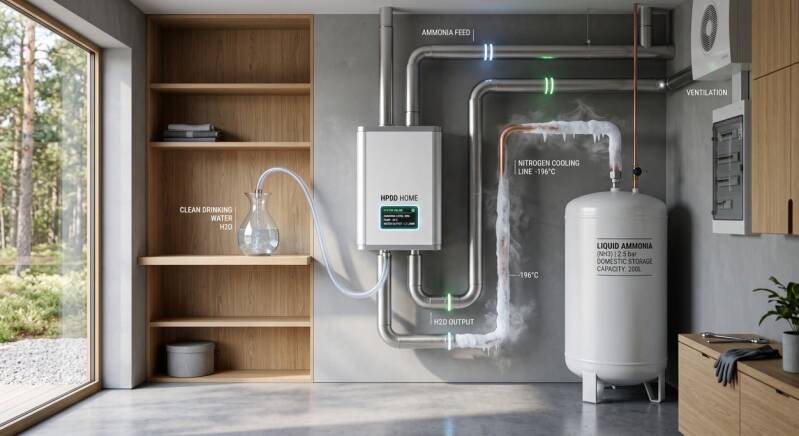
Safety with ammonia
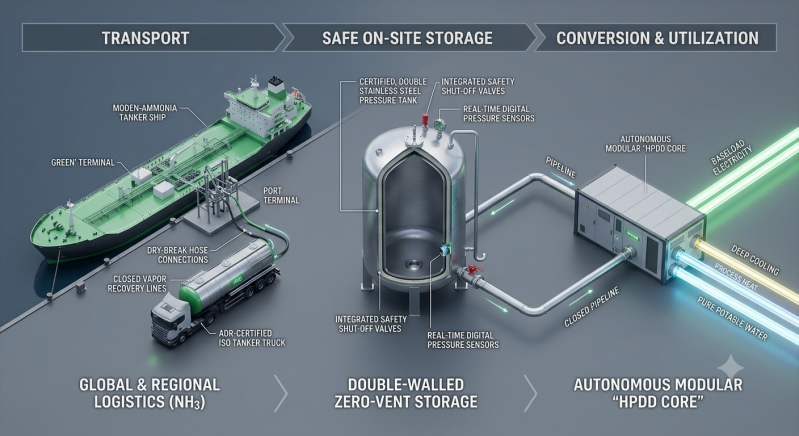
From Terminal to Tank: How Green Ammonia (NH_3) Reaches the End-User and Stores Safely 🚢🚛⚡
Green ammonia is rapidly establishing itself as the premier zero-carbon energy carrier due to its exceptional energy density and ease of liquefaction.
Yet the most frequent operational question remains: how does it get safely to the customer, and how is it stored on-site?
Unlike new and complex hydrogen infrastructure, ammonia benefits from over a century of established global handling protocols in the chemical and fertilizer sectors.
1. Reliable Transport Infrastructure
Marine Bulk Cargo: Shipped globally as a liquid under moderate pressure (~8–10 bar at ambient temperature) or refrigerated at -33°C in standard gas carriers.
Road & Rail Logistics: Transported via standard ISO tank containers and ADR-certified bulk trucks equipped with dry-break couplings and closed-loop vapor recovery systems.
2. Multi-Layered On-Site Storage Safety
Double-Walled Containment: On-site storage utilizes certified, double-walled stainless steel or composite pressure vessels engineered for maximum mechanical integrity.
Zero-Venting Closed Loops: Filling and extraction operate in 100% hermetically sealed circuits, eliminating emissions and odor exposure.
Active & Passive Safeguards: Integrated slam-shut emergency valves, continuous optical/gas sensors, and redundant pressure relief loops ensure immediate containment.
3. In-Situ Multi-Vector Utilization
Once connected, the Hydro Puls Direct-Drive (HPDD) platform converts green ammonia directly into high-efficiency power, industrial process heat, deep refrigeration, and pure water, with zero carbon footprint.
Green ammonia isn't an unproven concept: the supply chain and safety framework are industrial realities ready for immediate deployment.