Extinguishing Battery Fires
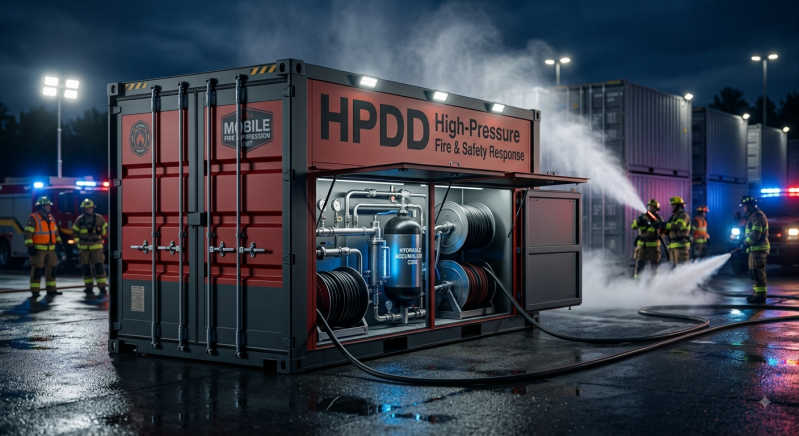
Extinguishing Battery Fires? Why Nitrogen + High-Pressure Water Mist is the Ultimate Gamechanger 🔋🔥
As the world scales up lithium-ion battery energy storage systems (BESS), mobile EV charging hubs, and high-density data centers, a critical operational hazard looms in the background: thermal runaway.
When a lithium-ion cell fails, it triggers a catastrophic chemical chain reaction. The cell decomposes internally to produce its own oxygen, vents highly explosive toxic gases (off-gassing), and generates extreme heat.
Conventional fire suppression systems hit a hard wall here:
Water Alone: Causes massive collateral water damage and fails to mitigate the explosion risks of the vented gas cloud.
Gas-Only Systems: Displace ambient oxygen but lack the cooling capacity needed to halt the internal thermal chain reaction.
The Physical Solution: Inertization + Extreme Cooling
To 100% control a battery fire and prevent destructive gas explosions, two physical actions must occur simultaneously:
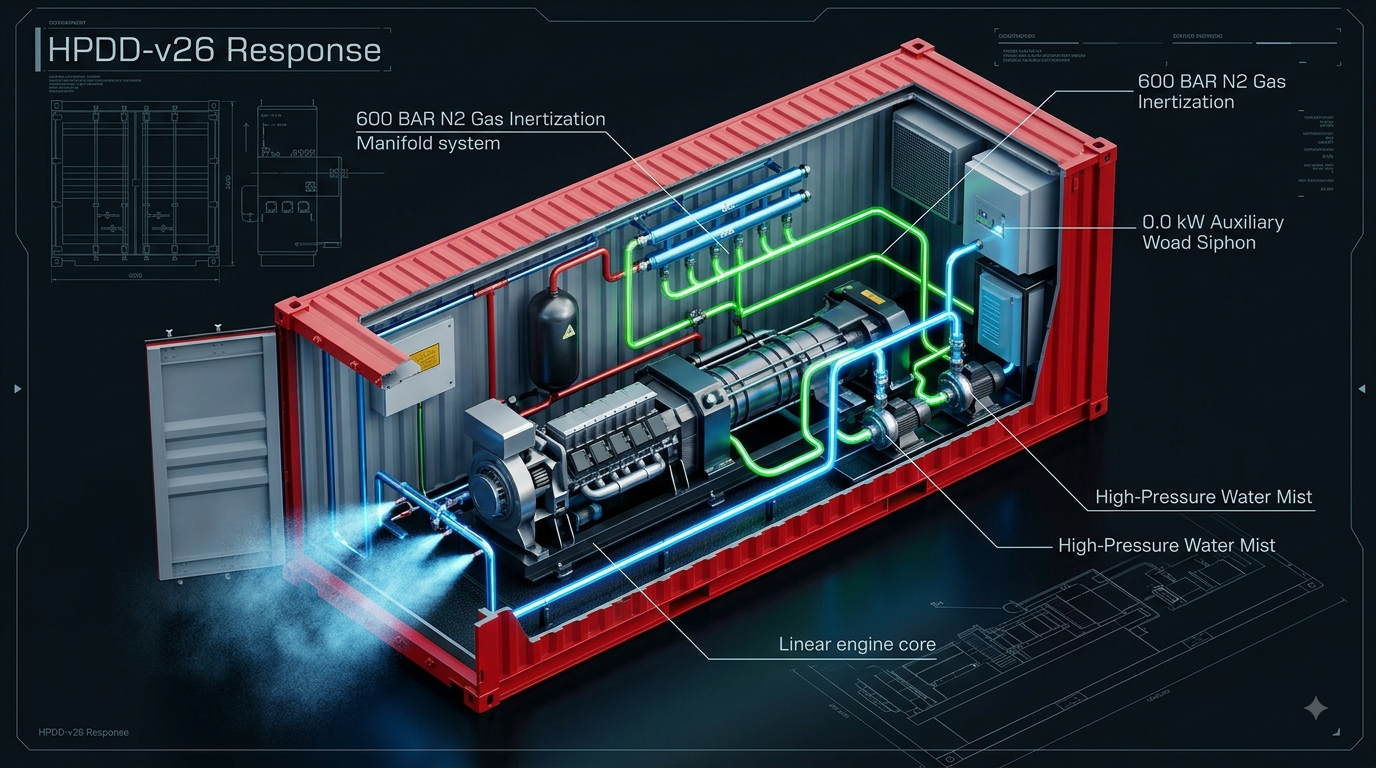
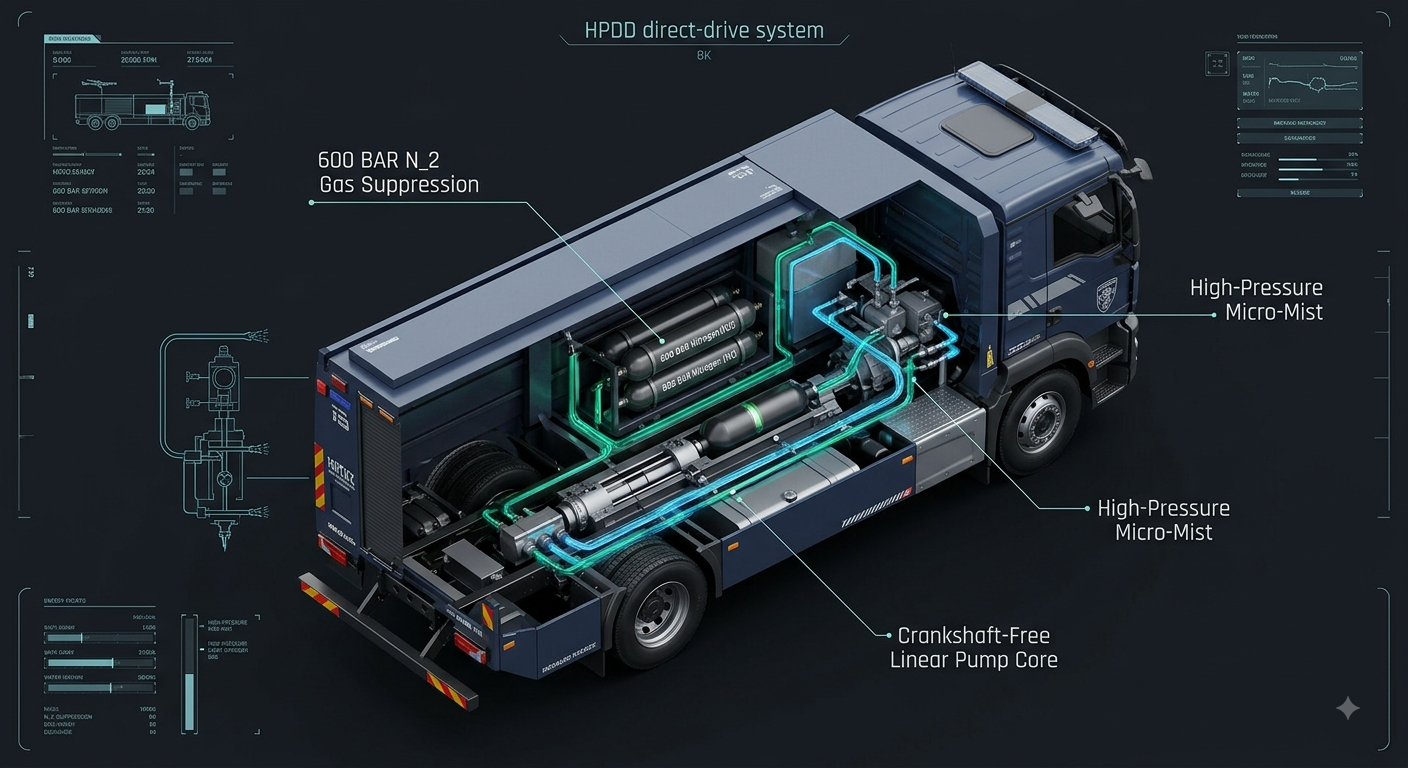
Inert Nitrogen Gas (N_2): Displaces ambient oxygen and neutralizes the volatile gas mixture (hydrogen, methane, carbon monoxide) venting from the battery modules, blocking secondary gas explosions.
High-Pressure Water Mist: Micro-droplets that expand the surface area of the water thousands of times, dropping cell temperatures in seconds to physically stop the thermal runaway.
How the HPDD Architecture Natively Facilitates This.
This is where the Hydro Puls Direct-Drive (HPDD) platform plays a dual-purpose role. Beyond serving as a high-efficiency power generator, it operates natively as an integrated fire suppression hub:
Free High-Pressure Nitrogen at 600 BAR: When processing green ammonia (NH_3) in-situ, the HPDD core generates clean baseload electricity while dissociating the ammonia molecule to yield pure nitrogen (N_2) at a 600 BAR baseline, requiring zero auxiliary pumps or extra energy penalty.
Direct Hydraulic Pressure for Water Mist: Driven by its crankshaft-free linear engine loop and integrated hydraulic accumulator, the HPDD system effortlessly delivers 300 to 600+ BAR hydraulic pressure to instantly generate micro-water mist with zero mechanical lag.
Transforming Safety Risks into Integrated Assets
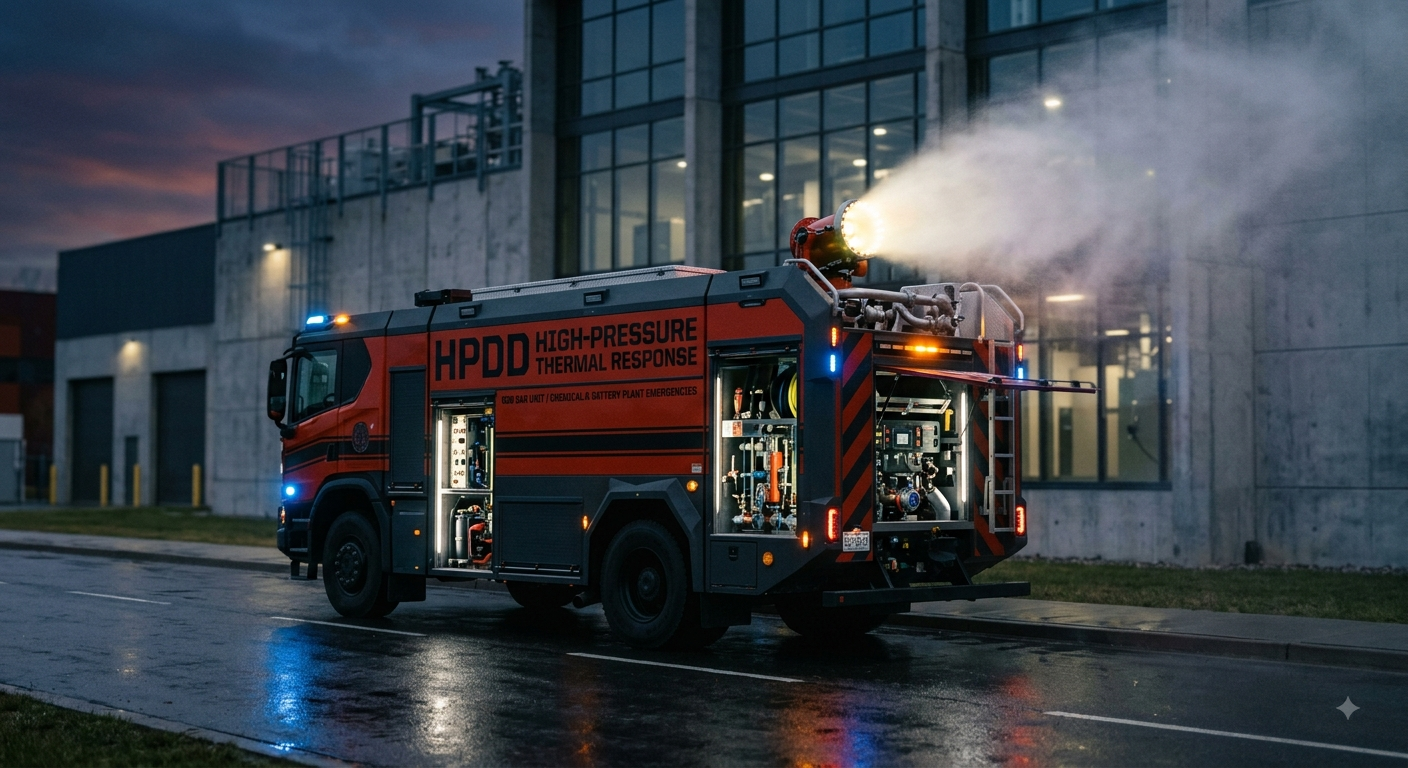
For utility-scale BESS sites, off-grid charging stations, and critical industrial hubs, this merges power generation and emergency response infrastructure into a single system.
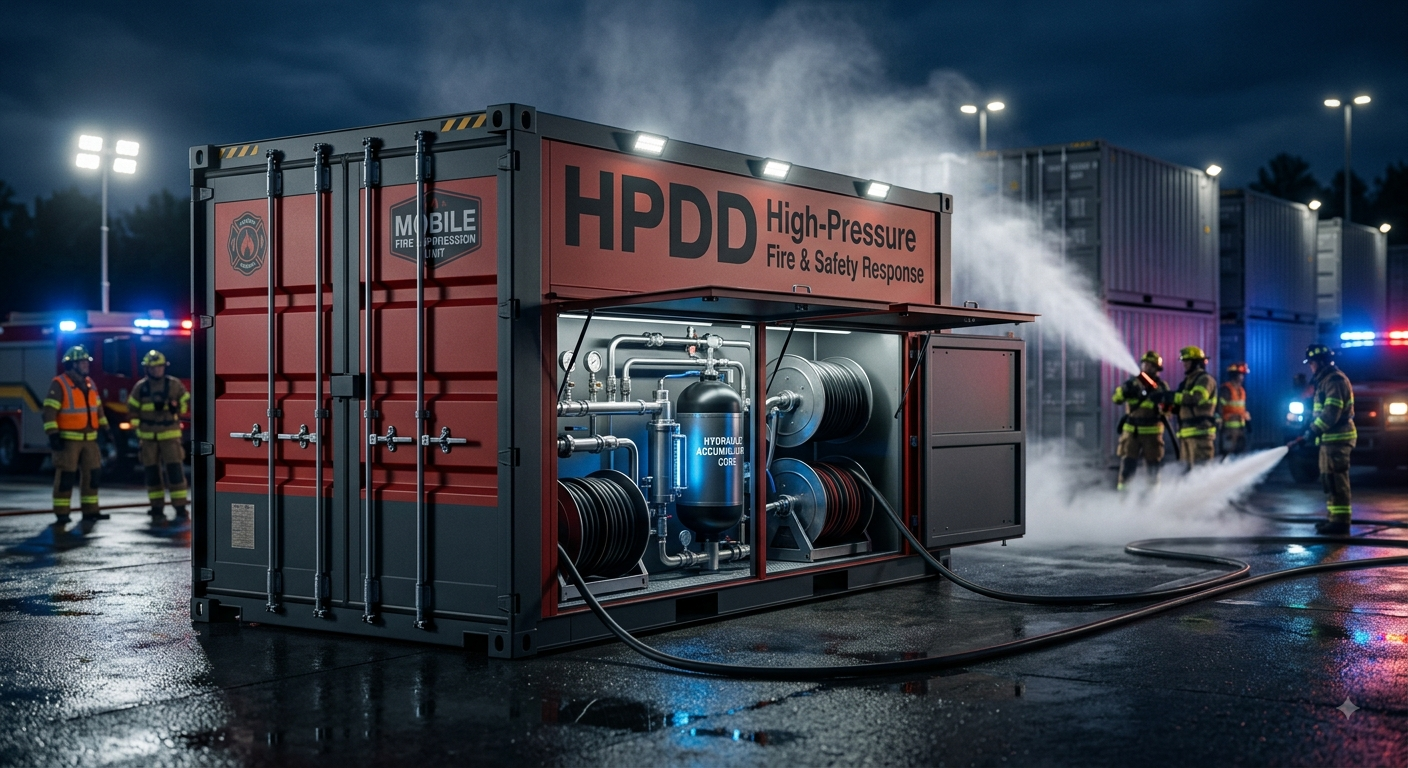
Instead of purchasing passive gas banks and standalone high-pressure pumps, a single containerized HPDD unit supplies dispatchable power while standing by with the exact physical tools needed to suppress catastrophic events instantly.
The Bottom Line: Complex energy challenges demand multifunctional thermodynamics. 🚀