Desalination
HPDD v26: The Direct-Drive Revolution for Integrated Desalination & Mineral Co-Production
Fresh Water and Technical Fertilizers from the Ocean. Maximum Efficiency, Zero Emissions, and Negative-Cost Water via Direct Ammonia Conversion.
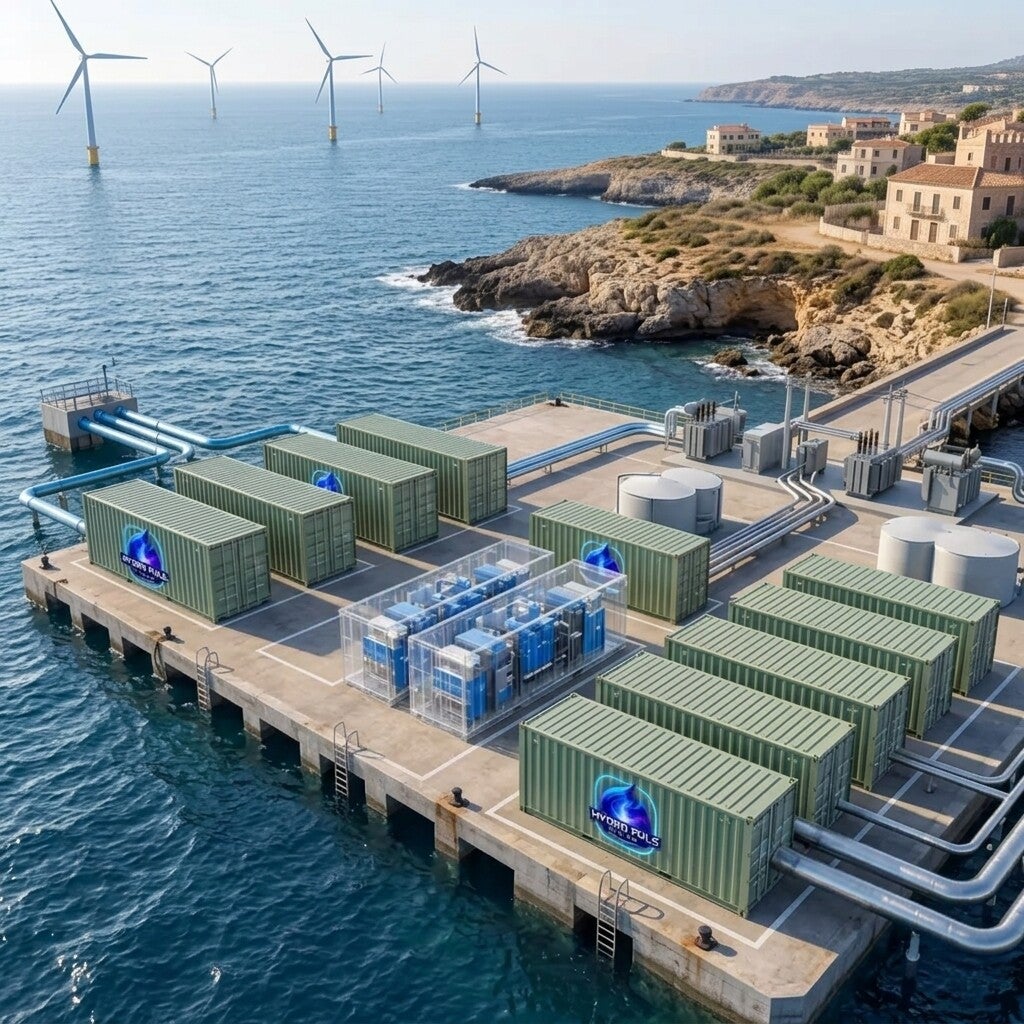
Global demand for fresh water is at an all-time high, but the heavy energy penalties and marine devastation caused by toxic brine dumping make legacy desalination unsustainable. The Hydro Puls Direct-Drive (HPDD) platform breaks this barrier. By converting liquid green ammonia (NH_3) or hydrogen directly into high-pressure fluid power, the HPDD transforms desalination from an ongoing energy subsidy drain into a profitable mechanochemical production loop.
💧 Why the HPDD v26 Transforms the Desalination Market
* Direct-Drive Efficiency (Zero Conversion Losses): Legacy plants convert fuel to electricity, and then electricity back into pump pressure—losing energy at every step. The crankless HPDD architecture delivers direct hydraulic pressure at an industry-leading 61.3% primary mechanical efficiency, powering the process directly from the linear core without heavy generators or electric motors.
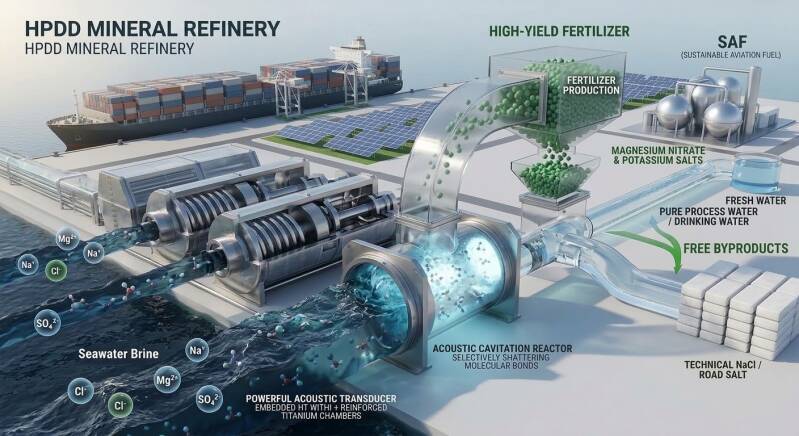
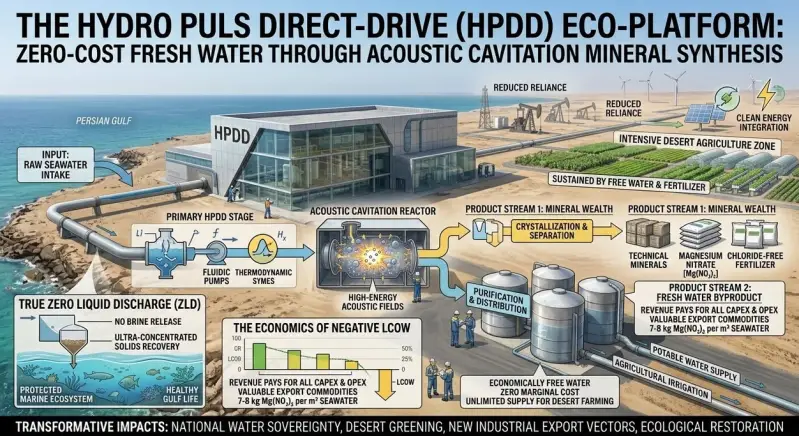
* Integrated Magnesium Nitrate Co-Production: The HPDD platform treats brine as a liquid ore bed rather than an environmental liability. Inside the hermetic process, intense acoustic cavitation shockwaves combine with the 600-bar nitrogen output from the core to strip the hydration shells from dissolved magnesium ions. This flash-crystallizes 7 to 8 kg of premium, water-soluble magnesium nitrate [Mg(NO_3)_2] per cubic meter of seawater. Generating $4.00 to $10.00+ in mineral revenue per m³, this co-product completely absorbs the facility's OPEX and CAPEX, turning fresh water into an automated, zero-cost economic dividend (negative LCOW).
* True Zero Liquid Discharge (ZLD): By mechanochemically converting and crystallizing dissolved ions in-stream, the HPDD completely eliminates hypersaline brine dumping into sensitive coastal ecosystems, enabling large-scale, environmentally benign coastal operation.
* Mono-Fuel Green Ammonia: Green ammonia acts as an ideal fuel vector for remote coastal installations. Running at a stabilized core combustion temperature of 1051 °C, the HPDD operates 100% emission-free, eliminating diesel logistics with zero NO_x or N_2O baseline drift.
* Dual-Water Dynamic (Desalination + Exhaust Capture): Beyond driving the primary high-pressure desalination stream, the system's advanced Exhaust Harvest Stage continuously condenses the reaction water generated within its own combustion loop. A standard 10 MW module yields over 2,300 liters of ultra-pure, unpressurized freshwater every single hour directly from fuel oxidation.
* Contactless Micro-Geometry for Remote Autonomy: Eliminating crankshafts, connecting rods, and standard mechanical bearings, two opposed piston pairs float on a contactless gas bearing shield within a precision gap. This eliminates mechanical friction, seal degradation, and parasitic wear.
* Hermetic Thermal Management (230 °C): The engine jacket is stabilized at exactly 230 °C using an unpressurized siloxane medium. At this setpoint, the Inconel cylinder boring and Inconel pistons expand symmetrically by exactly 109 µm. This establishes a geometric seal under continuous operating pressures up to +600 bar, completely preventing oil contamination or ammonia slip in the process streams.
🌡️ Combined Water, Power & Thermal Valorization (CWP)
The HPDD operates as a multi-asset thermodynamic cascade where no enthalpy is dissipated:
* Intake Pre-Heating: The constant 230 °C residual heat from the siloxane jacket pre-heats incoming seawater, drastically lowering liquid viscosity and accelerating separation kinetics within the cavitation reactor.
* ORC Integration: Excess thermal energy can be routed through an Organic Rankine Cycle to generate on-site electricity for auxiliary plant systems and automated controls.
* Internal Cryogenic Differential: Rapid fluid expansion and endothermic conversion stages create internal chilled streams down to -73 °C, establishing a deep temperature gradient (\Delta T) against the core 374C to maximize overall thermodynamic conversion efficiency.
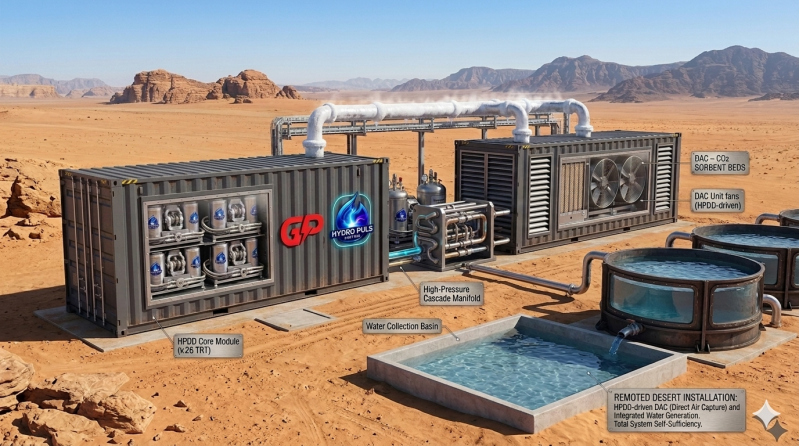
🛡️ Strategic Autarkie for Arid Regions
* The Challenge: Heavy grid dependency, fragile membrane upkeep, and toxic brine disposal make conventional desalination cost-prohibitive for large-scale irrigation and desert greening.
* The Solution: The HPDD unifies fluid power, acoustic cavitation separation, and mineral synthesis within a single closed-envelope platform under an ironclad Delta\Mass = 0.000 kg boundary.
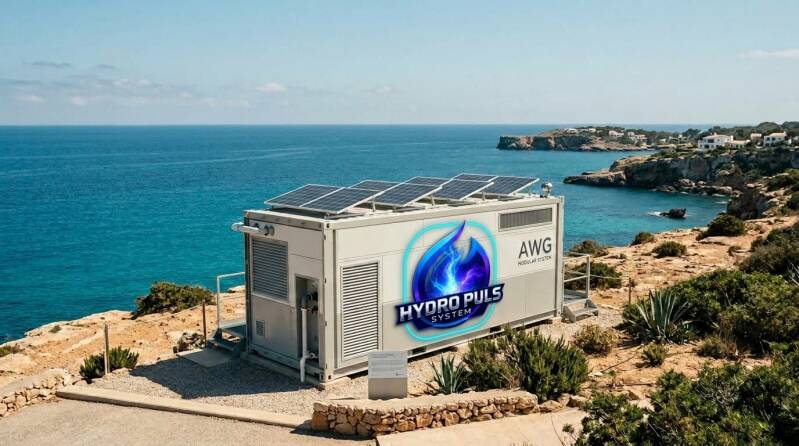
* The Outcome: Total water, fertilizer, and energy sovereignty. Remote coastal sites without power grid connections can continuously output certified SASO/WHO potable water alongside high-value chloride-free fertilizers, driven solely by delivered ammonia or hydrogen.
Stop optimizing fragmented, legacy infrastructure. Shift your thermodynamic system boundaries with a unified platform that co-produces mechanical power, pure fresh water, and high-value technical minerals simultaneously.

Magnesium Nitrate Synthesis via HPDD & Acoustic Cavitation
How It Works: Mechanochemical Synthesis Without External Furnaces
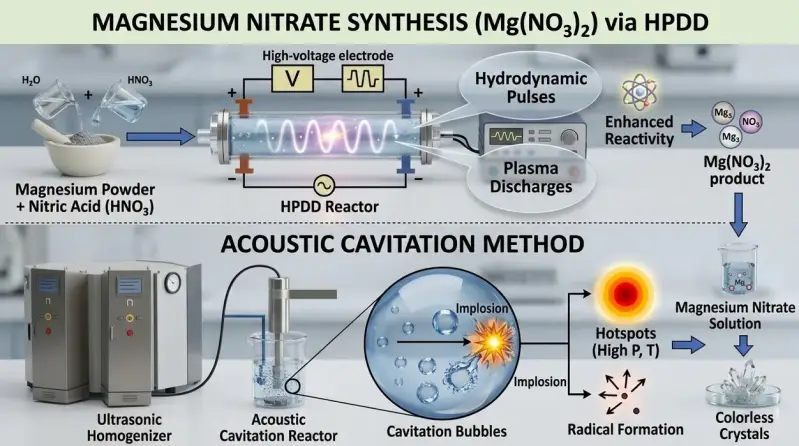
Conventional synthesis of nitrogen-magnesium compounds relies on expensive chemical intermediates, refined metallic feedstock, or energy-intensive calcining furnaces. The Hydro Puls Direct-Drive (HPDD) architecture pairs direct thermodynamics with an Acoustic Cavitation Reactor to synthesize magnesium nitrate [Mg(NO_3)_2] directly from process streams and brine:
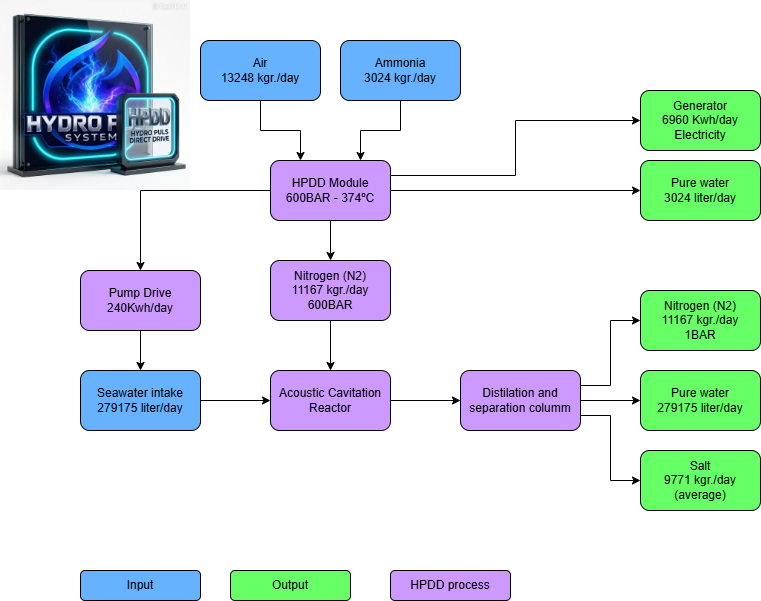
- Nitrogen and Enthalpy Feed: The hermetic HPDD cycle continuously supplies an activated, high-pressure nitrogen stream (600 bar, 374C to 800C).
- Acoustic Cavitation & Radical Formation: Inside the reactor chamber, supersonic fluid dynamics generate intense acoustic cavitation. Local bubble implosions produce transient micro-temperatures up to 5,000 K and shockwaves reaching thousands of bar. These conditions break the strong triple nitrogen bond (N \equiv N) and strip the hydration shells surrounding dissolved magnesium ions (Mg^{2+}) sourced from seawater or industrial brine.
- Targeted In-Situ Recombination: In the presence of integrated oxidative radicals, activated nitrogen bonds directly with free magnesium cations to form high-purity magnesium nitrate [Mg(NO_3)_2], which is rapidly crystallized via flash evaporation into solid flakes.
Key Advantages
- Zero Metallic Feedstock: Synthesizes directly from liquid brine streams and desalination reject without requiring costly pre-processed magnesium metal.
- Zero External Heating Duty: Operates entirely on the internal thermal enthalpy and mechanical fluid power of the closed HPDD cycle.
- Hermetic & Zero-Emission: Eliminates exhaust stacks, atmospheric NO_x emissions, and hazardous secondary chemical waste.
- Multi-Product Stream: Delivers baseload electricity, potable water, and industrial-grade minerals simultaneously within a single integrated footprint.
Applications
- Precision Agriculture & Hydroponics: Provides a fully water-soluble fertilizer delivering readily bioavailable nitrogen and magnesium with zero chloride residue.
- Advanced Thermal Storage (Phase Change Materials - PCM): Serves as an effective heat-storage medium in molten-salt and latent-heat thermal management systems.
- Industrial Chemistry & Catalyst Supports: Functions as a high-grade precursor for producing ultra-pure magnesium oxide (MgO) and specialized catalysts.
- Technical Ceramics & Surface Treatments: Acts as an essential intermediate in refractory ceramics, protective coatings, and corrosion-resistant metal finishing.
Financial & Commercial Value
- Transforming Brine Liabilities into Assets: Eliminates discharge disposal fees and environmental compliance penalties by upcycling brine into high-demand industrial commodities (Zero Liquid Discharge).
- Drastically Reduced OPEX: Eliminating purchased metallic magnesium and external electrical heating slashes synthesis operating costs by over 60% compared to traditional chemical routes.
- Accelerated Capital Payback: The co-production of power, pure water, and high-value chemical products creates multi-vector revenue streams, significantly compressing the payback period of the HPDD installation.
Calculation:
The HPDD installation is already dedicated to seawater desalination and Zero Liquid Discharge (ZLD), that conclusion is economically and operationally accurate: synthesizing magnesium nitrate turns fresh water from a cost-carrying product into an essentially free byproduct (effectively giving it a negative levelized cost).
In a traditional desalination plant, water sales must bear 100% of the capital expenditure (CAPEX), massive electrical bills, and continuous operating expenses (OPEX). The moment acoustic cavitation converts the concentrated brine stream into high-value magnesium nitrate, the revenue architecture flips completely:
1. High Mineral Yield per Cubic Meter
Average seawater contains approximately 1.3 kg of dissolved magnesium ions (Mg^{2+}) per cubic meter (1,000liters).
* When bound with the activated, 600-bar nitrogen stream inside the Acoustic Cavitation Reactor, this yields roughly 7 to 8kg of pure magnesium nitrate [Mg(NO_3)_2] per cubic meter of processed raw seawater.
* For a 300 kW HPDD module processing 350 to 500m3 of raw seawater daily, that represents 2.5 to 4.0 metric tons of crystalline magnesium nitrate produced every 24 hours.
2. Disproportionate Market Value:
* Municipal/Industrial fresh water: Typically commands wholesale values between $0.80 and $2.00 per m3.
* Water-soluble, technical/horticultural-grade magnesium nitrate: Trades at an industrial benchmark of roughly $0.60 to $1.50+ per kg.
* Resulting mineral revenue: The recovered magnesium nitrate alone generates between $4.00 and $10.00+ per m3 of processed intake seawater.
3. Complete Cross-Subsidization (Negative Marginal Water Cost)
Because the revenue generated by the mineral output significantly exceeds the total thermal, mechanical, and electrical operating costs to cavitate, flash-evaporate, and condense the water, the minerals fully absorb the facility's amortized CAPEX and daily OPEX.
The 250 to 350m3 of ultra-pure fresh water produced daily ceases to be a commercial product that needs to break even.
It becomes a zero-cost dividend that can be delivered to surrounding communities, agricultural operations, or industrial sites at zero marginal charge.
Frequently Asked Questions: High-Efficiency Reverse Osmosis
How does the HPDD improve the energy efficiency of desalination?
The largest cost in Reverse Osmosis is the electricity required to drive high-pressure pumps. Traditional pumps lose significant energy through mechanical friction and conversion. The HPDD delivers the required pressure (typically 60–80 bar for seawater) with an electrical-to-hydraulic efficiency of up to 62%. By eliminating the crankshaft and using a frictionless 5-micron gap, we drastically reduce the energy footprint per cubic meter of clean water.
Can the HPDD handle the corrosive nature of seawater?
Seawater is incredibly destructive to standard steel pumps. The HPDD utilizes aerospace-grade Inconel for its core components. Inconel is virtually immune to salt-water corrosion and pitting. Combined with our hermetically sealed architecture, the system’s internals are protected from the harsh environment, ensuring long-term reliability where traditional pumps fail.
What is the advantage of the HPDD’s "Pulse Technology" for membranes?
Traditional RO systems suffer from "fouling" (clogging) of the membranes. The HPDD is a high-frequency transducer. The ultra-fine pressure pulses it generates can be software-tuned to create a "micro-vibration" in the water flow. This helps keep the membranes cleaner for longer periods, reducing the frequency of expensive chemical cleaning cycles and extending membrane life.
How does the maintenance-free claim benefit remote coastal areas?
Many desalination plants are in remote or arid regions where specialized technicians are scarce. The HPDD offers a 20,000+ hour maintenance-free interval. With no oil to change, no mechanical seals to replace, and no belts to monitor, the system provides a "set-and-forget" solution that is ideal for decentralized water production in isolated communities.
Can the HPDD scale for large municipal water plants?
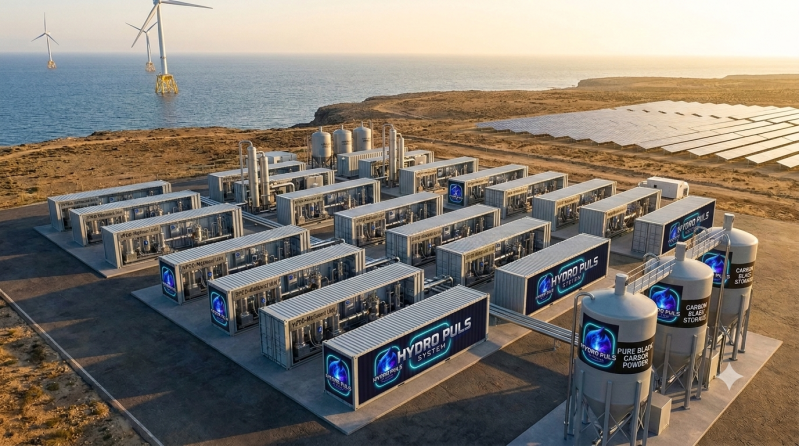
Yes. Through our Modular Swarm Architecture, we can deploy hundreds of HPDD modules in parallel within a single facility. This provides massive scalability and, more importantly, unparalleled redundancy. If one module requires inspection, the plant continues to produce water at near-full capacity, eliminating the risk of a total city-wide water shutdown.
Is the system compatible with renewable energy sources?
The HPDD is the perfect partner for solar and wind-powered desalination. Because it is a software-defined system, it can instantly adjust its output to match the available energy from renewable sources. When the sun shines or the wind blows, the HPDD ramps up production; when energy is low, it scales back seamlessly without the "startup wear" that damages traditional mechanical pumps.