HPDD Tugboats

HPDD Zero-Emission Ammonia Harbor Tugboat Propulsion
Technical & Financial Concept: 3.5 MW 600-Bar Direct Hydrostatic Drive for Azimuth Stern Drive (ASD) Tugs
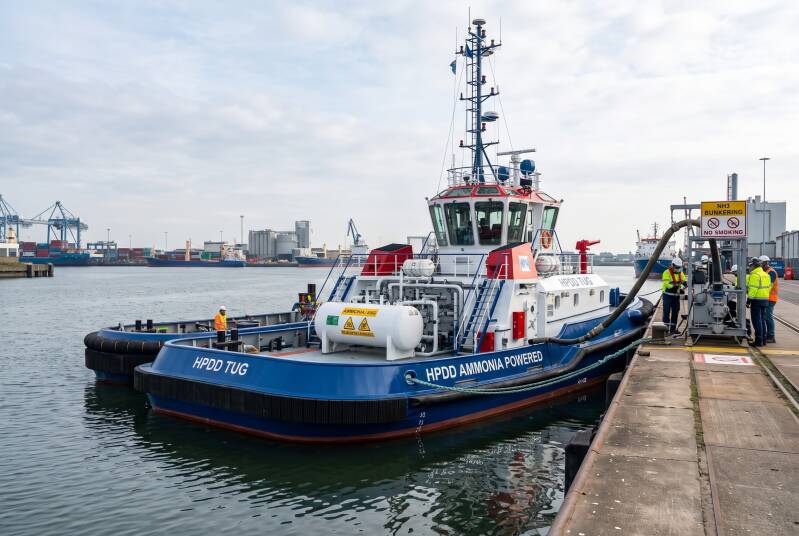
Harbor tugboats spend up to 80% of their operating hours idling, waiting on standby, or transiting at low load, followed by sudden surges to 100% bollard pull when assisting ocean-going vessels. Conventional marine diesels suffer severe soot fouling and poor efficiency at low load, while battery-electric tugboats carry heavy hull weight penalties and require costly multi-megawatt shore charging connections at port berths. By replacing diesel engines, reduction gearboxes, and electric drivetrains with a modular 3.5 MW Hydro Puls Direct-Drive (HPDD) core fueled strictly by carbon-free ammonia (NH3), port operators achieve true zero-emission towage with instant full bollard pull, 15-minute bunkering, and continuous 24/7 autonomy.
1. Technical Concept: Direct Hydrostatic Bollard Pull (Ammonia-Fueled HPDD)
Conventional diesel-mechanical and diesel-electric tugboats lose energy across gearboxes, cardan shafts, generators, and frequency converters. HPDD delivers hydrostatic propulsion power straight to the thrusters:
- Crankshaft-Free HPDD Propulsion Core (+600 bar, 230 °C): Operating strictly on carbon-free liquid ammonia (NH3) with isolated pulse combustion at a 230 °C working temperature, twin containerized 1.75 MW HPDD modules (3.5 MW continuous total) convert chemical energy directly into +600 bar hydrostatic fluid power without a crankshaft or electrical generator.
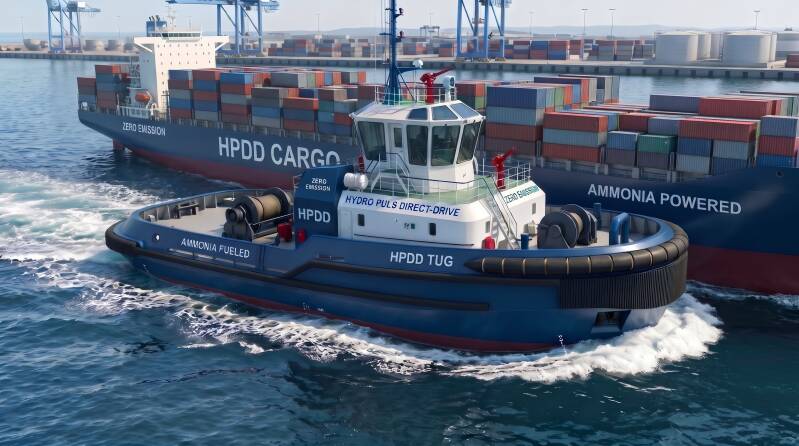
- Direct Azimuth Stern Drive (ASD) Thruster Actuation: High-pressure hydraulic ring mains drive variable-displacement radial-piston motors mounted directly on the 360-degree Azimuth Stern Drive thrusters. Eliminating reduction gearboxes, Z-drive shafts, and clutches provides instant peak torque from 0 RPM for 65 to 75 tons of static bollard pull.
- High Part-Load Efficiency Without Engine Fouling: During standby and low-speed transit (15 to 30% load), HPDD modulates hydraulic displacement while keeping active pulse chambers inside their optimal thermal window, eliminating low-load cylinder glazing and soot buildup.
- Unified Winch & Fire-Fighting (FiFi) Integration: Heavy hydraulic towing winches and high-capacity fire-fighting pumps draw power directly from the same +600 bar hydraulic ring main, eliminating separate auxiliary diesel generators.
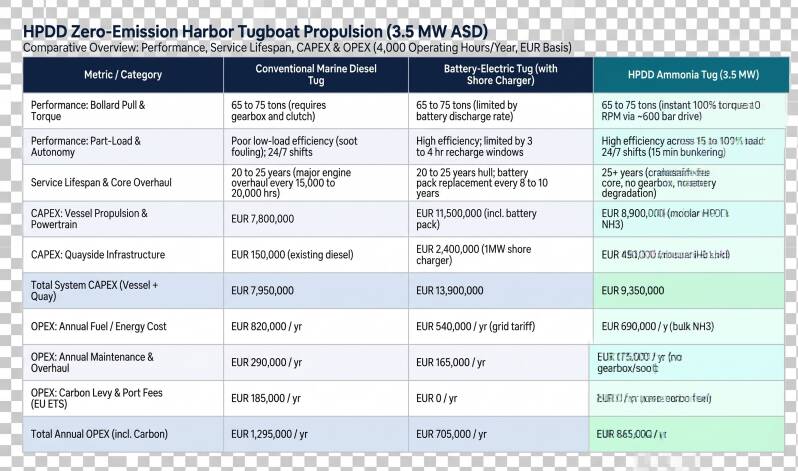
2. Indicative Unit Economics: 3.5 MW ASD Harbor Tugboat (4,000 Operating Hours/Year)
- Propulsion & Quayside CAPEX Advantage: A 3.5 MW HPDD ammonia tugboat requires approximately EUR 8,900,000 in propulsion and fuel-system CAPEX plus EUR 450,000 for a compact quayside liquid ammonia bunkering skid (EUR 9,350,000 combined), saving roughly EUR 4,550,000 compared to a battery-electric tugboat (EUR 11,500,000 vessel propulsion/battery CAPEX plus EUR 2,400,000 megawatt shore-charging infrastructure).
- Operating Cost & Carbon Savings: Annual operating costs total approximately EUR 865,000/year (EUR 690,000 bulk NH3 fuel, EUR 175,000 maintenance, EUR 0 EU ETS carbon levies), saving EUR 430,000/year compared to a conventional marine diesel tugboat (EUR 1,295,000/year including fuel, overhaul, and EU ETS carbon charges).
3. Key Strategic Advantages for Port Authorities & Towage Operators
- Zero Shore-Grid Congestion: Enables immediate deployment of high-bollard-pull zero-emission tugboats without waiting years for multi-megawatt high-voltage substation upgrades at port quays.
- Continuous 24/7 Multi-Shift Autonomy: Liquid ammonia refuels in 15 to 20 minutes, eliminating the 3 to 4 hour recharge downtime of battery-electric vessels while offering far higher volumetric energy density than compressed hydrogen.
- True Zero-Carbon Port Compliance: Produces zero CO2, zero SOx, and zero particulate matter, meeting strict zero-emission port mandates in Rotterdam, Antwerp, Hamburg, and global maritime hubs.