Hydrothermal Gasification (HTG)
This process was developed in collaboration with Chemical Engineer Srivathsan R.
Hydrothermal Gasification (HTG) & High-Density Biomethane Production
Hydrothermal Gasification & Biomethane Production — HPDD Solutions | Compact, Low-CAPEX Conversion of Wet Biomass, Sewage Sludge & Organic Residues into Pipeline-Grade Methane and Hydrogen — Powered by +600 Bar HPDD + ACR + VCD
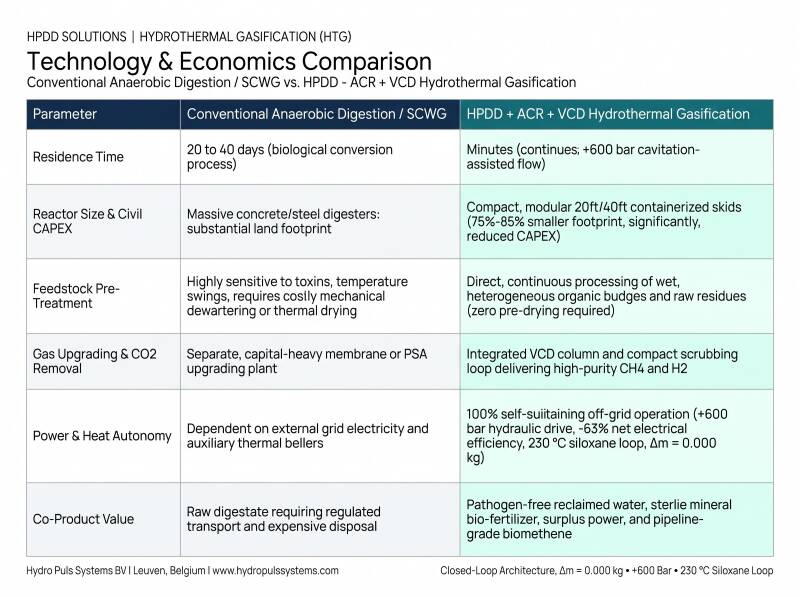
Conventional anaerobic digestion systems require massive tank farms and extended residence times of 20 to 40 days, incurring extreme civil CAPEX, high maintenance liabilities, and large land footprints. Alternative thermal conversion technologies, such as externally fired supercritical water gasification (SCWG), typically suffer from high parasitic energy demands, rapid heat-exchanger fouling, and severe thermal losses.
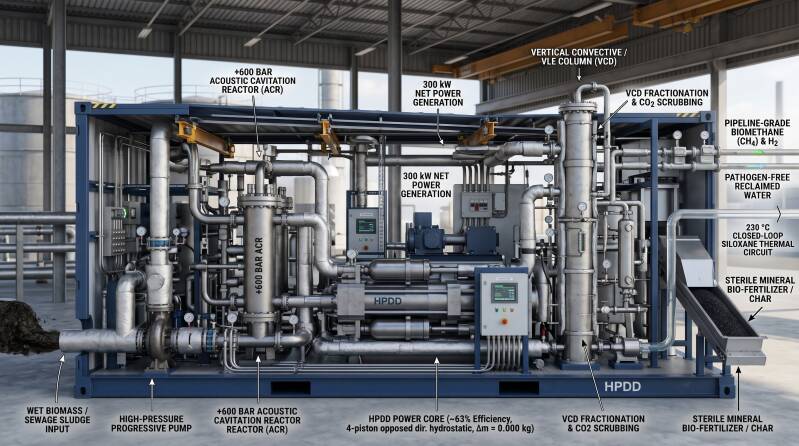
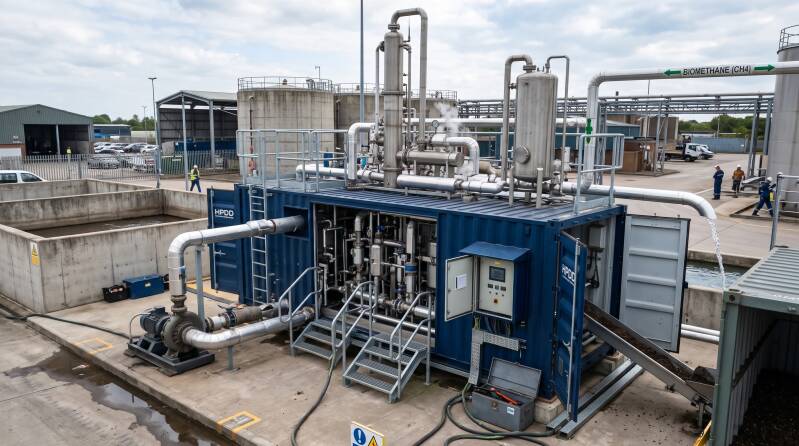
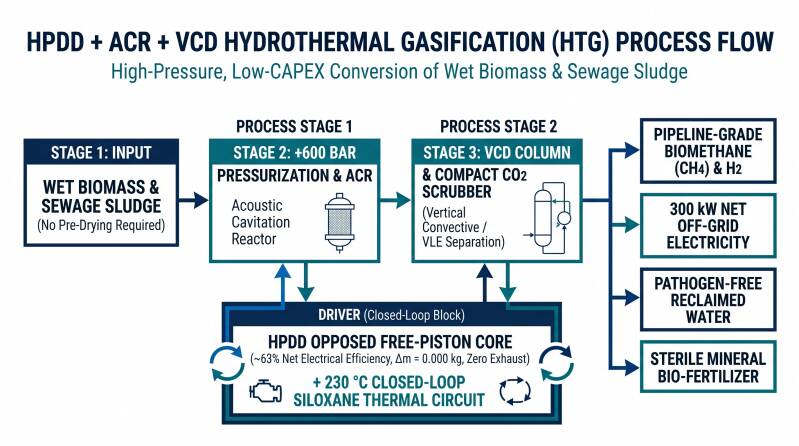
Hydro Puls Direct-Drive (HPDD) technology bypasses these structural bottlenecks. By pairing a +600 bar opposed free-piston architecture with Acoustic Cavitation Reactors (ACR) and Vertical Convective / VLE Columns (VCD), the integrated system accelerates reaction kinetics from weeks into minutes. The entire processing plant fits within a compact, containerized footprint, delivering high-purity biomethane and hydrogen-rich syngas with self-sustaining operational economics.
How the Integrated HPDD + ACR + VCD Hydrothermal Pathway Works
+600 Bar Hydrostatic Pressurization & Acoustic Cavitation (ACR)
Wet organic feedstocks including municipal sewage sludge, agro-industrial residues, Palm Oil Mill Effluent (POME), food waste, and microalgae are processed directly without requiring energy-intensive pre-drying. The HPDD primary stage pressurizes incoming slurries up to +600 bar while subjecting them to high-frequency acoustic cavitation shockwaves within the ACR unit. This mechanical disruption ruptures cellular walls instantly, accelerating depolymerization, hydrolysis, and methanation/gasification kinetics by orders of magnitude compared to standard thermal digestion.
Closed-Loop 230 °C Siloxane Thermal Integration
Thermal energy is managed via direct integration with the hermetically sealed HPDD power core. Operating at approximately 63% net electrical efficiency with zero exhaust stack emissions (Delta Mass = 0.000 kg), the power core continuously transfers 230 °C internal siloxane process heat directly into the hydrothermal reaction loop. This closed thermal loop eliminates the need for external steam boilers, fossil-fuel burners, or auxiliary parasitic heating systems.
Simple, Clean CO₂ & Moisture Separation via VCD
Following gasification, trace carbon dioxide (CO₂) and moisture fractions are separated through our proprietary Vertical Convective / Vapor-Liquid Equilibrium Column (VCD) coupled with a compact scrubbing loop. The system continuously discharges high-purity, pipeline-grade biomethane (CH₄) and hydrogen-rich syngas ready for natural gas grid injection, compressed/liquefied bio-CNG/LNG production, or direct integration into on-site chemical manufacturing.
Key Industrial Applications
Municipal Wastewater & Sewage Sludge Conversion: Rapidly transforms high-moisture primary and secondary sewage sludges into pipeline-grade biomethane, high-purity hydrogen, and pathogen-free reclaimed water for municipal utilities.
Agro-Industrial Biorefineries (Project CAIDI) & POME: Converts high-COD effluents like Palm Oil Mill Effluent (POME), agricultural residues, and bio-processing waste into dense renewable energy vectors without lagoon methane slip.
Food Processing, Brewery & Pharmaceutical Waste: Eliminates high disposal fees and compliance overhead by converting wet organic bypass streams into high-value on-site heat, power, and renewable gas streams.
Decentralized Biomethane, Hydrogen & Ammonia Synthesis: Serves as a modular, containerized primary reactor engine for regional green hydrogen hubs, localized bio-CNG filling stations, and distributed chemical feedstocks.
Commercial Deployment & Technical Contact
HPDD hydrothermal systems are manufactured as scalable, modular skids starting from 10 Tons Per Day (TPD) containerized units up to multi-megawatt industrial facilities. All systems undergo witnessed Factory Acceptance Testing (FAT) at our engineering headquarters in Belgium prior to site delivery.