Olive Pomace Valorization
Olive Pomace (Alperujo) Valorization
Rapid, Modular Biomethane (Bio-CNG) & Liquid Fertilizer Production from Olive Mill Waste
1. The Challenge: Slow Digestion & High Civil Costs
Mediterranean olive oil production generates millions of tons of wet olive pomace (alperujo) every season. While rich in energy potential, conventional anaerobic digestion facilities struggle with its high content of woody lignin, tannins, and polyphenols. As a result, traditional biogas plants require massive concrete digesters, multi-week retention times, and up to 30 months of design and civil construction.
2. The Solution: HPDD + Hydrothermal Gasification (HTG)
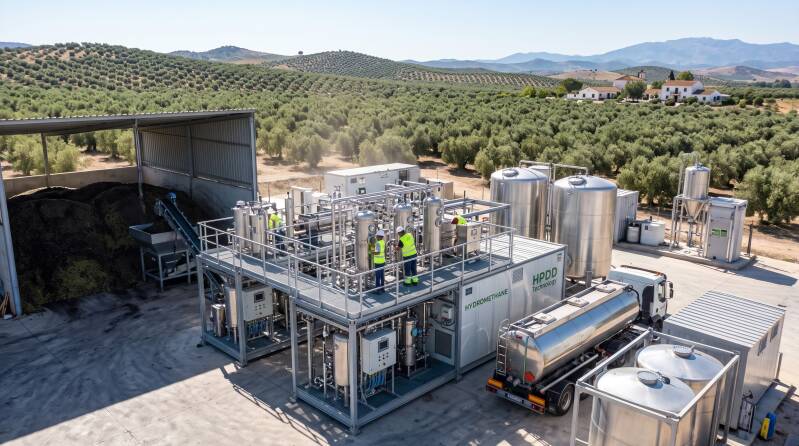
By integrating Hydro Puls Direct-Drive (HPDD) with continuous Hydrothermal Gasification (HTG), wet olive pomace is transformed directly at the mill or regional hub, converting organic waste into pipeline-grade renewable gas and clean mineral nutrients in minutes instead of weeks.
- Direct Wet Feedstock Processing: Handles high-moisture olive pomace (up to 80% water content) directly without energy-intensive drying or thermal evaporation.
- Subcritical Hydrothermal Conversion: Operates continuously at 230 °C and +600 bar direct hydrostatic pulse pressure, breaking down complex lignin and polyphenols that inhibit conventional bacteria.
- High-Purity Bio-CNG (>97% CH4): Delivers clean, grid-ready or vehicle-grade biomethane with significantly higher carbon conversion efficiency per ton of pomace.
3. Complete Circular Output & Zero Liquid Discharge (ZLD)
HPDD ensures nothing goes to waste, turning an environmental disposal challenge into two high-margin revenue streams:
- Renewable Biomethane (Bio-CNG): Decarbonizes local transport fleets, industrial heat, or gas grids.
- Clean, Odorless Liquid NPK Fertilizer: Potassium (K), Nitrogen (N), and Phosphorus (P) remain solubilized in a clear, pathogen-free liquid concentrate ready for precision fertigation in olive groves.
- Pure Water Recovery: Reclaims clean process water on-site, achieving full Zero Liquid Discharge (ZLD).
4. Strategic Advantages Over Traditional Biogas Plants
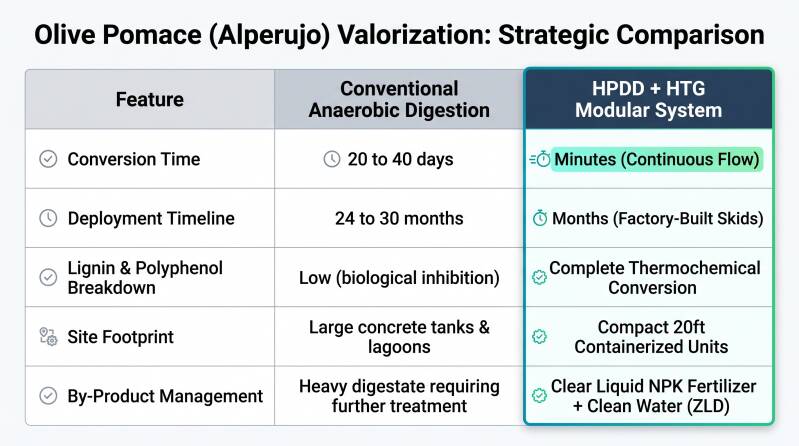
- Conversion Time: 20 to 40 days (Conventional) vs. Minutes in continuous flow (HPDD + HTG)
- Deployment Timeline: 24 to 30 months (Conventional) vs. Months with factory-built skids (HPDD + HTG)
- Lignin & Polyphenol Breakdown: Low due to biological inhibition (Conventional) vs. Complete thermochemical conversion (HPDD + HTG)
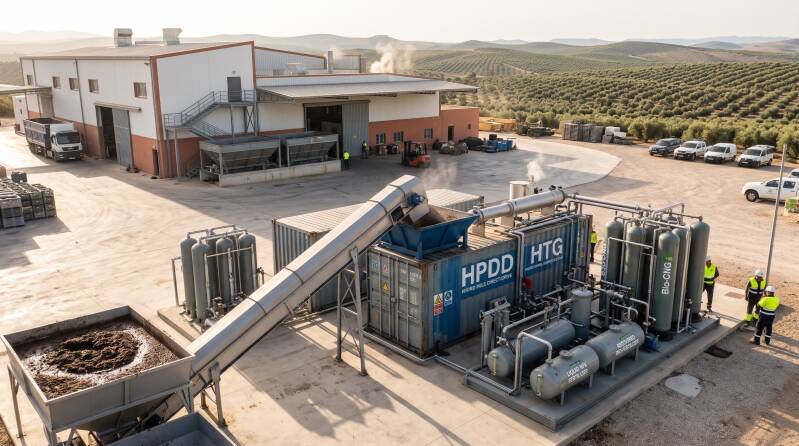
- Site Footprint: Large concrete tanks & lagoons (Conventional) vs. Compact 20ft containerized units (HPDD + HTG)
- By-Product Management: Heavy digestate requiring further treatment (Conventional) vs. Clear liquid NPK fertilizer + clean water with ZLD (HPDD + HTG)
5. Modular Scalability & Pilot Deployment
Whether deployed directly at a cooperative olive mill (almazara) or scaled into a centralized multi-unit hub, HPDD’s modular 20ft containerized architecture grows with seasonal harvest volumes, drastically lowering upfront CAPEX and accelerating return on investment.
Ready to turn olive pomace into high-margin biomethane and liquid fertilizer?
Contact Hydro Puls Direct-Drive (HPDD) Systems to request a site-specific mass and energy balance based on your seasonal pomace tonnage.
Hydro Puls Direct-Drive Systems | www.hpdd.eu | 2026