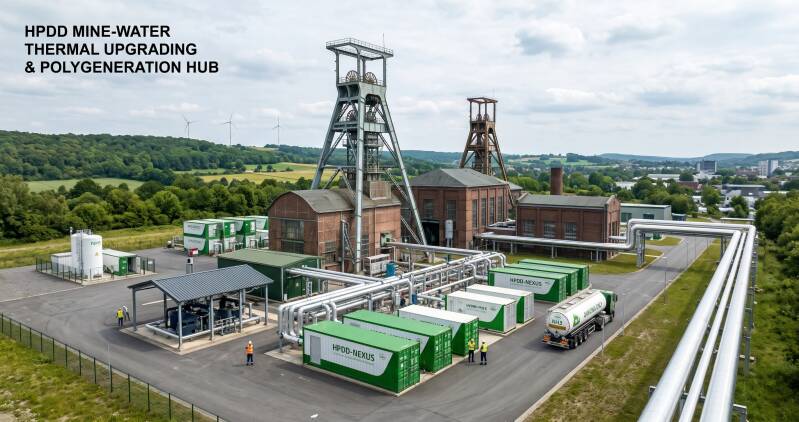
HPDD Mine-Water Thermal Upgrading & Polygeneration Hub
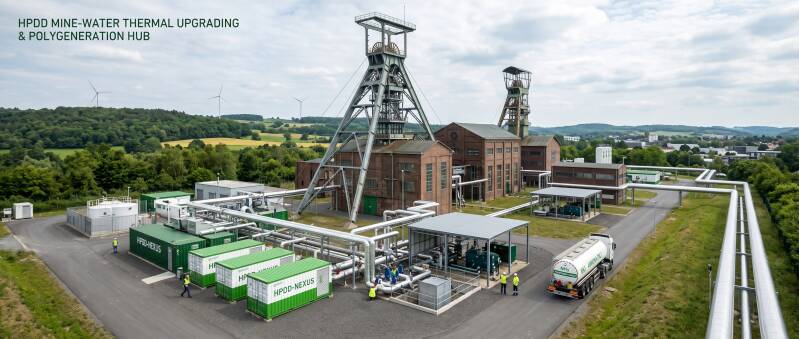
Technical & Financial Concept: HPDD Mine-Water Thermal Upgrading & Polygeneration Hub
This concept transforms flooded, abandoned mine shafts (such as in Belgian/Dutch Limburg, Wallonia, or the Ruhr Valley) into decentralized, grid-independent thermal energy hubs. Instead of installing costly high-voltage grid connections to power large electric heat pumps, the facility uses a modular Hydro Puls Direct-Drive (HPDD) unit, fueled strictly by ammonia (NH3), to mechanically upgrade low-grade mine water (20–35 °C) into high-value industrial process heat or district heating (95–150 °C), with an optional pathway to convert captured coal-mine methane into turquoise ammonia and solid carbon.
1. Technical Concept: Direct Mechanical Heat Upgrading (Ammonia-Fueled HPDD)
Conventional mine-water projects draw grid electricity to drive electric heat pump compressors, incurring electrical conversion losses and severe grid-congestion delays. HPDD eliminates the electrical middleman:
- Thermal Source (Mine-Water Extraction): Warm mine water (25–35 °C) is pumped from deep flooded shafts through the evaporator of a closed-loop industrial heat pump and returned at a lower temperature to an upper aquifer layer.
- HPDD Direct-Drive Mechanical Power (+600 bar): A containerized HPDD unit (e.g., 2.5 MW mechanical/thermal output, operating at a 230 °C working temperature strictly on carbon-free ammonia NH3) delivers direct hydrostatic and mechanical shaft work to the high-pressure heat pump compressor.
- Two-Stage Thermal Cascade:
- Stage 1 (Mechanical Heat Pump): Upgrades the mine water from 30 °C to 95–120 °C (achieving an average COP of 3.5–4.2).
- Stage 2 (HPDD Waste-Heat Topping Cycle): Captures the HPDD unit's own 230 °C thermal exhaust to boost delivery temperatures further to 140–160 °C industrial steam/process heat, or to cover winter peak demand without auxiliary fossil boilers.
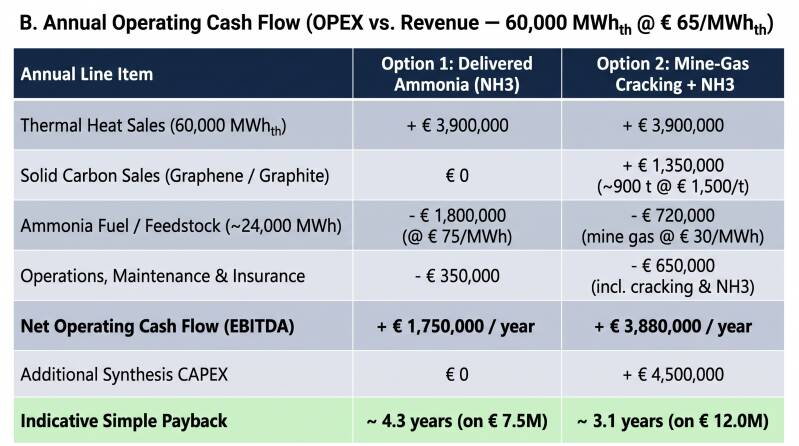
- Optional Gas-to-Ammonia Expansion (Coal-Mine Methane Valorization): Because HPDD operates exclusively on ammonia (NH3), any methane (CH4) captured from abandoned coal seams is not burned in the HPDD engine. Instead, where sufficient mine gas is available, it can be converted upstream via 600-bar mechanochemical cracking (CH4 → C + 2H2) into solid graphite/graphene (3 kg per 1 kg H2) and pure hydrogen, followed by nitrogen separation and catalytic synthesis (N2 + 3H2 → 2NH3) to produce on-site turquoise ammonia fuel for the HPDD drive.
2. Financial Business Case: Indicative 10 MWth Mine-Water Hub
The figures below provide an indicative financial estimate for a modular 10 MWth thermal upgrading hub (combining a 2.5 MW ammonia-fueled HPDD drive unit with a 7.5 MWth industrial heat pump module utilizing existing mine shaft infrastructure, running 6,000 full-load hours/year = 60,000 MWhth annual heat output).
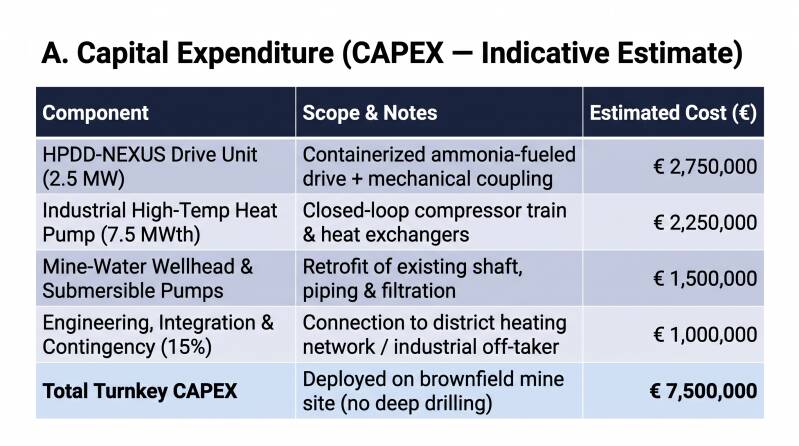
(For comparison, drilling a new 2.5 km deep geothermal doublet with a high-voltage grid connection typically requires € 15M–22M in CAPEX and carries substantial geological drilling risk.)
3. Key Strategic Advantages for Investors & Regional Authorities
-
Zero Drilling Risk & Zero Grid Congestion: Existing deep mine shafts are already in place (often held by public regeneration agencies), and because HPDD generates mechanical shaft work directly from ammonia, no multi-megawatt high-voltage grid upgrade is required.
-
Industrial-Grade Output Temperatures (95–150 °C): Standard mine-water heat pumps top out at 40–65 °C (limiting them to newly insulated residential buildings). Combining HPDD mechanical drive with its 230 °C thermal exhaust unlocks existing industrial steam loops, hospitals, food processors, and legacy district heating grids.
-
European Transition Funding Leverage: Former coal-mining regions across Europe qualify for dedicated public co-financing (such as the EU Just Transition Fund and national brownfield decarbonization grants), which can reduce net investor CAPEX by 25%–40% and shorten payback to under 3 years.