Heavy Water Production
H₂S-FREE HEAVY WATER (D₂O) & DEUTERIUM PRODUCTION
Modular, zero-H₂S isotope separation powered by green ammonia combustion, supersonic De Laval nozzle expansion (600 bar / 374 °C to 1 bar), and chiller-free fractional freeze crystallization.
1. THE INDUSTRY BOTTLENECK: WHY THE GIRDLER-SULFIDE PROCESS IS OBSOLETE
Conventional industrial heavy water (D₂O) production relies on the Girdler-Sulfide (GS) process, which exchanges deuterium between water and massive volumes of toxic, corrosive hydrogen sulfide (H₂S) gas across towering hot-and-cold columns:
- Extreme Safety & Corrosion Hazards: Requires vast inventories of lethal, explosive, and acidic H₂S gas, demanding exotic alloys and wide safety exclusion zones.
- Massive Thermal & Water Losses: Because natural water contains only ~0.015% deuterium, GS plants pump, heat, and cool enormous water volumes with huge cooling towers and low net thermal efficiency.
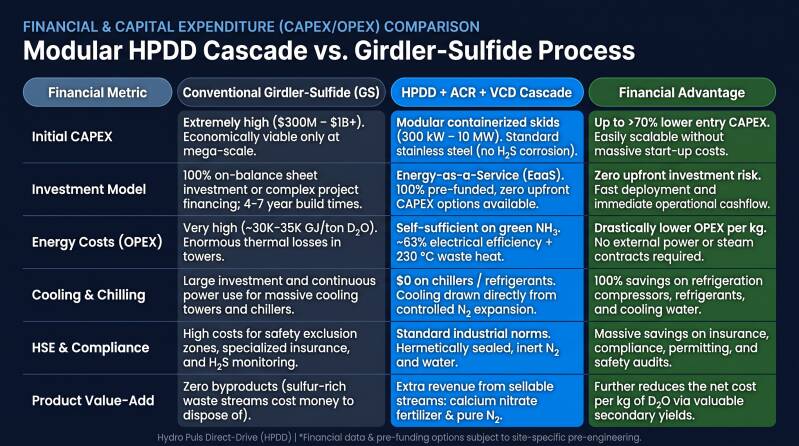
- Mega-Scale CAPEX Only: Economically viable only in centralized, multi-hundred-million-dollar chemical complexes.
2. THE HPDD INTEGRATED SOLUTION: DUAL-STAGE ISOTOPE SEPARATION WITHOUT H₂S OR CHILLERS
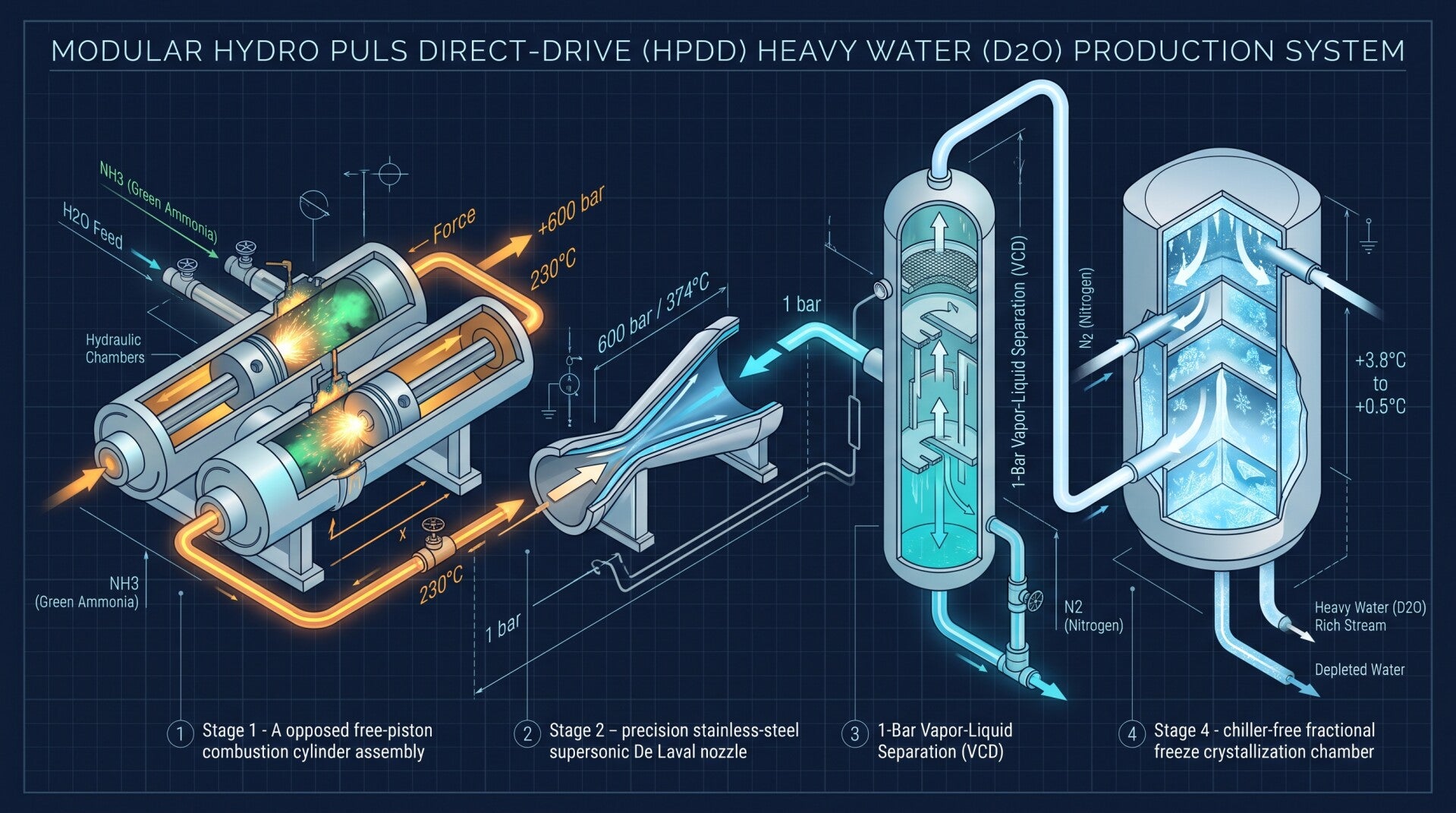
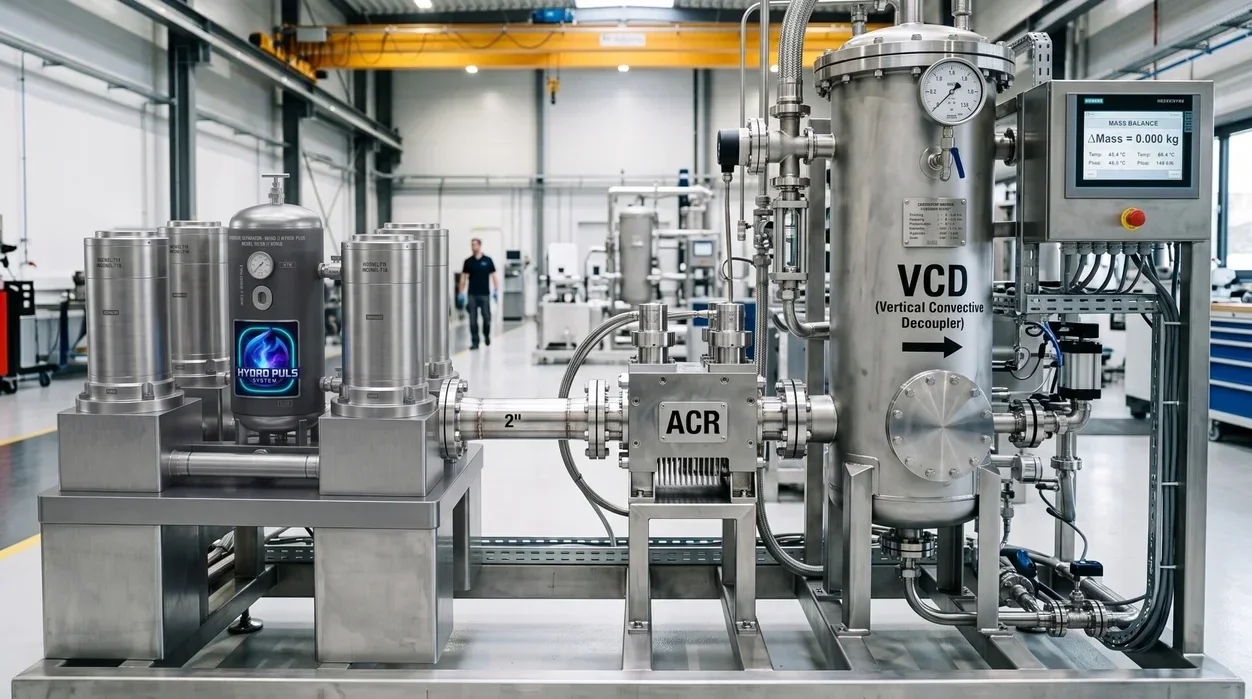
Hydro Puls Direct-Drive (HPDD) replaces toxic H₂S exchange towers and external chillers with a self-contained, modular cascade combining green ammonia (NH₃) combustion, a supersonic De Laval Acoustic Cavitation Reactor (ACR), a 1-bar Vertical Convective / VLE Column (VCD), and nitrogen-driven fractional freeze crystallization.
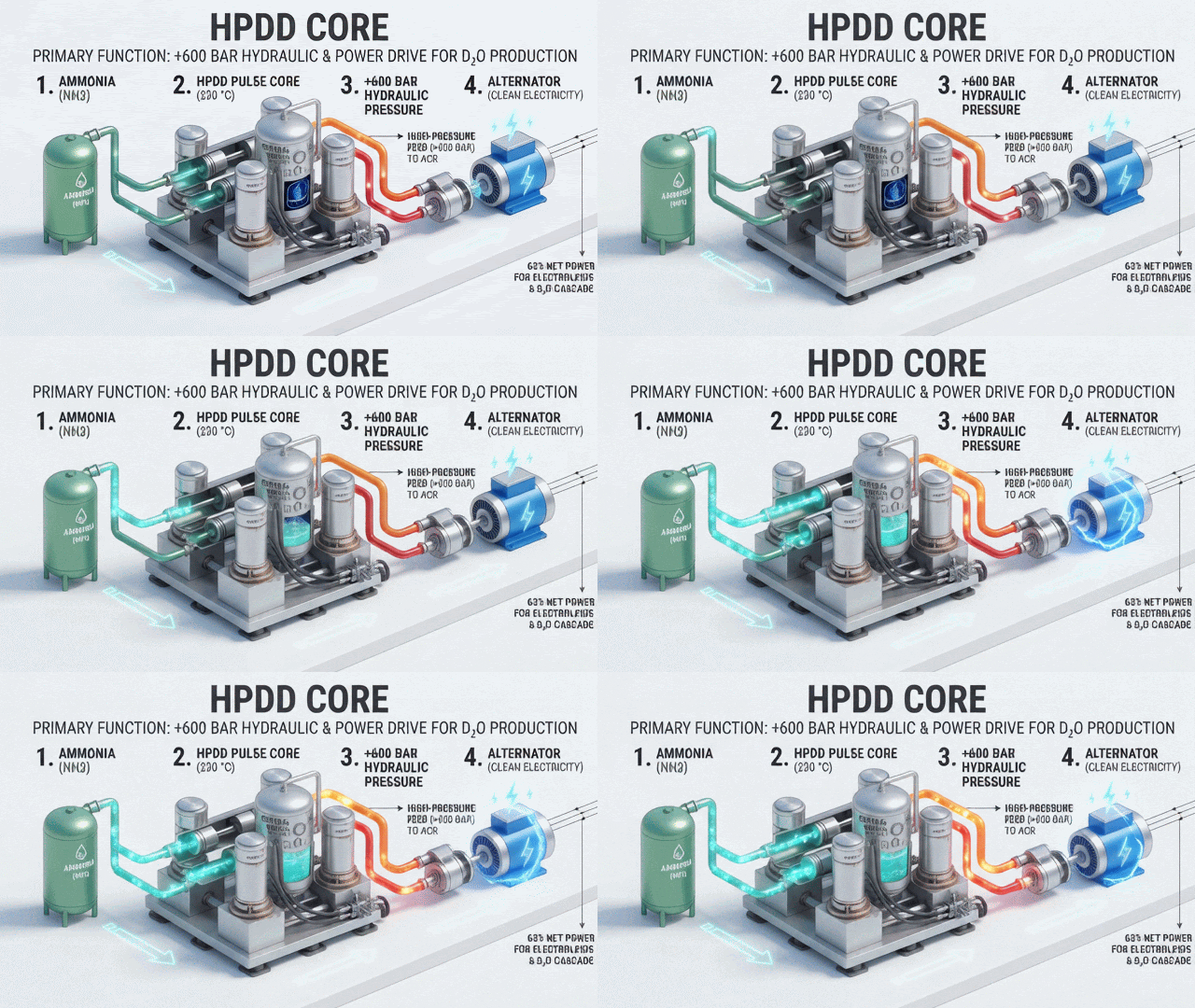
A. Clean Power, Pure Water & Continuous Nitrogen from Green Ammonia
- Carbon-Free Cylinder Combustion: Opposed free-piston pairs combust green ammonia (NH₃) in an isolated combustion environment to generate +600 bar direct hydraulic pressure, ~63% net electrical efficiency, and a closed-loop 230 °C siloxane thermal circuit.
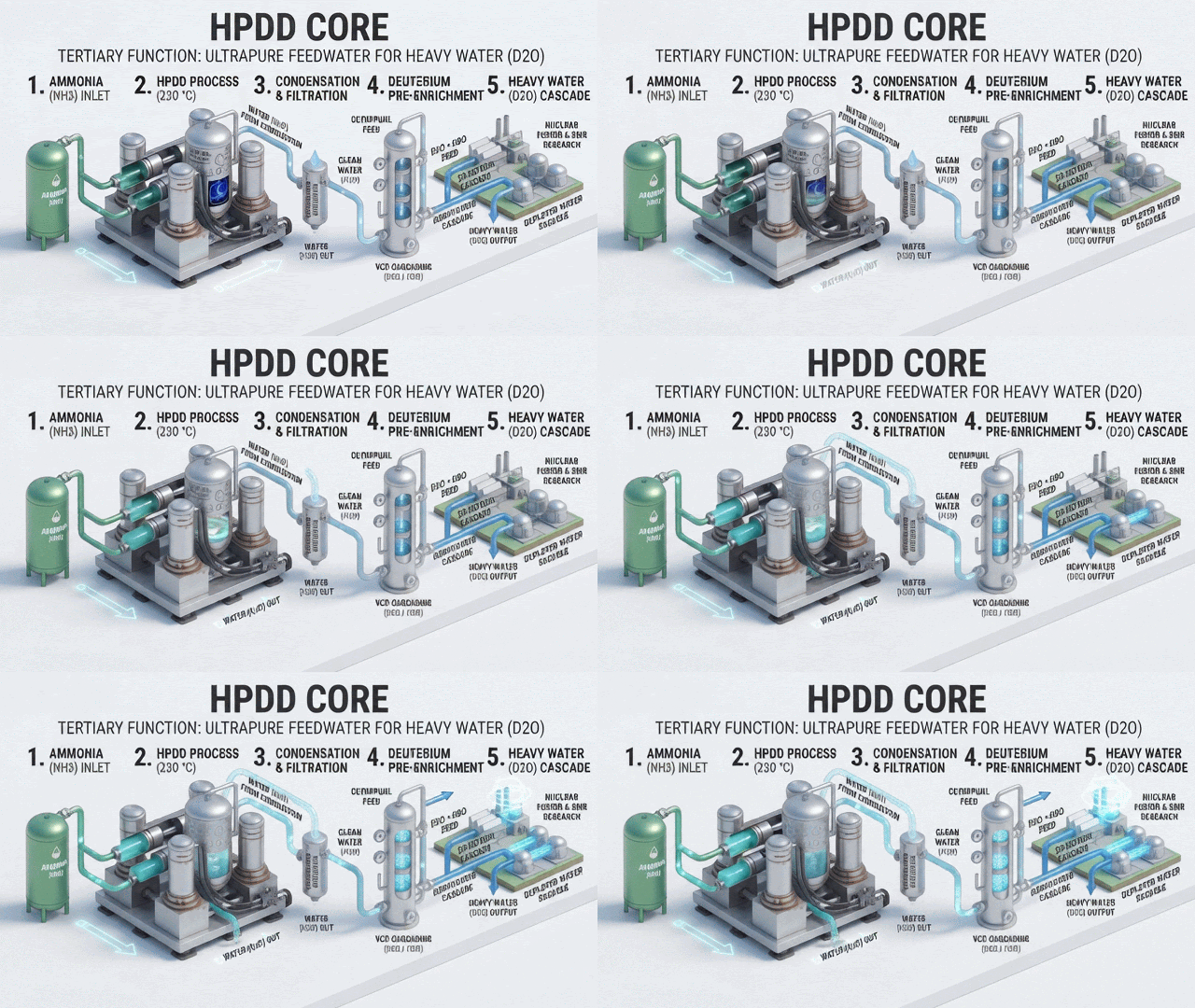
- Ultrapure Feedwater & Inert Nitrogen (N₂): Ammonia combustion yields mineral-free condensed water alongside a continuous stream of clean, dry nitrogen gas (N₂), while trace NOₓ is scrubbed into agricultural calcium nitrate.
- Pre-Concentration Synergy: Can directly upgrade deuterium-enriched reject water from coupled VCD desalination skids or water electrolyzers, drastically reducing the number of cascade stages required.
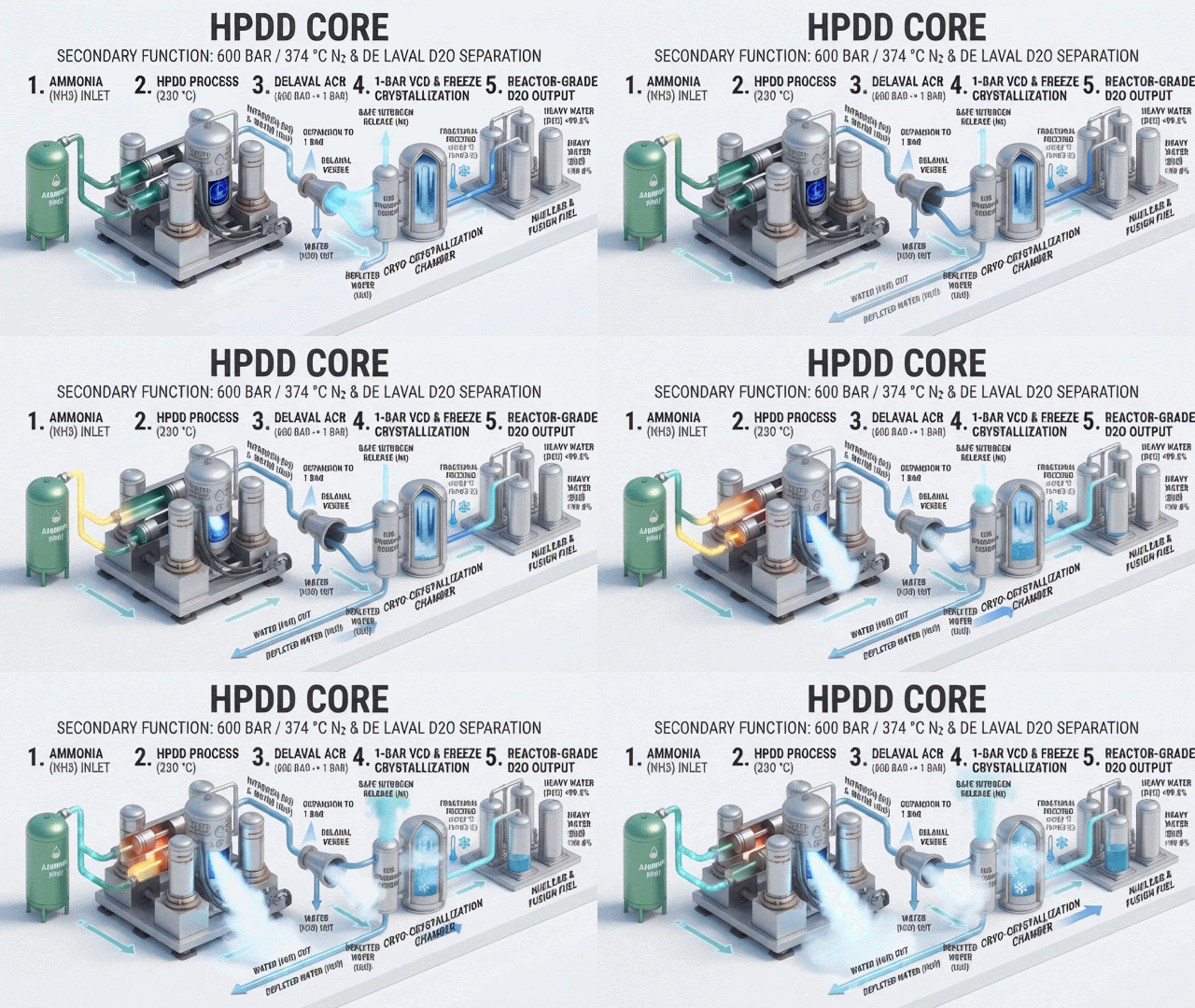
B. Stage 1: Supersonic De Laval Nozzle (ACR) + 1-Bar VCD Vapor-Liquid Separation
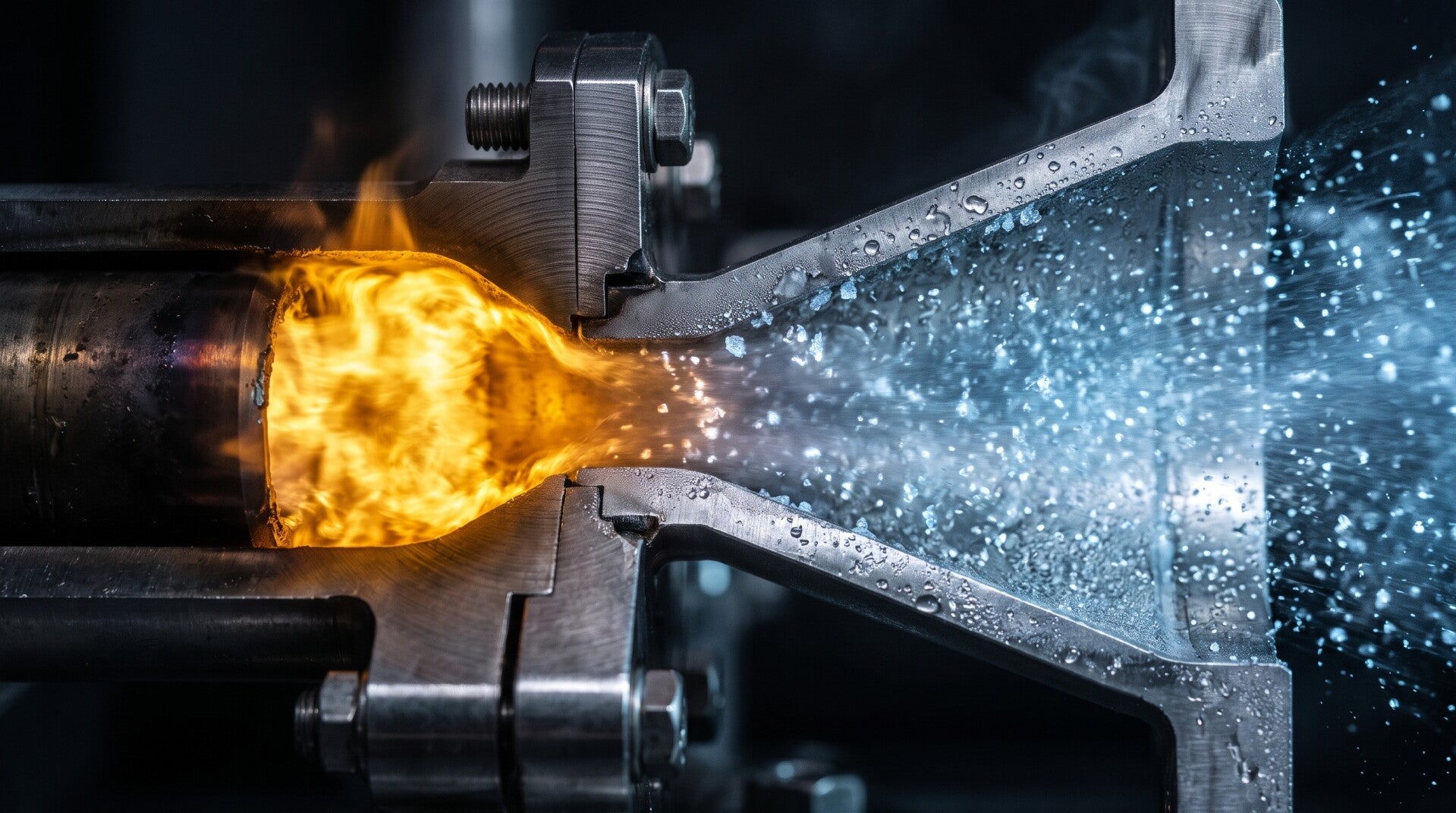
- 600 Bar & 374 °C to 1 Bar Expansion: Demineralized, degassed feedwater and continuous nitrogen (N₂) enter the De Laval nozzle at up to 600 bar and 374 °C (water's critical temperature) and expand instantaneously to 1 bar.
- Supersonic Flash & Inertia Separation: While the divergent nozzle wall is kept ice-free by the 230 °C siloxane loop, lighter H₂O flashes preferentially into vapor while heavier HDO and D₂O micro-droplets separate in the 1-bar VCD column.
C. Stage 2: Chiller-Free Fractional Freeze Crystallization (+3.82 °C to +0.5 °C)
- Direct Nitrogen Expansion Cooling: Instead of electric chillers or synthetic refrigerants, a controlled bypass of high-pressure nitrogen (N₂) expands directly across the crystallization chamber heat exchanger, delivering precise cooling without external chillers.
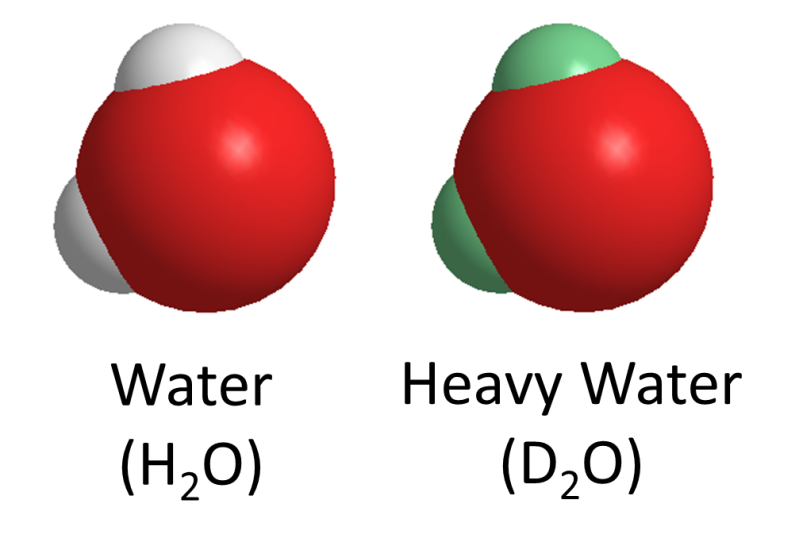
- Exploiting Freezing-Point Differences: Heavy water (D₂O, freezing point +3.82 °C) and HDO (~+2.0 °C) crystallize into ice first, while ordinary light water (H₂O, 0.00 °C) remains liquid.
- Low-Energy Cascade Concentration: Deuterium-rich ice crystals are mechanically separated from depleted liquid H₂O, melted using minimal 230 °C siloxane heat, and fed into compact downstream cascade stages up to reactor-grade D₂O (>99.8%).
3. KEY OPERATIONAL ADVANTAGES
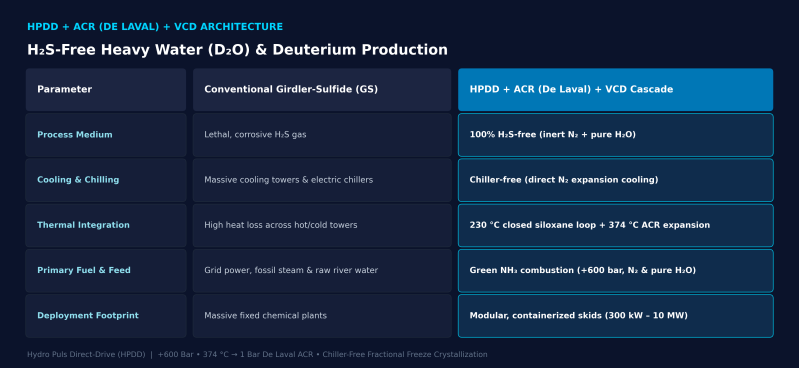
Parameter: Conventional Girdler-Sulfide (GS) | HPDD + ACR (De Laval) + VCD Cascade
Process Medium: Lethal, corrosive H₂S gas | 100% H₂S-free (inert N₂ + pure H₂O)
Cooling & Chilling: Massive cooling towers & electric chillers | Chiller-free (direct N₂ expansion cooling)
Thermal Integration: High heat loss across hot/cold towers | 230 °C closed siloxane loop + 374 °C ACR expansion
Primary Fuel & Feed: Grid power, fossil steam & raw river water | Green NH₃ combustion yielding +600 bar, N₂ & pure H₂O
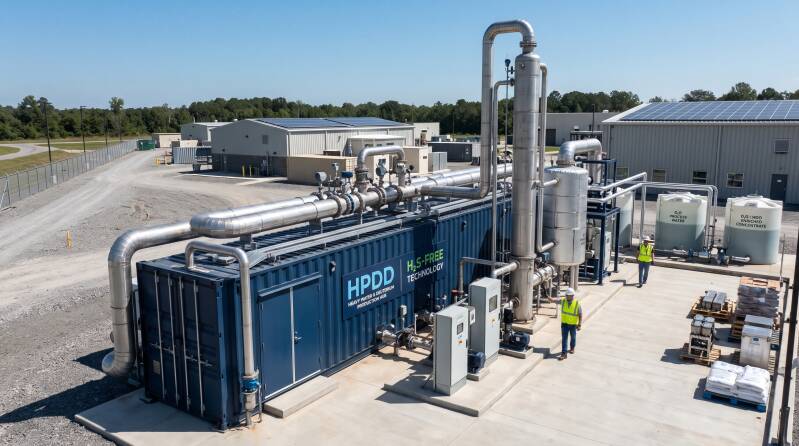
Deployment Footprint: Massive fixed chemical plants | Modular, containerized skids (300 kW – 10 MW)
4. TURNKEY DEPLOYMENT FOR NUCLEAR, FUSION & RESEARCH HUBS
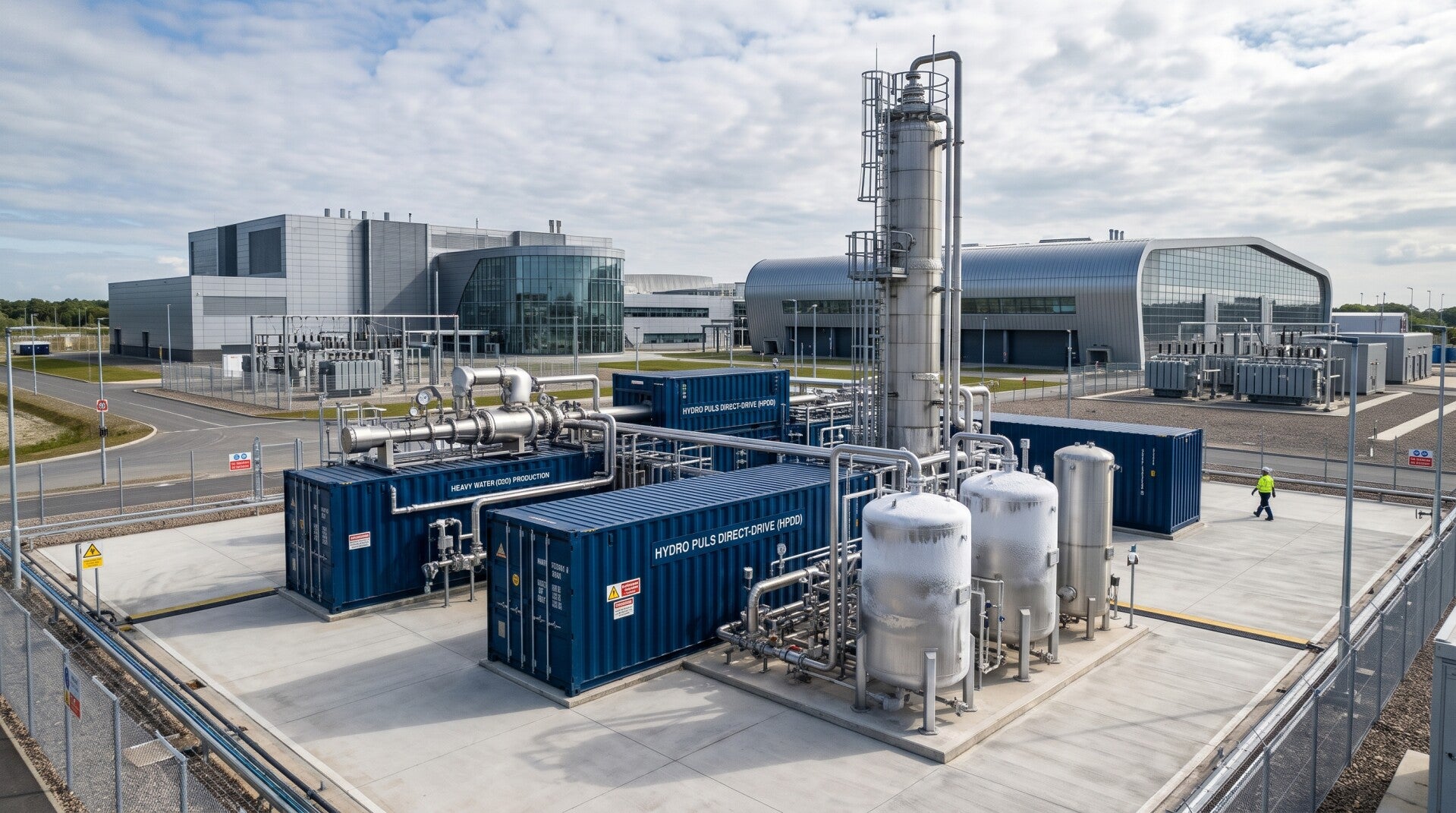
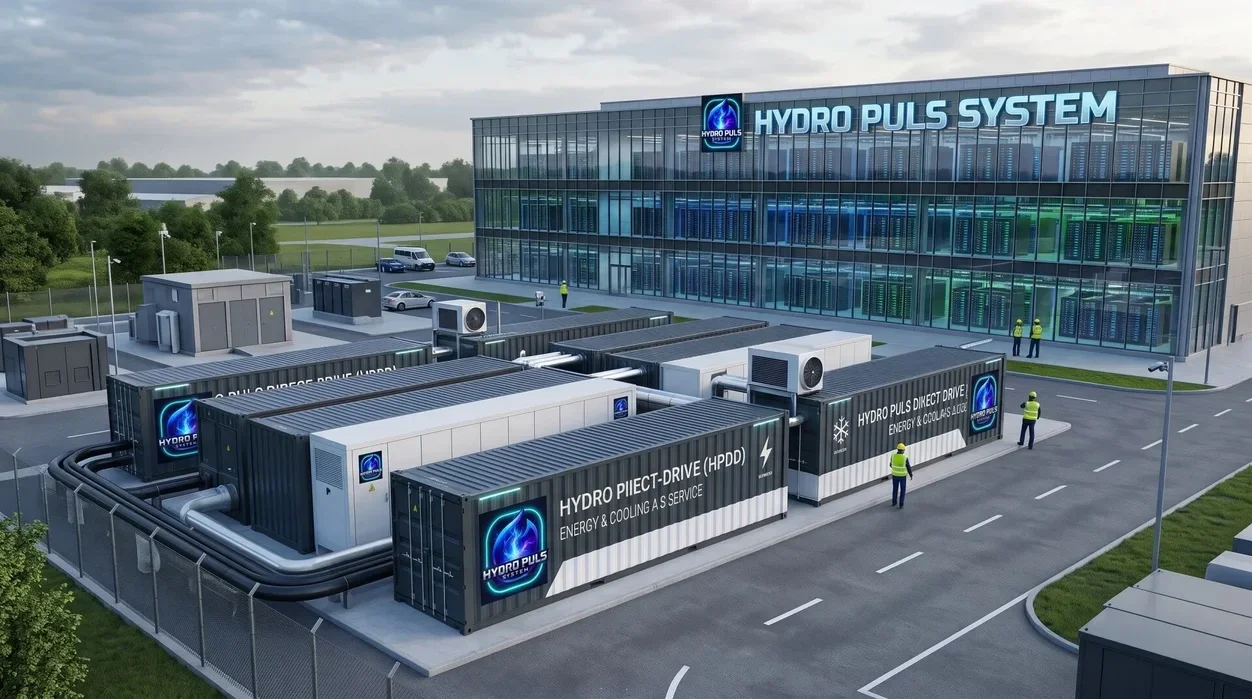
Backed by U.S. institutional investors for immediate global deployment, HPDD delivers standardized, containerized heavy-water and deuterium modules, available via direct equipment purchase or 100% pre-funded Energy-as-a-Service (EaaS) with zero upfront energy CAPEX.