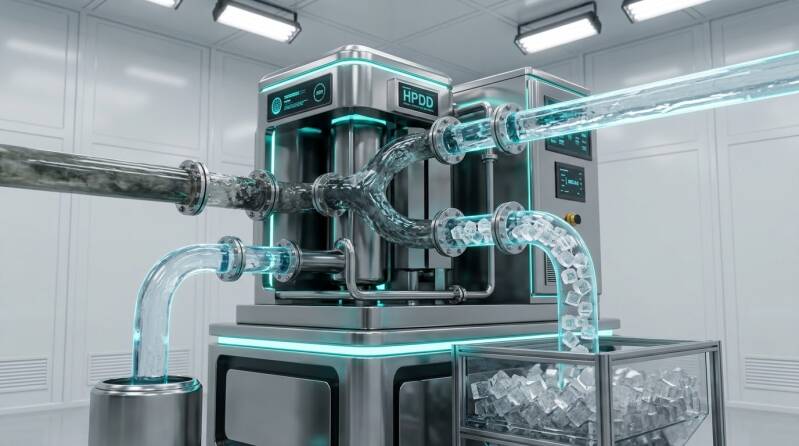
Potassium
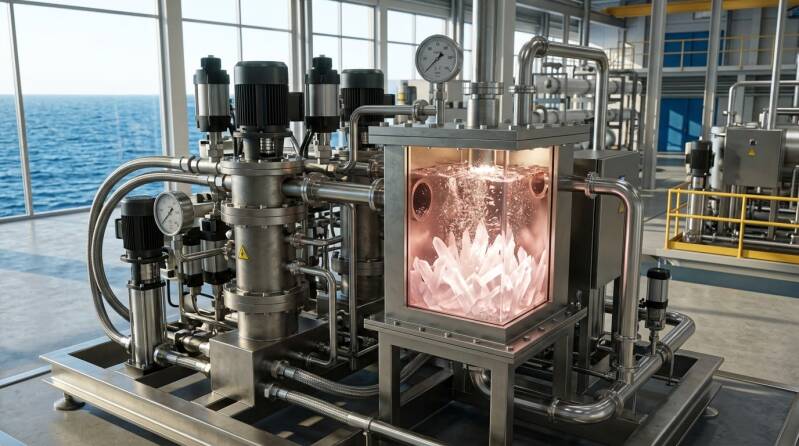
Mineral Recovery: Selective Potassium Chloride (KCl) Harvesting from Desalination Rejects
Converting Hypersaline Waste Streams into Strategic Agricultural Precursors
THE OVERVIEW
Seawater Reverse Osmosis (SWRO) operations face escalating environmental compliance costs and disposal restrictions associated with hypersaline concentrate (brine rejects). Rather than treating reject brine as an environmental penalty, the Hydro Puls Direct-Drive (HPDD) architecture integrates mineral recovery into the process stream, selectively extracting high-value potassium chloride (KCl / MOP) and magnesium salts.
HOW HPDD UNLOCKS CIRCULAR BRINE PROCESSING
Extracting discrete mineral salts from mixed multi-ion brine traditionally demands energy-intensive thermal multi-effect distillation or complex, chemical-heavy precipitation:
- Pulsed Nucleation & Cavitation Control: Utilizing high-frequency hydraulic pressure transients, HPDD enhances supersaturation and crystallization kinetics, promoting selective crystallization of potassium chloride without runaway co-precipitation of sodium chloride.
- Minimal Specific Energy Consumption: By replacing external boiler steam cycles with direct volumetric fluid work and waste heat recovery, the system drives near-Zero Liquid Discharge (ZLD) concentration at dramatically lower specific energy thresholds.
- Closed Thermodynamic Boundary (Delta Mass = 0.000 kg): Mineral harvesting runs within an isolated, hermetic boundary, preventing corrosive leakage and eliminating fugitive environmental discharges.
INTEGRATED MULTI-MARKET VALUE
Pairing HPDD mineral harvesting directly with SWRO plants enables:
1. Direct production of agricultural-grade potassium chloride (KCl) for fertigation and NPK blending.
2. Synergistic co-recovery of magnesium inputs for downstream on-site magnesium nitrate synthesis.
3. Substantial reduction in reject brine salinity, mitigating maritime environmental impact and easing regulatory discharge permitting.