Offshore Green Ammonia
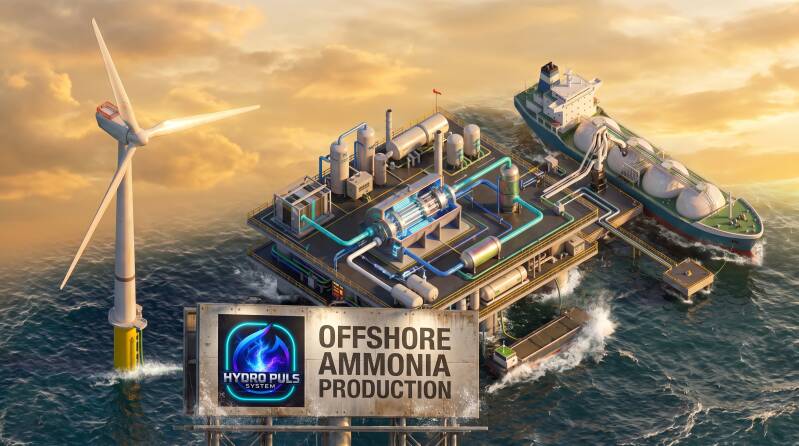
Offshore Wind to Green Ammonia:
Unlocking Efficiency with Direct-Drive Architecture 🌊⚡
Thanks to: Syed Yousaf BEng MSc
Unlocking Next-Generation Round-Trip Efficiency with Direct-Drive Architecture
The Offshore Challenge: Parasitics, Weight, and Balance-of-Plant Drag
Offshore wind is globally recognized as the cornerstone of zero-carbon hydrogen and green ammonia export corridors. However, deploying multi-megawatt offshore Power-to-X facilities introduces severe engineering bottlenecks that challenge project economics:
- Heavy Parasitic Compression Loads: Compressing hydrogen and nitrogen up to the elevated synthesis loop pressures (150–250+ BAR) requires heavy, multi-stage mechanical rotary compressor trains that consume a massive share of generated green power.
- Topside Weight and Space Constraints: Rotating drivetrains, lubrication packages, gearboxes, and standalone balance-of-plant (BoP) equipment drive up platform topside mass, structural costs, and maintenance complexity in harsh marine environments.
- Complex Thermal & Water Integration: High-temperature Solid Oxide Electrolysis (SOEC) delivers industry-leading electrical conversion efficiency, but demands continuous high-grade steam enthalpy from treated water sources.
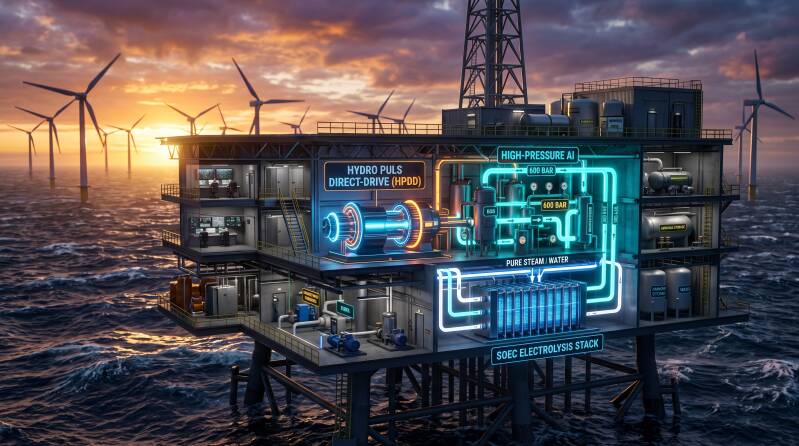
The Direct-Drive Breakthrough: Hydro Puls Direct-Drive (HPDD)
The Hydro Puls Direct-Drive (HPDD) architecture transforms offshore wind-to-ammonia integration by removing rotating intermediate mechanical conversions entirely.
By operating as an Autonomous Energy Heart, HPDD directly couples thermodynamic expansion with high-pressure fluid dynamics—consolidating multiple balance-of-plant systems into a single, oil-free direct-drive power core.
Key System Capabilities for Offshore Power-to-Ammonia
1. Direct High-Pressure Delivery (Up to 600 BAR)
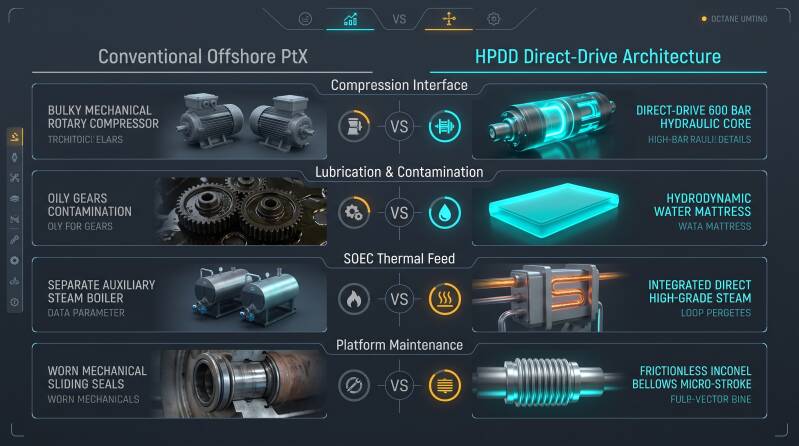
- Eliminating Multi-Stage Compressor Trains: HPDD generates fluid and gas pressure natively, cutting parasitic electrical losses and removing mechanical rotary compressors from the topside deck.
- Decoupled Load Dynamics: Integrated hydraulic accumulator circuits decouple fluctuating wind inputs from continuous chemical synthesis, maintaining optimal thermodynamic operating points across variable duty cycles.
2. Integrated Steam & Pure Water Co-Generation for SOEC
- Optimized SOEC Steam Loops: HPDD co-generates high-grade process heat and pure water streams, delivering the precise steam enthalpy required for high-temperature solid oxide electrolysers without requiring dedicated auxiliary boilers.
- Elevated Round-Trip Efficiency: Coupling high-temperature steam recovery directly with direct-drive pressure reduces total specific energy consumption (kWh/kg\ NH_3).
3. Native High-Purity Nitrogen (N_2) Integration
- Pressure-Native Delivery: High-purity nitrogen is co-generated directly on-demand at target synthesis pressures.
- Footprint Reduction: Minimizes dependence on oversized, standalone offshore Air Separation Units (ASUs), saving critical deck space and weight.
4. Oil-Free, Hermetic Offshore Operation
- Zero Sliding Friction: The linear core levitates within an active hydrodynamic water-bearing matrix, eliminating oil lubrication, hydrocarbon contamination, and mechanical side-thrust wear.
- Infinite Fatigue Sealing: High-pressure boundaries utilize pressure-balanced metallic Inconel bellows undergoing micro-displacement (75mu) across minimal differential pressures (Delta P approx 5BAR), ensuring long maintenance intervals in marine installations.
System Architecture Overview
Accelerating the Maritime Green Fuel Corridor
By replacing heavy mechanical conversion chains with a multi-asset direct-drive pressure core, HPDD enables offshore operators and energy developers to maximize green ammonia yields per megawatt of wind resource while dramatically simplifying offshore infrastructure.
Contact our engineering team at info@hpdd.eu to request technical datasheets, integration studies, and flow-modeling parameters.