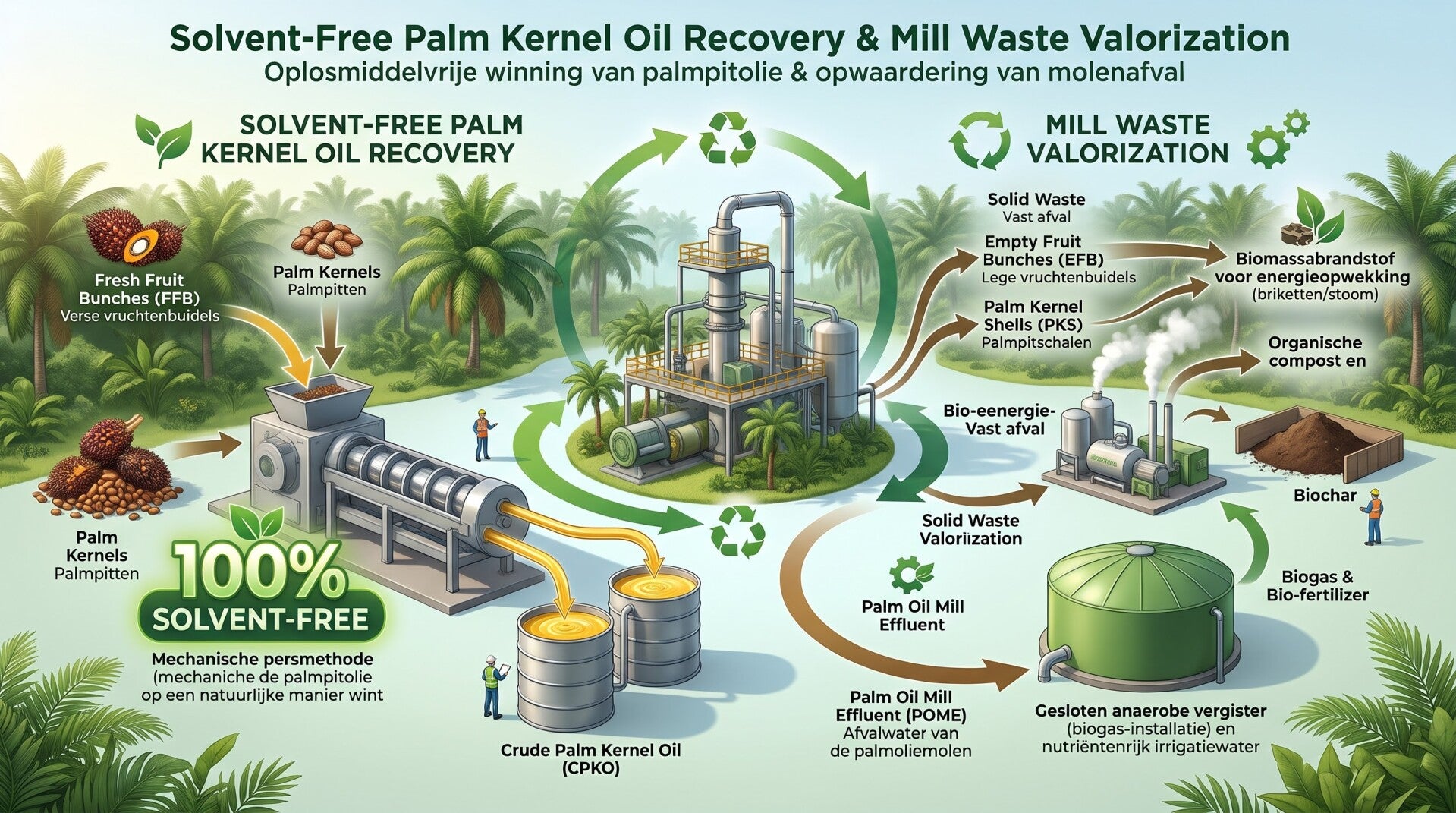
Solvent-Free Palm Kernel Oil Recovery & Mill Waste Valorization
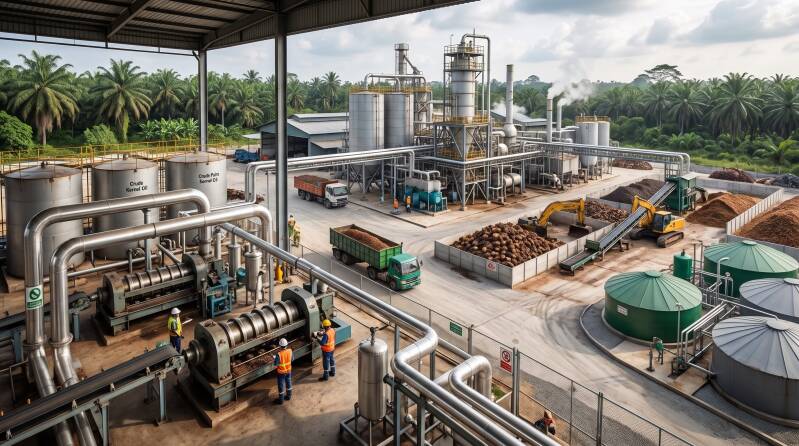
Solvent-Free Palm Kernel Oil Recovery & Mill Waste Valorization
Powered by Ammonia-Fueled Hydro Puls Direct-Drive (HPDD) & Acoustic Cavitation (ACR)
Zero-Carbon Power Meets Complete Palm Oil Mill Circularity
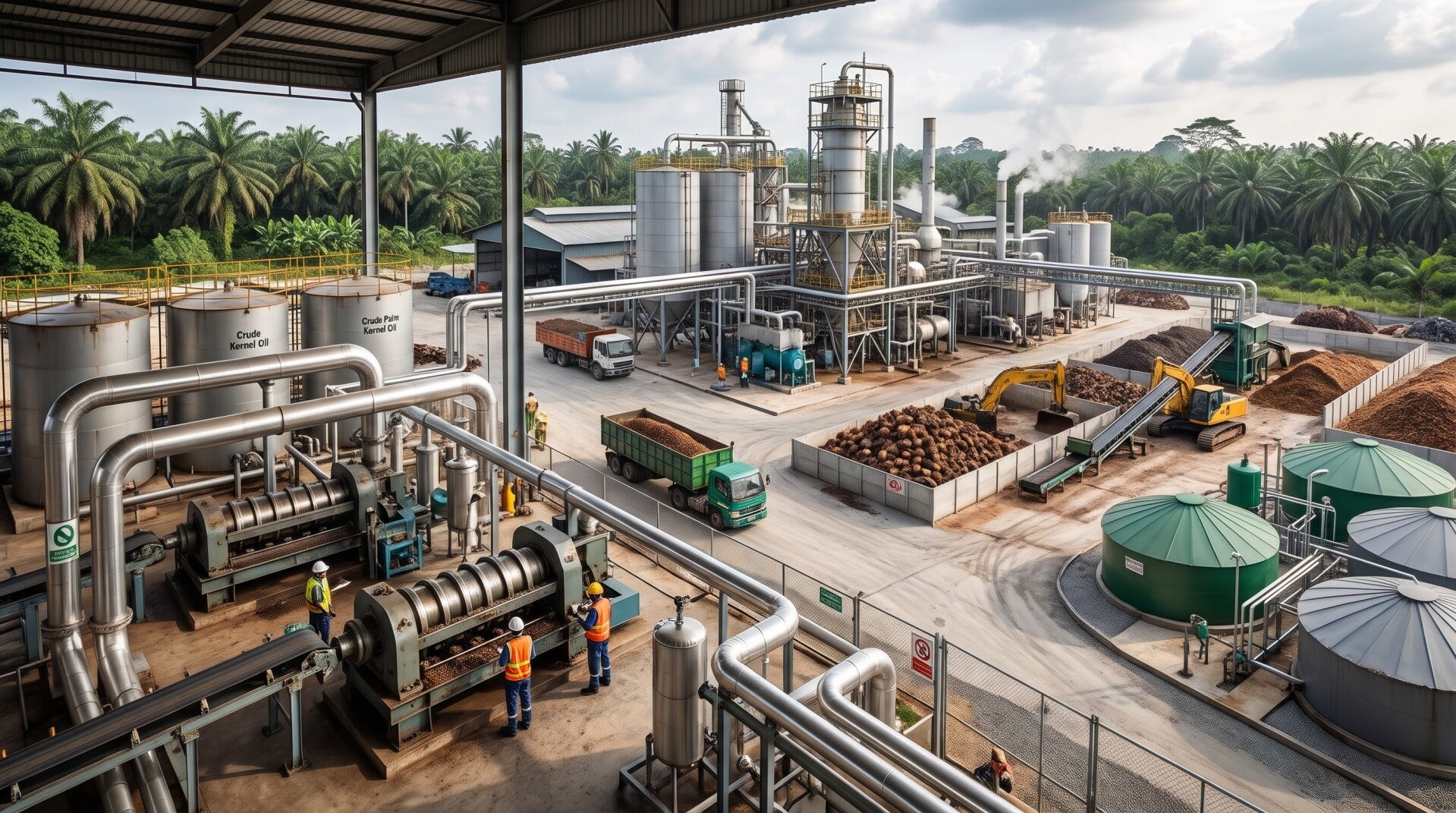
Palm oil mills and kernel crushing plants sit on immense untapped value, not only in the 6% to 10% residual Palm Kernel Oil (PKO) left behind in pressed Palm Kernel Expeller (PKE), but also in massive organic waste streams such as Palm Oil Mill Effluent (POME) biogas, empty fruit bunches, and palm kernel shells.
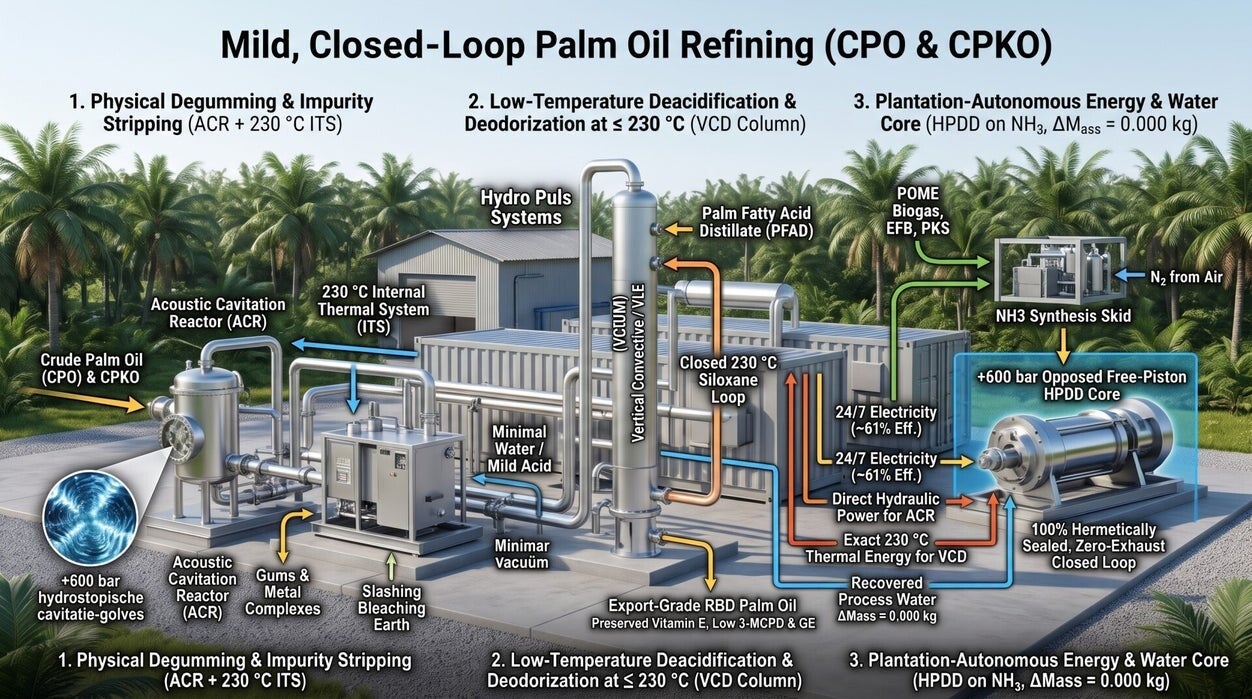
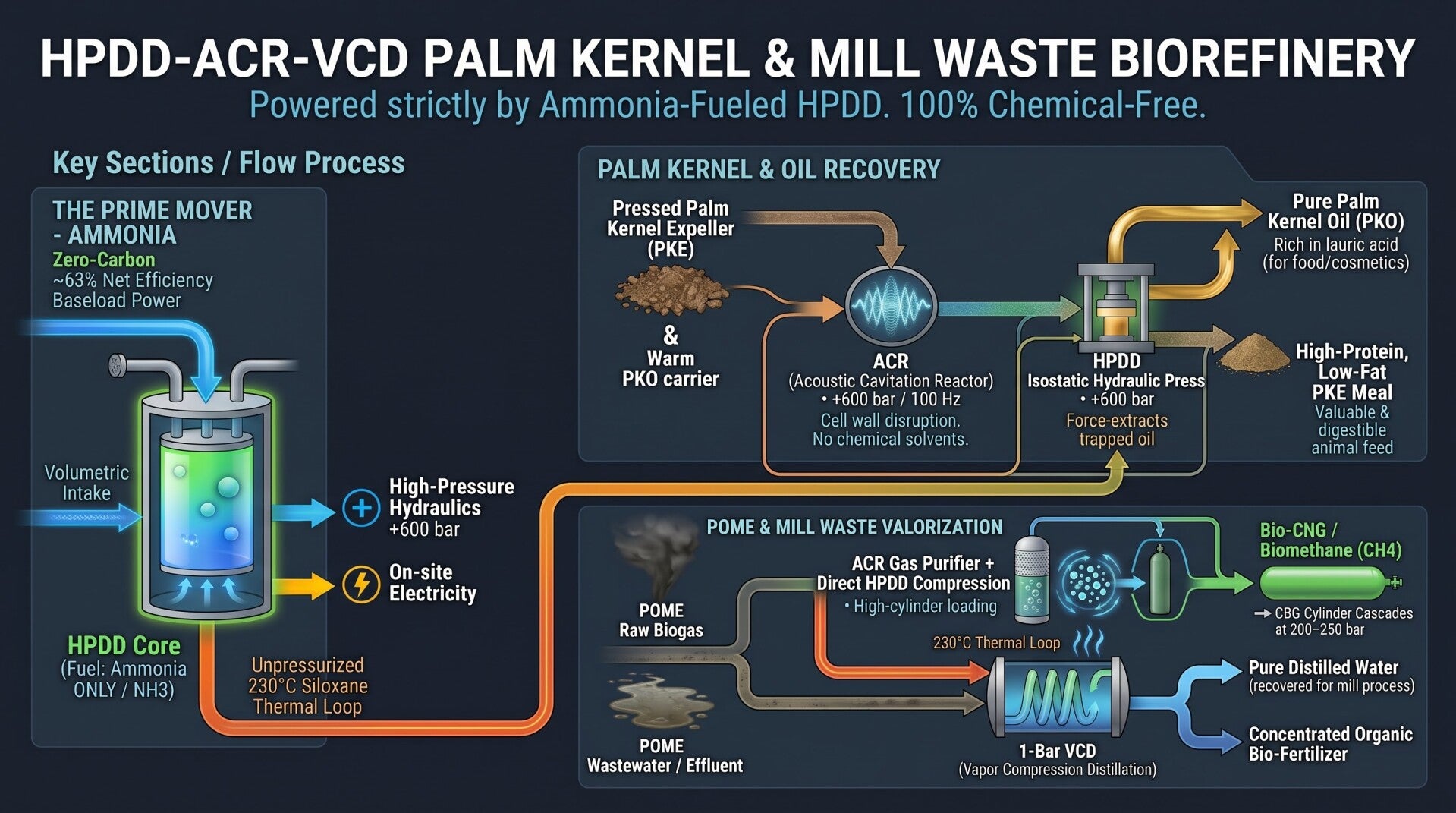
At the heart of our solution is the Hydro Puls Direct-Drive (HPDD) platform, which operates exclusively on carbon-free ammonia (NH_3) as its primary fuel. By running strictly on pure ammonia in our isolated pulse-combustion core (~63% net electrical efficiency), HPDD eliminates carbon and soot emissions at the source while delivering direct +600 bar hydraulic pressure, closed-loop N_2 expansion cooling (600 bar - 1 bar), and an unpressurized 230 °C siloxane thermal loop.
Using this clean, ammonia-driven hydraulic and thermal power, the integrated HPDD–ACR–VCD system transforms palm kernel processing and mill waste management into a single, chemical-free biorefinery:
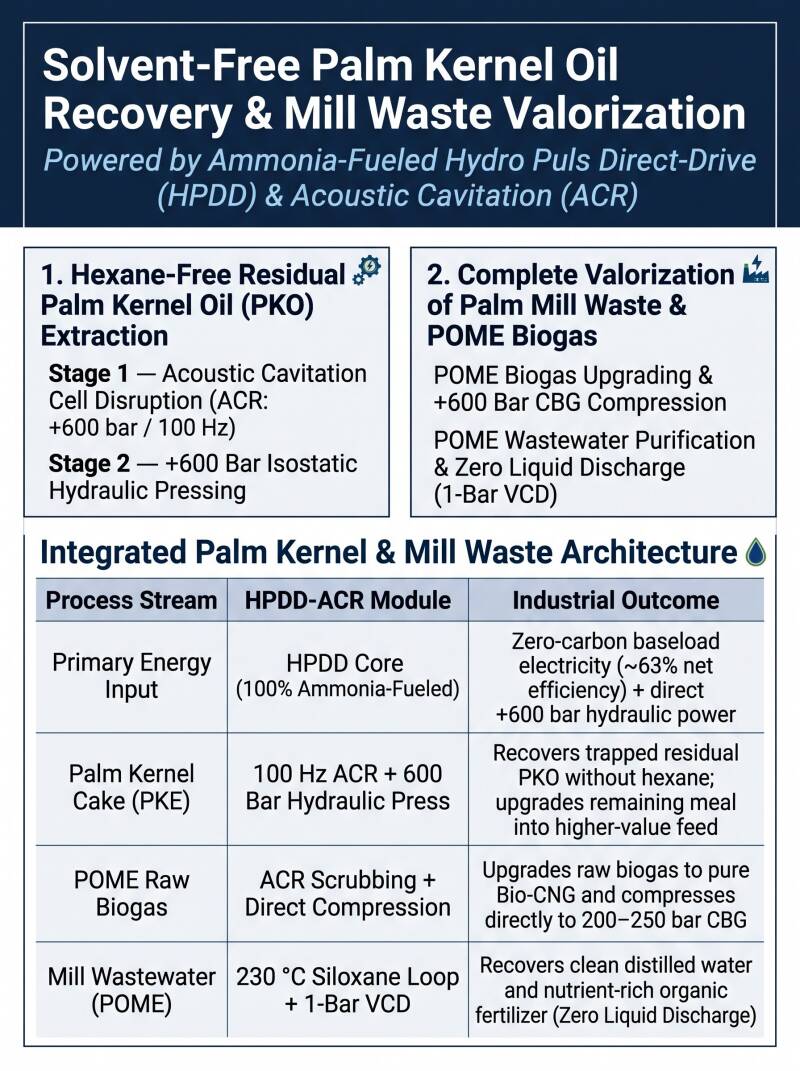
1. Hexane-Free Residual Palm Kernel Oil (PKO) Extraction
Conventional mechanical screw presses leave 6%–10% valuable lauric-rich PKO trapped inside intact cell walls of the palm kernel cake. Normally, recovering this fraction requires hazardous, petroleum-based hexane extraction. Our two-stage physical process achieves comparable yields with zero chemical solvents:
- Stage 1 — Acoustic Cavitation Cell Disruption (ACR: +600 bar / 100 Hz): Ground Palm Kernel Expeller (mixed with a small carrier stream of warm PKO) passes through the ACR. High-frequency 100 Hz pressure pulses and imploding cavitation micro-bubbles rupture the tough lignocellulosic cell walls, releasing trapped oil droplets without thermal degradation.
- Stage 2 — +600 Bar Isostatic Hydraulic Pressing: Gently warmed via our unpressurized 230 °C siloxane loop (~45–55 °C) to optimize viscosity, the cavitated cake is pressed at +600 bar directly by HPDD hydraulics, extracting pure, food- and cosmetic-grade PKO while leaving behind a higher-protein, more digestible, low-fat PKE feed with extended shelf life.
2. Complete Valorization of Palm Mill Waste & POME Biogas
While HPDD itself is fueled strictly by ammonia, its high-pressure hydraulics, acoustic cavitation, and thermal recovery systems process and upgrade every major palm oil mill byproduct on site:
- POME Biogas Upgrading & +600 Bar CBG Compression (ACR + Direct Hydraulics): Instead of flaring or burning raw methane from Palm Oil Mill Effluent (POME) ponds in low-efficiency engines, our +600 bar / 100 Hz ACR scrubs CO_2 and H_2S to produce pipeline- and vehicle-grade Bio-CNG / Biomethane, while HPDD’s direct hydraulic compression fills 200–250 bar CBG cylinders without heavy multi-stage electric compressors.
- POME Wastewater Purification & Zero Liquid Discharge (1-Bar VCD): Waste heat from the unpressurized 230 °C siloxane loop powers our 1-bar Vapor Compression Distillation (VCD) module, turning toxic, high-BOD palm oil mill effluent into clean distilled process water and concentrated organic fertilizer.
- Cavitation Pre-Treatment of Biomass & Shells: The 100 Hz ACR breaks down fibrous mill residues (EFB and shell fines), accelerating anaerobic digestion rates to boost total POME biogas output.
Built for Rapid, Modular Mill Integration
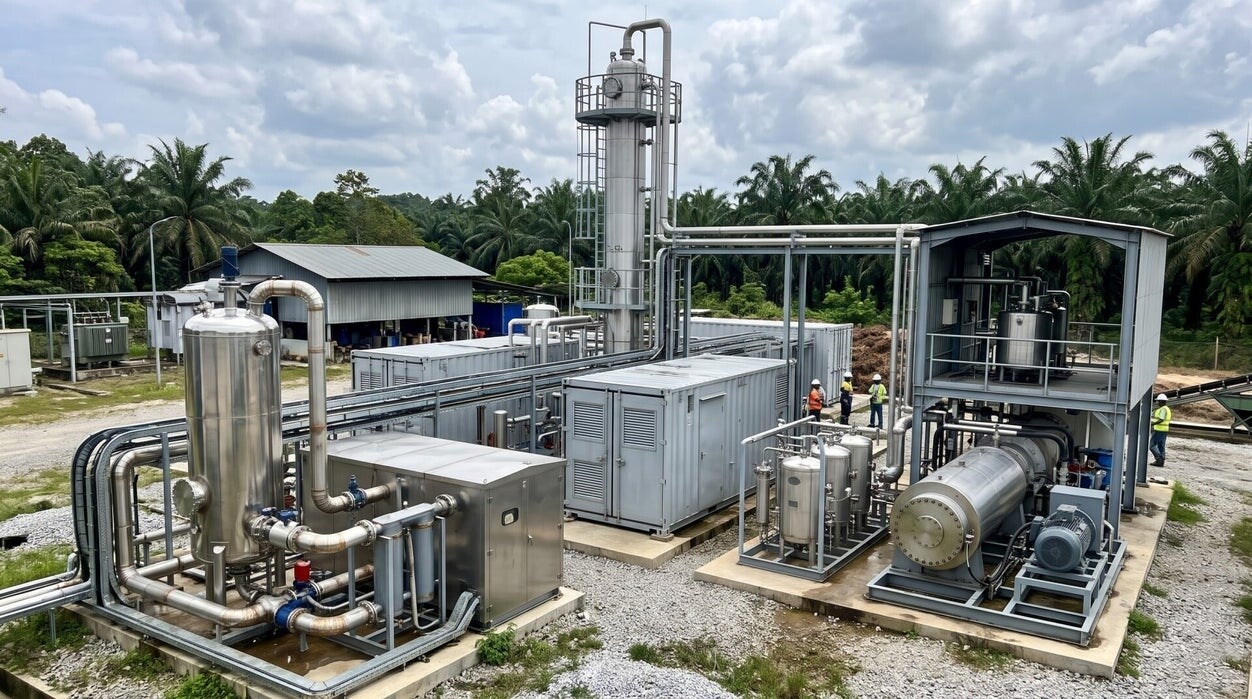
Housed in standard 20ft containerized skids, the ammonia-fueled HPDD–ACR–VCD platform installs directly alongside existing palm kernel crushing lines and POME digesters, delivering higher oil revenues, export-ready biomethane, and clean water without a single drop of hexane or fossil fuel.
[Contact Our Engineering Team] to model residual PKO recovery and biogas upgrading yields for your mill capacity.
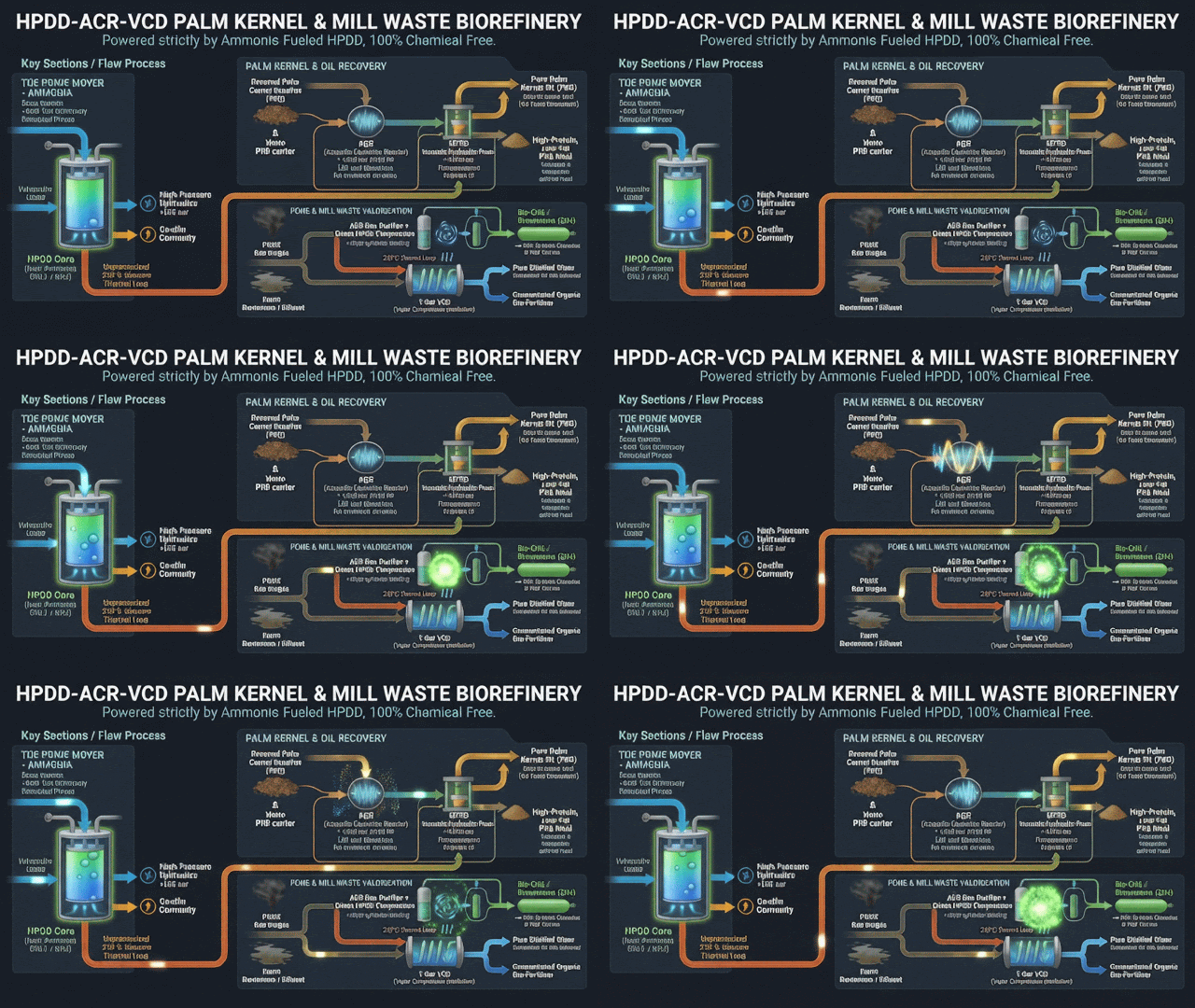
Integrated Palm Kernel & Mill Waste Architecture