Why traditional engines choke on 100% ammonia (and why HPDD thrives on it):
Ammonia (NH3) is widely regarded as the holy grail of clean shipping fuels: zero carbon atoms, meaning absolute zero CO2 emissions.
Yet legacy engine manufacturers struggle to run their engines on pure ammonia. They almost always inject a substantial pilot dose of diesel just to keep the flame alive.
Why? Think of it like lighting a barbecue:
• Diesel is like dry kindling: a single spark and it ignites instantly and burns fast.
• Ammonia is like a dense, solid oak log: it packs tremendous energy, but it has a very slow flame speed and requires sustained heat and dwell time to burn completely.
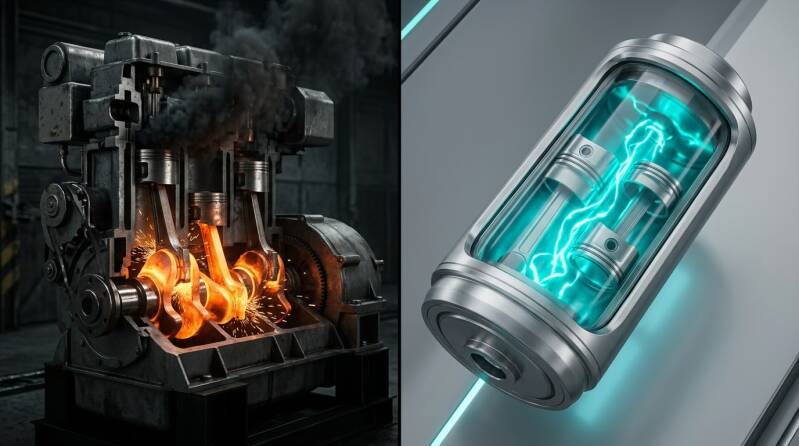
In a conventional engine, a crankshaft spins at high speed. The piston flies up and down in fractions of a second. For ammonia, that mechanical cycle is simply too fast: the flame quenches before it can fully develop. The result? Unburned toxic ammonia in the exhaust and poor power output.
This is why Hydro Puls Direct-Drive works fundamentally differently:
1. No crankshaft, complete dwell time control:
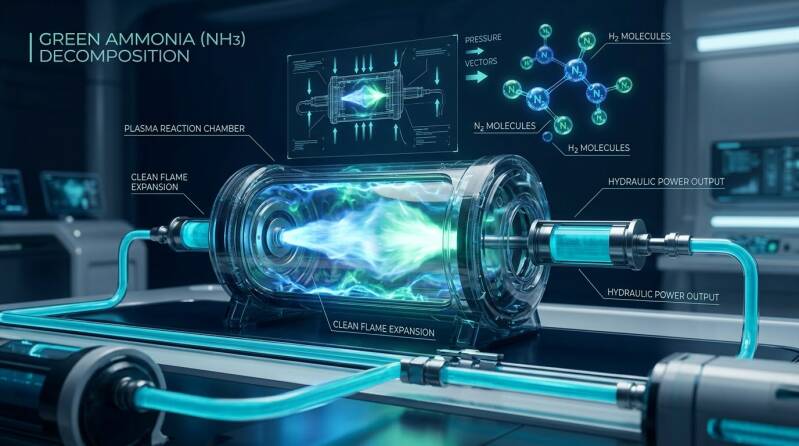
Because we eliminated the crankshaft, the piston isn’t locked into a rigid mechanical rotation. We can literally hold the piston steady at the point of maximum compression. Ammonia gets the exact thermodynamic time window it needs to react cleanly, completely, and steadily.
2. Brute hydrostatic force (600 bar):
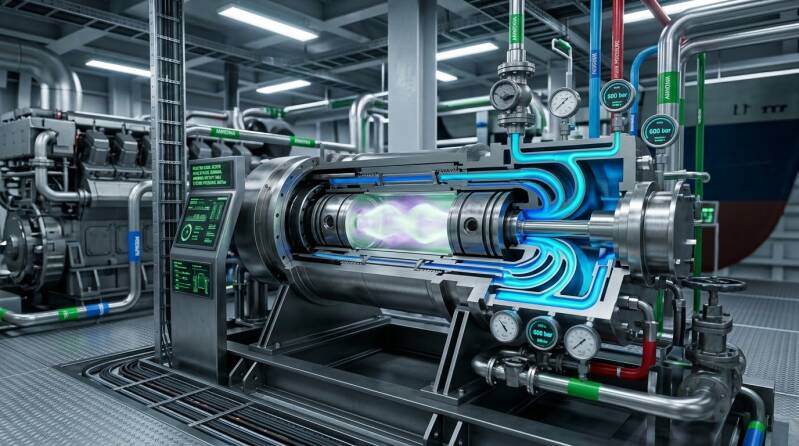
Instead of a rapid mechanical shock pounding against connecting rods and bearings, HPDD converts reaction heat directly into a massive, controlled hydraulic pressure wave. A high-pressure nitrogen matrix absorbs the load and transfers fluid power directly.
3. Zero pilot fuel, zero CO2, zero soot:
No pilot diesel, no messy dual-fuel compromises, and no mechanical friction surfaces in an engine block. Just pure ammonia reacting in a hermetically sealed core.
You cannot decarbonize global shipping by forcing a slow, clean molecule through a 19th-century high-speed mechanical compromise. Adapt the machine to the fuel, not the fuel to the machine.
#GreenAmmonia #Decarbonization #Shipping #CleanTech #HydroPulsDirectDrive #HPDD #EnergyTransition #MarineEngineering