

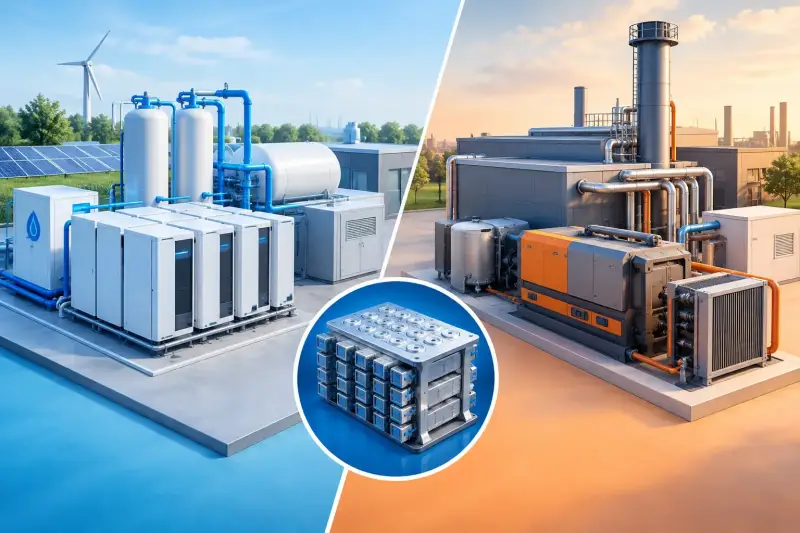
The debate between fuel cells and combined heat and power (CHP) is often framed as a false either-or choice. A fuel cell is an energy-conversion device; CHP is a system architecture capturing useful thermal energy while producing power or mechanical work. A fuel cell can serve as the prime mover in a CHP plant, just like a gas engine, turbine, or an isolated-combustion hydraulic energy core.
Industrial operators do not buy electrochemistry or process diagrams. They procure dispatchable capacity, process heat, cooling, water, fuel flexibility, emissions compliance, and bankable project economics.
Electrical Efficiency vs. Total Useful Energy
Fuel-cell vendors highlight high electrical efficiency, quiet operation, and low criteria emissions. Yet nameplate numbers alone do not dictate industrial viability. The decisive metric is useful energy delivered across the plant's actual operating profile, accounting for part-load performance, start-stop cycles, parasitic loads, thermal losses, and stack degradation. A system with lower electrical efficiency can yield superior project returns if it delivers the exact combination of power, thermal energy, cooling, and mechanical drive the facility would otherwise purchase separately.
Infrastructure and Fuel-Transition Risk
While fuel cells are frequently marketed as a hydrogen pathway, hydrogen storage, compression, and distribution dominate early project capital. Natural gas and biogas provide transitional options, while ammonia pairs high volumetric density with global handling chains. Conversely, conventional CHP engines face stranded-asset risk if carbon policies accelerate faster than equipment depreciation. The critical design question is whether the energy core can transition from transitional gas to hydrogen or ammonia without rebuilding balance-of-plant infrastructure.
Limitations of Conventional CHP and the Multi-Output Alternative
Crankshaft engines and turbines suffer from parasitic friction and efficiency drops under partial load. Furthermore, traditional plants treat power generation, thermal assets, chillers, and process pumping as fragmented systems sized and financed independently.
A direct-drive hydraulic architecture resolves this fragmentation. By thermally isolating combustion and transferring work hydraulically, generators, compressors, and pumps are decoupled from fluctuating site loads, allowing the thermal core to run continuously in its thermodynamic sweet spot. The Hydro Puls Direct-Drive (HPDD) platform operates on this premise: an Autonomous Energy Heart delivering electricity, hydraulic power, and cooling concurrently, engineered for future hydrogen and green ammonia operation.
The Strategic Approach
Effective procurement begins with mapping hourly energy flows: electrical demand, thermal requirements by temperature band, cooling, and mechanical pumping. The optimal engineering choice selects the architecture that converts the maximum fraction of every fuel molecule into productive industrial work.