The century-old Haber-Bosch process is ripe for fundamental hardware disruption.
Together with pioneers like Windom Shields and the team at geNH₃ (General Ammonia Co.), we are looking at the next industrial benchmark.
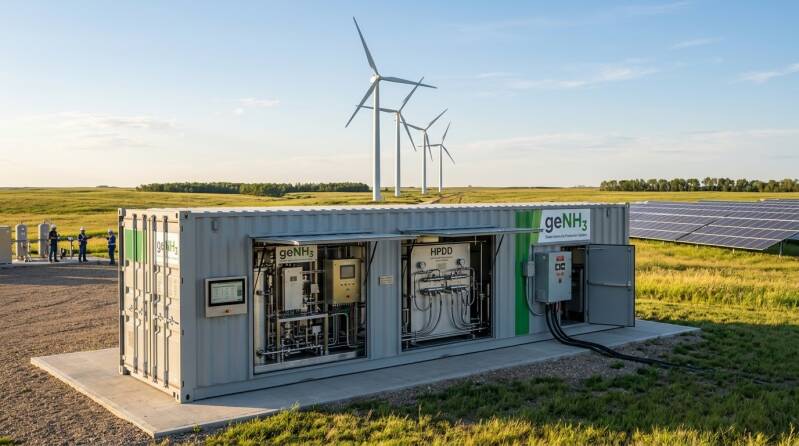
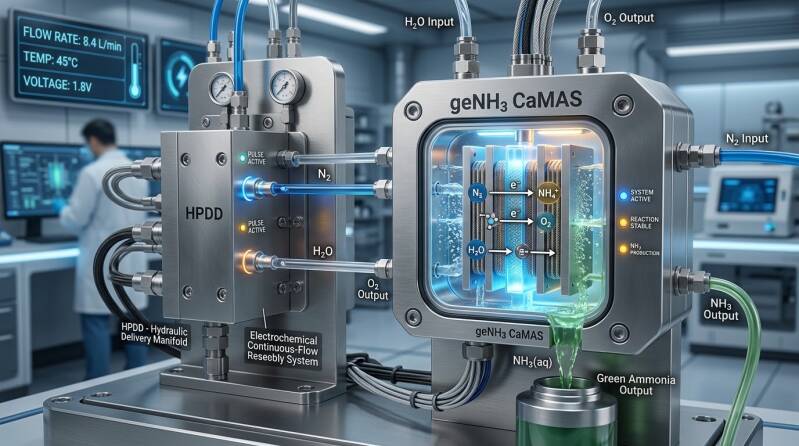
The $70B+ annual global ammonia market is approaching a critical paradigm shift. While conventional "green Haber-Bosch" pathways attempt to patch legacy infrastructure with massive, capital-heavy add-ons, separate electrolyzer plants, intermediate hydrogen storage, multi-stage compression, and rigid synthesis loops, geNH₃ is proving with their calcium-mediated electrochemistry (CaMAS) that ammonia can be synthesized directly from air, water, and renewable electricity.
The key to unlocking peak scalability and field resilience? Precision fluid and gas delivery engineered natively for intermittent operation.
That is why Hydro Puls Systems is in active discussions with Windom Shields to pair geNH₃'s direct electrochemical CaMAS reactor with our Hydro Puls Direct-Drive (HPDD) platform:
• HPDD serves as the high-efficiency fluid core, dynamically metering and delivering the nitrogen and water feedstocks under stiff, pulsation-controlled hydraulic displacement.
• Eliminating oversized parasitic balance-of-plant components and legacy mechanical drivetrain losses.
• Designed specifically to ramp seamlessly with volatile, stranded renewable power (wind and solar) for decentralized on-site production.
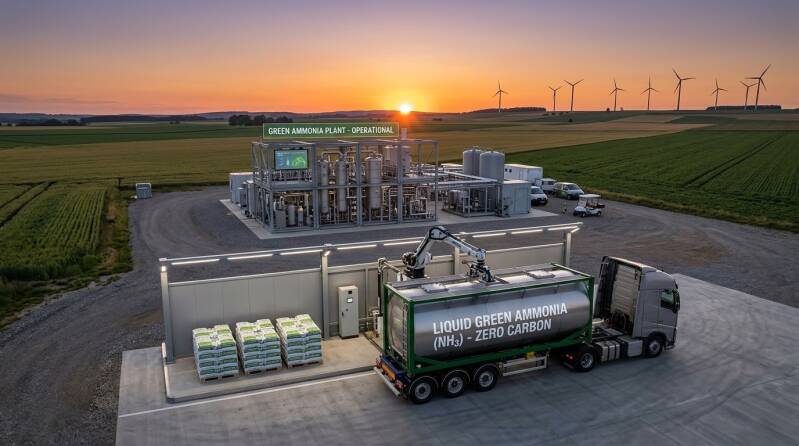
By fusing direct electrochemistry with direct-drive process intensification, we turn stranded local electrons into high-value green ammonia for regional fertilizers, zero-emission marine fuels, and dispatchable energy storage.
The future of chemical synthesis is modular, direct, and hardware-efficient.
#CleanTech #GreenAmmonia #Decarbonization #ProcessIntensification #HPDD #geNH3 #DeepTech #EnergyTransition