Decentralized on-site SAF production at airport hubs: transitioning from multi-hectare refineries to modular skid architecture.
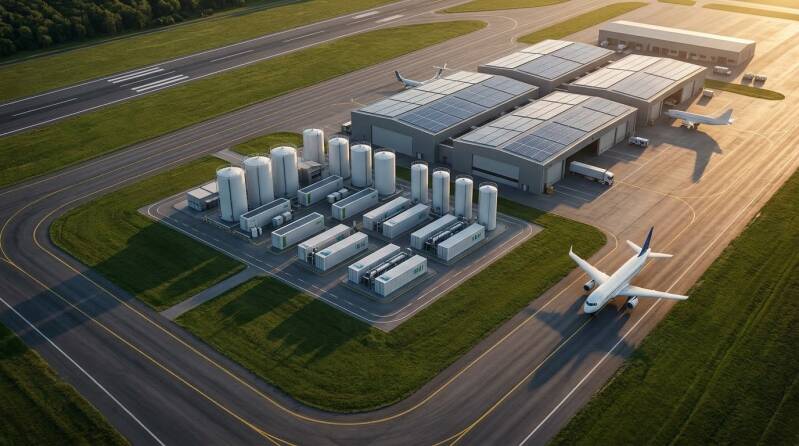
Sustainable Aviation Fuel (SAF) adoption remains constrained by brittle supply chains. Traditional architectures rely on massive, centralized chemical plants that move fuel across hundreds of kilometers via pipelines, rail, and tanker fleets. This legacy model introduces high transport costs, distribution emissions, and vulnerability to supply shocks.
Shifting synthesis directly to airport infrastructure fundamentally alters project economics through Hydro Puls Direct-Drive (HPDD) mechanochemistry:
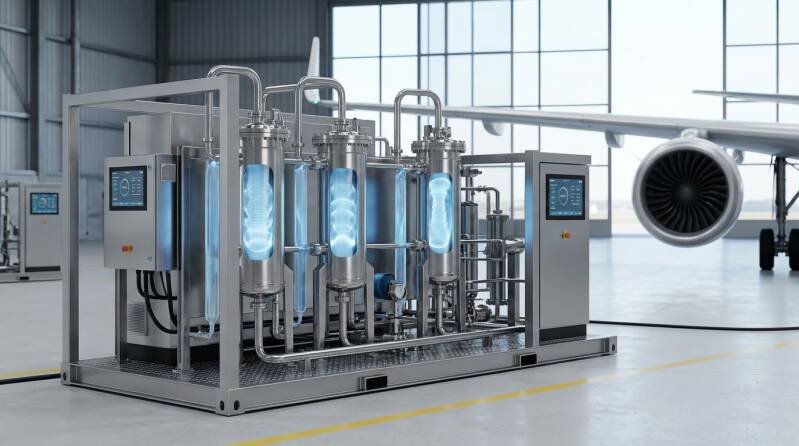
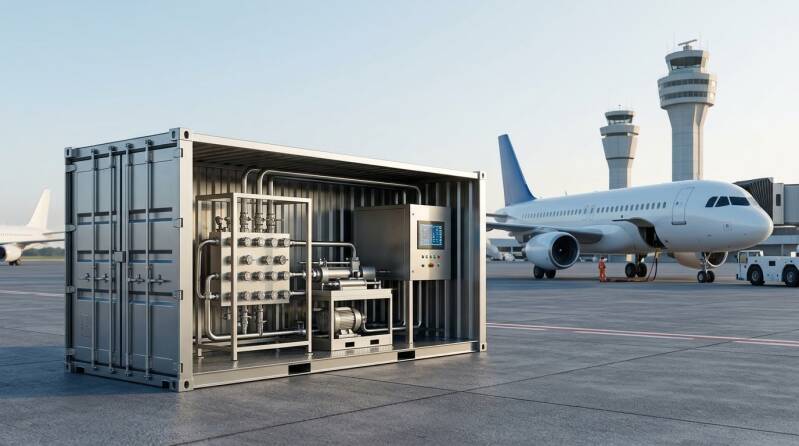
- Modular footprint without thermal mega-reactors: Conventional Fischer-Tropsch pathways require vast land parcels, complex cracking trains, and thermal infrastructure to reach economic scale. High-pressure mechanochemical synthesis (up to 600 bar) compresses that entire reaction envelope into compact, containerized skids.
- Local feedstocks and agile load-following: Coupling on-site renewable power, biogenic CO2, or captured point sources directly to an HPDD unit enables agile, on-demand production that dynamically matches airport fueling schedules without massive intermediate storage.
- Edge-verified fuel provenance: Operating with high-frequency edge telemetry and cryptographic proof-of-process ensures drop-in kerosene meets strict ASTM aviation specifications directly at the skid outlet before entering the fuel farm.
Synthesizing drop-in fuel at the exact point of consumption eliminates logistical drag and turns regional airport hubs into self-reliant, zero-emission fueling centers.