

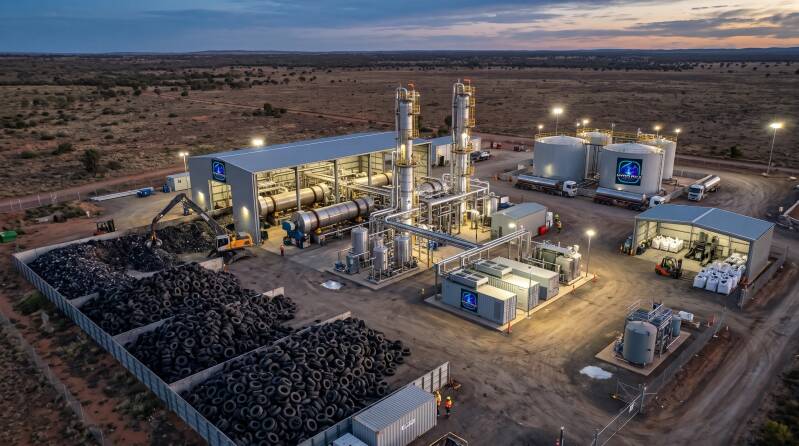
How do you run a 100–150 TPD end-of-life tyre recycling plant 24/7 in a rural area with an unreliable grid, no BESS limits, and zero outside ammonia deliveries? 🏭♻️⚡
Many tyre pyrolysis operators face two major bottlenecks: unstable grid power (forcing expensive Solar + short-duration battery setups) and under-monetized outputs, crude Tyre Pyrolysis Oil (TPO) and low-grade raw char.
With Hydro Puls Direct-Drive (HPDD) paired with our Acoustic Cavitation Reactor (ACR) and Vertical Convective / VLE Column (VCD), the entire plant becomes 100% energy- and feedstock-autonomous:
1️⃣ Zero Outside Fuel or NH3 Deliveries: Hydrogen-rich non-condensable off-gas from the 100–150 TPD tyre line is combined with nitrogen from ambient air in a compact on-site synthesis skid, producing the exact NH3 needed to run our hermetically sealed, zero-exhaust HPDD power core (ΔMass = 0.000 kg, +600 bar opposed free-piston drive).
2️⃣ 24/7 Off-Grid Power & Process Heat: A 1 MW modular HPDD block delivers continuous base power (600–700 kW average load, 1 MW peak) at ~61% net electrical efficiency plus 230 °C closed-loop siloxane heat, eliminating grid outages and diesel backup.
3️⃣ Upgrading Every Output Stream On-Site:
• Crude TPO → Low-sulfur, de-gummed industrial fuel cuts via ACR + VCD without acid-washing sludge.
• Raw Pyrolysis Char → High-grade recovered Carbon Black (rCB) via hydrostatic acoustic cavitation.
• Process Moisture → Clean, potable water recovered on-site.
One closed-loop modular architecture, turning waste tyres into 24/7 power, clean fuels, high-value rCB, and potable water.
#CircularEconomy #TyreRecycling #Pyrolysis #rCB #CleanEnergy #OffGridPower #ProcessIntensification #ZeroEmissions #HPDD #Engineering