Day 1: The Paradigm Shift in Aviation Propulsion
The Limits of Turbofan Physics: Why Aviation Needs a Clean-Sheet Thermodynamic Architecture ✈️⚡️
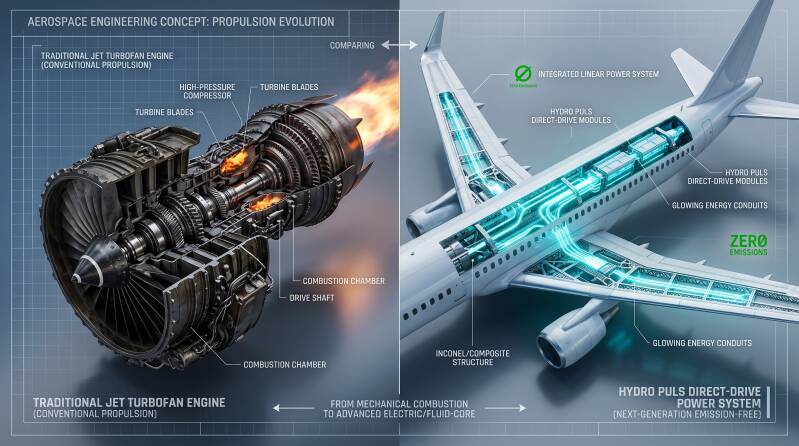
Modern aerospace engineering has refined turbofans close to their theoretical maximums. Yet, commercial aviation remains constrained by heavy mechanical architectures, high maintenance overhead (AOG risks), and massive parasitic drag from wing-mounted nacelles.
Direct battery electrification hits an insurmountable gravimetric barrier for commercial payloads, while burning hydrogen or SAF in legacy turbines continues to generate high-altitude contrails and mechanical wear penalties.
With HPDD-AERO (Hydro Puls Direct-Drive), we introduce a ground-up thermodynamic rethink:
Decoupling thermal conversion from mechanical rotating crankshafts.
Transitioning to a fluid-elastic linear matrix.
Delivering distributed hydraulic drive power with unmatched thermal density.
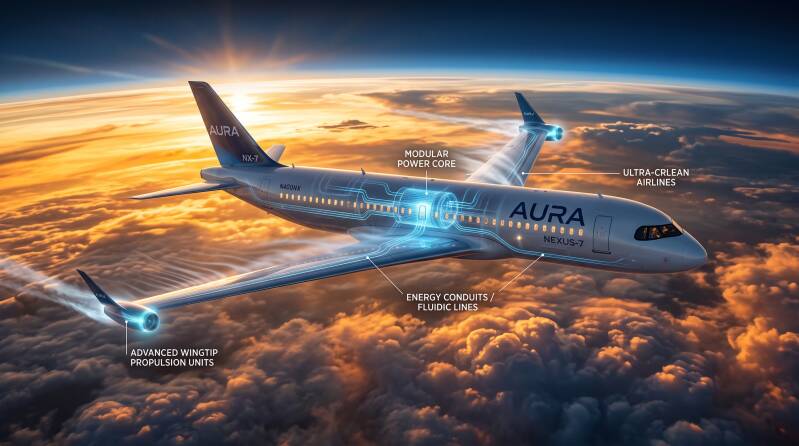
Over the next 10 days, we will break down the engineering principles and data behind HPDD-AERO—from our Airbus A320 transformation case study to heavy-lift cargo UAV applications.
👉 Tomorrow: The Tri-Cycle Principle (>80% System Efficiency).
hashtagAviation hashtagAerospaceEngineering hashtagHPDDAero hashtagDeepTech hashtagCleanSky hashtagAviationInnovation hashtagDecarbonization