Polygeneration for Breweries & Distilleries

Circular Polygeneration for Breweries & Distilleries
Turn high-moisture organic residues into behind-the-meter process steam, sub-zero refrigeration, firm electricity, and commercial-grade fertilizer.
Industrial brewing and distilling operations face two persistent operational liabilities: heavy energy expenditures for thermal boiling and cellaring refrigeration, paired with disposal costs and logistical headaches for wet organic byproducts (spent grains, draff, pot ale, and vinasse).
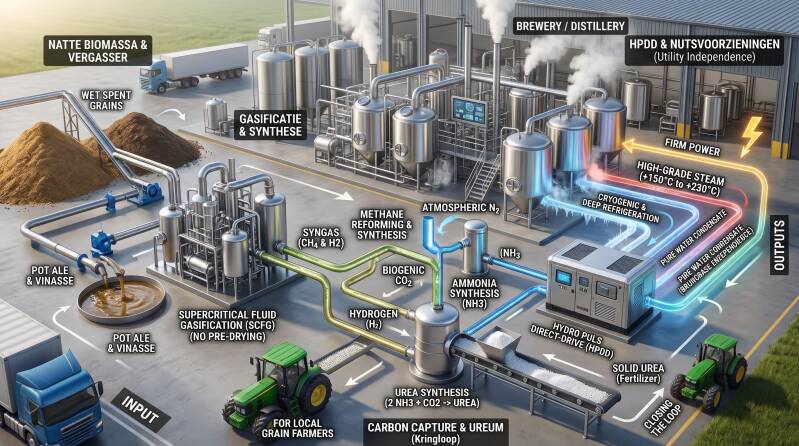
Coupling Supercritical Fluid Gasification (SCFG) directly with the crankless Hydro Puls Direct-Drive (HPDD) polygeneration platform closes your facility's mass and energy balance entirely behind the meter. No thermal drying steps, no dependence on congested electrical grids, and zero fossil reliance.
The Closed Industrial Loop
Process Architecture
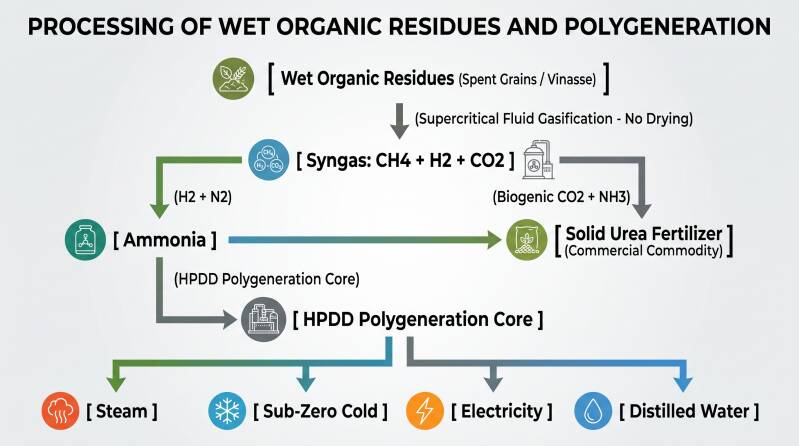
1. Direct Conversion of Wet Biomass
High-moisture organic residues are gasified directly in the aqueous phase via supercritical fluid gasification. Bypassing thermal drying removes the parasitic energy tax and capital expense that make conventional biomass-to-energy projects financially unviable. Disposal liabilities and haulage charges are eliminated at the source.
2. Synthesis and Biogenic Carbon Capture
• Syngas-derived hydrogen is matched with atmospheric nitrogen extracted on site to synthesize clean ammonia.
• Biogenic carbon dioxide is not vented through an exhaust stack; it is chemically bound with ammonia to yield high-grade solid urea:
2 NH3 + CO2 -> NH2CONH2 + H2O
• This delivers a merchantable solid fertilizer product that can be supplied directly to regional grain growers and agricultural partners.
3. Behind-the-Meter HPDD Polygeneration
The remaining ammonia stream powers the hermetically sealed, crankless HPDD reaction core. Operating without mechanical friction or oil contamination, it produces all facility utility streams concurrently:
High-Grade Process Steam (+150°C to +230°C): Directly supplies mashing tun heaters, wort kettles, and distillation columns from internal reaction enthalpy.
Sub-Zero and Cryogenic Chilling: Integrated nitrogen gas expansion and thermally driven absorption chilling deliver continuous cooling for fermentation cellars, lagering tanks, and wort heat exchangers, eliminating electric chiller compressor draw.
Firm Baseload Power: Dependable electricity for bottling halls, high-pressure pumps, and balance-of-plant loads without exposure to peak demand tariffs or grid curtailment.
Distilled Pure Condensate: High-purity recycled water available for boiler feed or internal facility operations.
Direct Fluid Work (+600 bar): Hydrostatic motive force delivered directly without crank mechanisms or lubricant risks.
Grounded in Industrial Merchant Economics
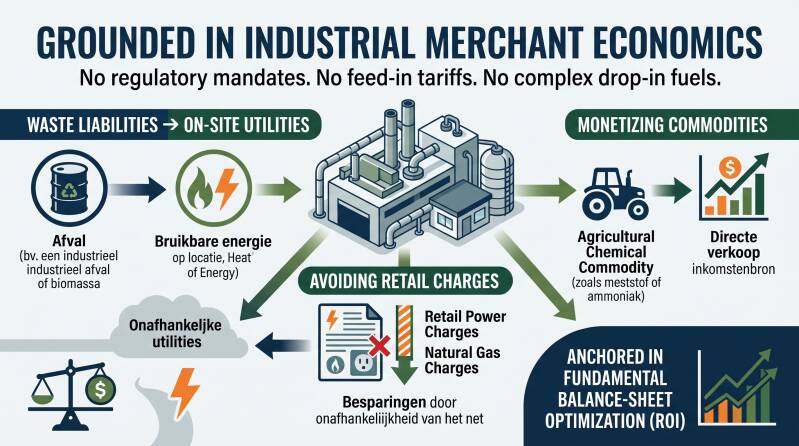
This architecture does not depend on regulatory mandates, feed-in tariffs, or complex drop-in fuels. Its return on investment is anchored in fundamental industrial balance-sheet optimization: converting waste liabilities into on-site utilities, avoiding retail power and gas charges, and monetizing a tangible agricultural chemical commodity.