

Steady-State Power Plant Economics: Why Chasing Load Destroys Value.
A power plant becomes truly economical when its energy conversion equipment remains near its thermodynamic optimum while the grid or process changes demand. Preserving a high-value operating point, rather than forcing the prime mover to chase fluctuations in load, is the central issue in modern energy economics.
🚨 The Cost of Part-Load Operation & Cycling
Most thermal systems are calibrated around a narrow operating range. At partial load, conventional generators still carry fixed parasitic demands (pumps, cooling, emissions control) while losing combustion quality and heat-recovery performance.
Additionally, cycling imposes severe thermal fatigue on hot-section components, seals, and bearings. Repeated starts and stops consume fuel without producing saleable output, spiking maintenance costs (OpEx) and forced-outage risks.
⚡ The Decoupled Architecture Solution
A superior system architecture separates energy conversion from load-following. The thermal core operates continuously in its high-efficiency zone, while an intermediate energy layer absorbs short-duration demand variations.
By utilizing hydraulic accumulators, thermal buffers (like unpressurized siloxane loops), absorption cooling, and atmospheric water generation (AWG), load variation is managed downstream. This protects the prime mover from destructive operating transients.
Instead of evaluating maximum nameplate output, we must look at how many hours per year a system produces useful, billable, or cost-avoiding output at its best heat rate. A steady-state plant delivering electricity, high-grade heat, chilled energy, and process water competes against several separate utility systems, dramatically improving the project's financial return profile.
📦 The HPDD Autonomous Energy Heart
Transition fuels like hydrogen and ammonia change fuel pathways but do not repeal thermodynamics. In fact, higher-cost green fuels make poor part-load behavior even more expensive.
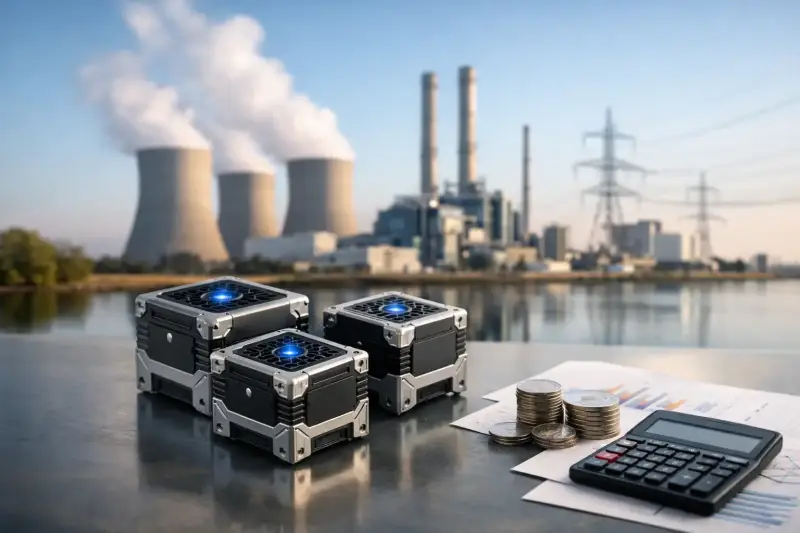
Hydro Puls Systems positions its HPDD architecture around this separation of isolated combustion from downstream energy transfer. It acts as an Autonomous Energy Heart, keeping the energy core steady while serving variable electrical, thermal, hydraulic, cooling, and water demands.
#PowerGeneration #CleanTech #EnergyEconomics #HPDDNexus #GridIndependence #Decarbonization