

Food waste
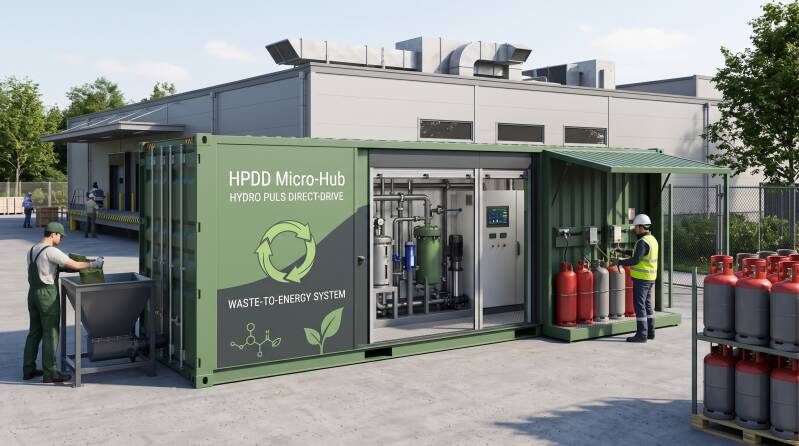
Use Case: Turning 4 Tonnes of Daily Food Waste into 100% Cooking Autonomy.
🍲⚡Institutional kitchens, such as temple complexes, university campuses, and large community dining halls, prepare tens of thousands of meals daily. Along with that volume comes two persistent operational realities:
1. Significant daily organic waste (food scraps, vegetable cut-offs, biodegradable plates).
2. High, recurring OPEX spent on commercial LPG cylinders for continuous high-heat cooking.
Moving wet organic waste (often 85% moisture / 15% dry matter) off-site is expensive and environmentally taxing.
Here is how a single-container Hydro Puls Direct-Drive (HPDD) Micro-Hub creates a closed loop on site:
The Operational Model (4 tpd Waste-to-Cylinder):
• Input: 4,000 kg/day of raw kitchen slurry and organic food waste.
• Acoustic Cavitation (ACR): Destroys the cellular structure and liberates bound moisture without energy-heavy thermal drying, enabling high-pressure continuous processing.
• Integrated Hydrothermal & Sabatier Polishing: Carbon is systematically bound to hydrogen rather than vented as CO2, yielding ~180 to 200 kg of high-purity biomethane (CH4) daily.
• Direct Cylinder Bottling: Our positive-displacement hydrostatic core compresses the biomethane directly into 18 kg commercial cooking cylinders at 200+ bar.
The Result:
• 10 to 12 commercial 18 kg cylinders produced every single day on site.
• Zero external commercial LPG dependency for kitchen boilers and cooking lines.
• Entire plant pre-engineered inside a single 40-ft ISO container skid: zero civil disruption, rapid plug-and-play installation behind the kitchen facility.
True sustainability does not mean trucking waste to distant landfills. It means extracting maximum molecule value directly where the waste is generated.
#HydroPulsDirectDrive #HPDD #CleanTech #Biomethane #CircularEconomy #WasteToEnergy #UrbanMining #Decarbonization #ProcessEngineering