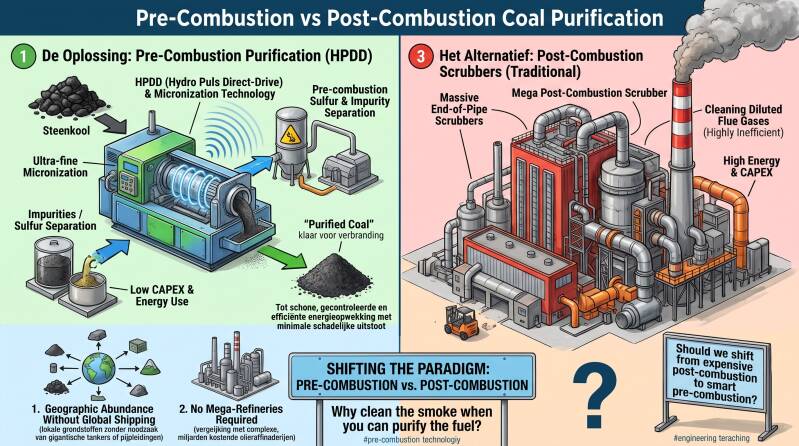
Why do we keep building massive end-of-pipe scrubbers to clean diluted flue gases after combustion, when we can purify coal before it is ever burned?
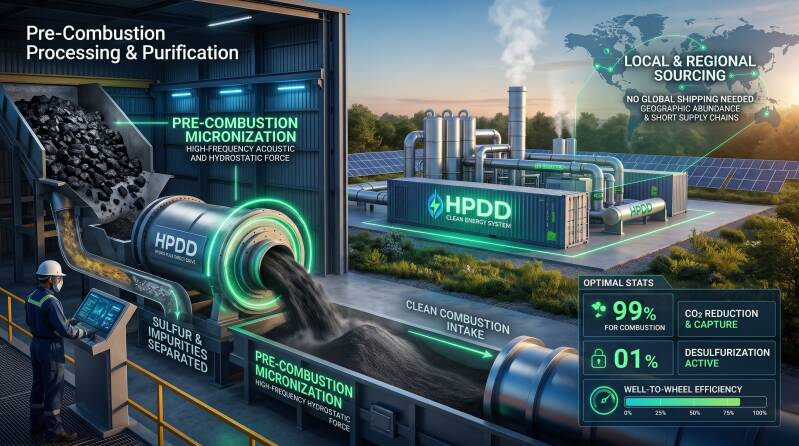
By ultra-fine grinding (micronization) of coal prior to combustion, sulfur and CO2-forming fractions can be separated upfront. Doing this before combustion is vastly more efficient and cost-effective than capturing emissions from low-concentration exhaust gases afterward.
When you evaluate the full supply chain from source to energy output, the equation shifts completely:
1. Pre-Combustion Purification: Separating sulfur and impurities from concentrated, micronized coal takes a fraction of the energy and CAPEX required for post-combustion flue gas treatment.
2. Geographic Abundance Without Global Shipping: Coal reserves are widely distributed across the globe, eliminating the need to transport fuel across oceans via massive tanker fleets or cross-continental pipelines.
3. No Mega-Refineries Required: Unlike crude oil, coal does not depend on multi-billion-dollar refining complexes before it can deliver reliable baseload energy.
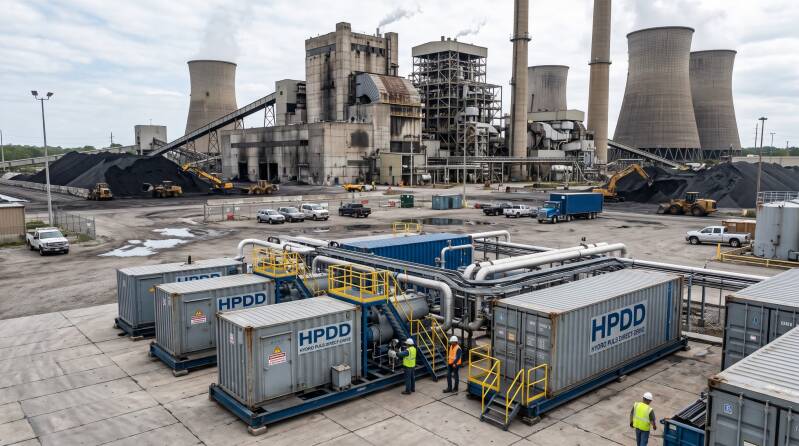
With high-pressure hydrostatic and acoustic dispersion technologies like Hydro Puls Direct-Drive (HPDD), ultra-fine coal micronization and pre-combustion separation become highly profitable.
Looking at the entire lifecycle, clean pre-processed coal stands out as one of the most efficient and environmentally sound energy pathways available.
Should the industry shift its focus from expensive post-combustion capture to smart pre-combustion purification?
#HPDD #Energy #Micronization #Desulfurization #CleanCoal #CO2 #EnergyTransition #IndustrialInnovation