Turning Flooded Coal Mines into Grid-Independent Industrial Heat Hubs ⛏️♨️⚡
Across former coal-mining regions like Belgian and Dutch Limburg, Wallonia, and the Ruhr Valley, flooded mine shafts hold vast reserves of warm water (20–35 °C). Until now, scaling mine-water energy has been held back by two major bottlenecks: high-voltage grid congestion for large electric heat pumps and low output temperatures (40–65 °C) unsuitable for heavy industry.
With our Hydro Puls Direct-Drive (HPDD) platform, we eliminate the electrical middleman:
1. Direct Mechanical Heat Upgrading (Zero Grid Bottleneck)
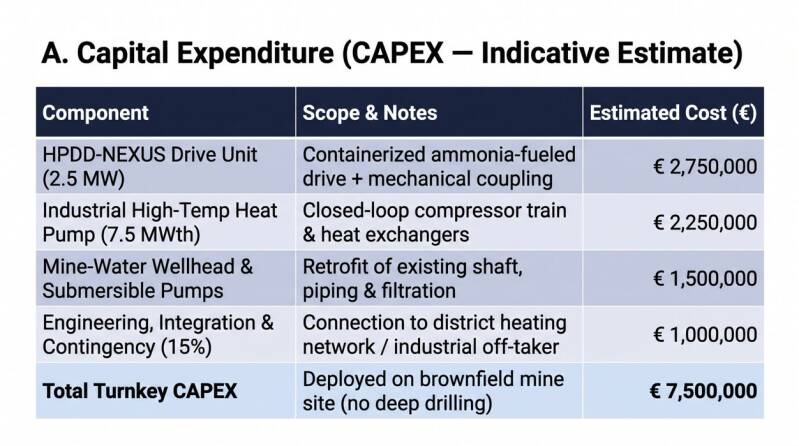
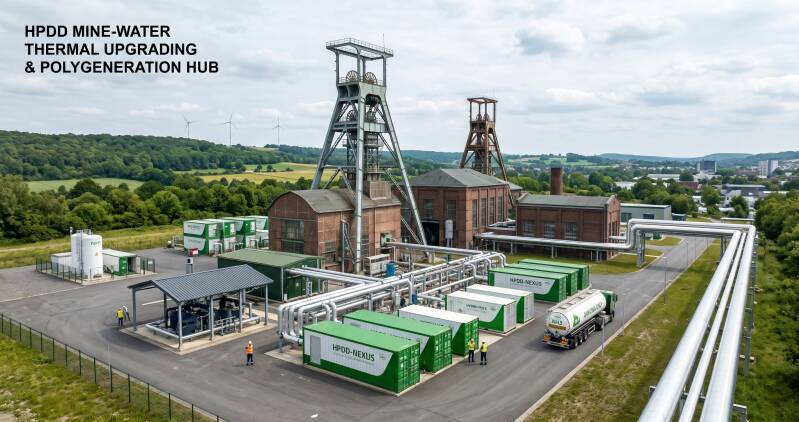
Fueled strictly by carbon-free ammonia (NH3) at +600 bar and 230 °C, a containerized 2.5 MW HPDD unit directly drives a 7.5 MWth industrial heat pump compressor, delivering 10 MWth of reliable thermal energy without waiting years for high-voltage grid upgrades.
2. Industrial-Grade Temperatures (95–160 °C)
By cascading mechanical heat pump output (95–120 °C) with HPDD’s 230 °C thermal exhaust, the hub supplies industrial steam loops, hospitals, food processors, and legacy district heating networks.
3. Optional Coal-Mine Methane Valorization
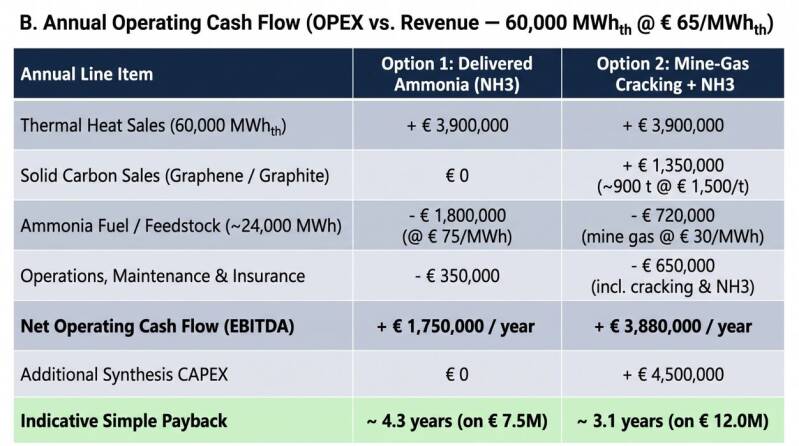
Where captured mine gas (CH4) is available, upstream 600-bar mechanochemical cracking converts it into high-value solid carbon (graphite/graphene) and clean hydrogen for on-site turquoise ammonia synthesis, with zero stack emissions.
4. Strong Brownfield Economics
Utilizing existing shafts avoids €15M–22M in deep geothermal drilling costs and geological risk, while qualifying for European transition co-financing such as the EU Just Transition Fund.
Legacy mining infrastructure can become the backbone of zero-emission industrial heat.
#CleanEnergy #MineWater #Geothermal #IndustrialHeat #DistrictHeating #Decarbonization #HPDD #HydroPulsDirectDrive #Ammonia #EnergyTransition #JustTransition #CircularEconomy