

# What Is Direct Drive Power Generation?
A conventional engine spends much of its operational life converting fuel into motion, only to re-convert it across crankshafts, gearboxes, generators, and pumps. Every mechanical interface introduces friction, parasitic drag, and thermodynamic compromise.
Direct drive power generation is an architectural shift: it transfers energy from the prime mover to the output stage with minimal intermediate conversion, eliminating or drastically reducing traditional drivetrains.
### Redefining the Thermodynamic Picture
Standard reciprocating engines rely on compromises. Combustion drives pistons, rotating a crankshaft to power a pump or generator while downstream loads constantly fluctuate. This introduces heavy side loads, vibration, transient inefficiencies, and mechanical wear.
Direct drive decouples the power core from these inherited constraints:
• Shorter Conversion Chains: Eliminating crankshafts and multi-stage gears preserves combustion energy directly for useful work.
• Stable Operating Windows: The core runs within its optimal thermodynamic zone rather than constantly chasing dynamic external load swings.
• Reduced Parasitic Losses: Mechanical friction, bearing drag, and oil churning are minimized at the architectural root.
### Beyond Rotational Mechanics
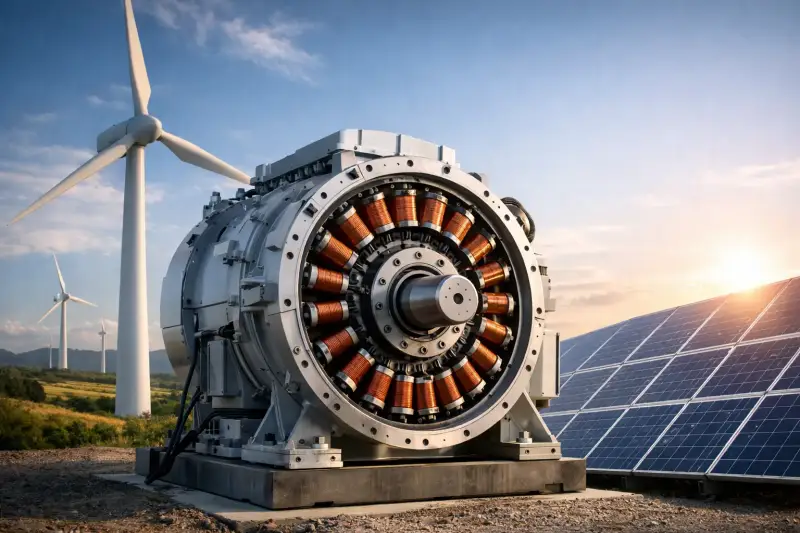
In electrical equipment, direct drive often describes a low-speed turbine or motor coupled directly to a generator without a gearbox.
In advanced thermal-hydraulic systems, direct drive operates on a deeper level. Instead of converting combustion into rotary motion first, combustion pressure is transferred directly into hydraulic work, fluid displacement, or tightly integrated generation stages. Platforms like Hydro Puls Systems’ Hydro Puls Direct-Drive (HPDD) treat the power unit not as an engine, but as an integrated thermal transformer converting fuel energy straight into application-ready outputs.
### Where Direct Drive Delivers Maximum Value
Eliminating parasitic losses and mechanical complexity delivers decisive benefits in capital-intensive, high-uptime operations:
• Combined Heat and Power (CHP): Captures maximum fuel energy where every incremental percentage point impacts operating margins.
• Remote & Off-Grid Utilities: Drastically cuts fuel consumption and maintenance logistics in locations where downtime is intolerable.
• Industrial Desalination & Microgrids: Provides combined hydraulic and electrical power from a single energy core.
• Transition-Fuel Readiness: A simplified, stable combustion geometry handles low-carbon fuels (such as ammonia or hydrogen) far better than dynamically constrained legacy engines.
### The Strategic Takeaway
Direct drive power generation replaces mechanical compromise with first-principles energy design. It shortens the path between energy release and productive work, driving higher net efficiency and multi-output integration.
The question is no longer whether direct drive sounds innovative, it is how much energy your current architecture is wasting simply keeping itself moving.
#DirectDrive #PowerGeneration #IndustrialEngineering #EnergyEfficiency #CleanTech #HPDD #Decarbonization #EngineeringInnovation