

Propeller Dynamics at Low RPM: Instant Torque, Maneuvering & Heavy Seas
A ship's propeller does not require a crankshaft. It requires precise, high-density torque, hydrodynamic control, and instantaneous responsiveness.
In conventional mechanical propulsion, matching a combustion engine to a propeller creates a severe operational compromise:
• Low-RPM Sluggishness: At low shaft speeds (during harbor maneuvers, locks, or slow-steaming), conventional engines operate far below their torque optimum. Boosting power requires heavy throttling, leading to smoky combustion, incomplete fuel burn, and thermal fouling.
• The Reversal Delay (Crash-Stop): Reversing a conventional direct-coupled low-speed engine or engaging heavy reversing gearboxes requires stopping fuel injection, braking the shaft, and restarting on compressed air. In critical close-quarters maneuvering or emergency crash-stops, seconds of lag introduce severe navigational risk.
• Wave-Impact Torque Spikes: When swells lift the stern or rough seas induce propeller ventilation, the sudden load shedding and re-immersion send violent torsional vibration spikes straight up the shaftline into the engine's mechanical bearings.
The Fluid-Power Solution: Direct-Mounted Swashplate Dynamics
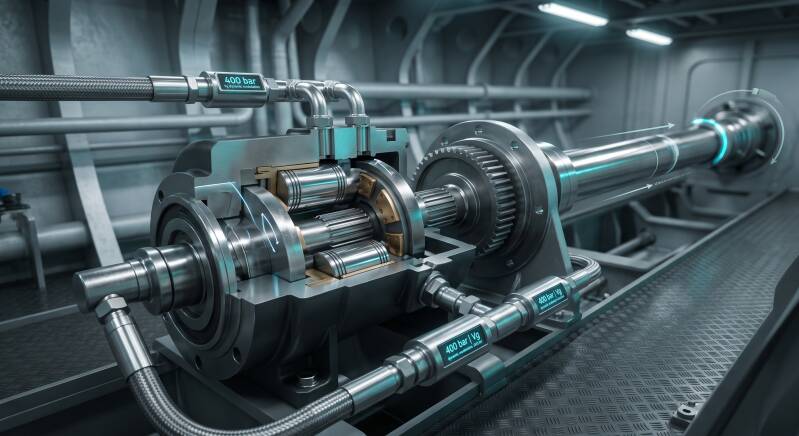
The Hydro Puls Direct-Drive (HPDD) architecture replaces mechanical transmission lag with stiff, closed-loop hydraulic power delivery to the shaftline:
1. 250 kW Power Take-In Mechanical Boost
Mechanical power is delivered to the shaftline or main reduction gear via a secondary closed hydraulic circuit operating at design pressure.
2. Dynamic Swashplate Angle Modulation
Shaft delivery is governed by a variable-displacement axial piston motor. The required motor displacement (Vg) is dynamically modulated across varying shaft speeds.
By adjusting the swashplate angle in milliseconds, the system produces full rated torque right down to near-zero RPM. Whether holding station against a strong tidal current or maneuvering at dead slow ahead, the propeller receives precise, instant hydrodynamic thrust without touching the combustion core's steady-state operation.
3. Instant Crash-Stop & Ice-Class Responsiveness
Reversing torque does not require stopping a combustion engine. Reversing the swashplate angle reverses hydraulic displacement across the motor porting instantaneously, providing aggressive, seamless counter-torque for crash-stop maneuvers or shock-loading in broken ice.
4. Hydraulic Torsional Isolation
The intermediate accumulator bank serves as a fluid cushion. When heavy seas cause propeller cavitation or sudden re-entry shock, the hydraulic capacitance absorbs the torque spikes. The torsional shockwaves never reach the thermal expansion core.
By separating the generation of energy from its hydrodynamic delivery to the water, you give captains instant maneuvering control while protecting your machinery from the sea.
For masters, chief engineers, and naval architects: In tight maneuvers or heavy swells, how much operational safety margin would your bridge gain from instantaneous, zero-delay torque reversal across the entire RPM range?
#MarineEngineering #NavalArchitecture #PropellerDynamics #HydroPulsDirectDrive #FluidPower #MaritimeRetrofit #ShipHandling #Decarbonization