

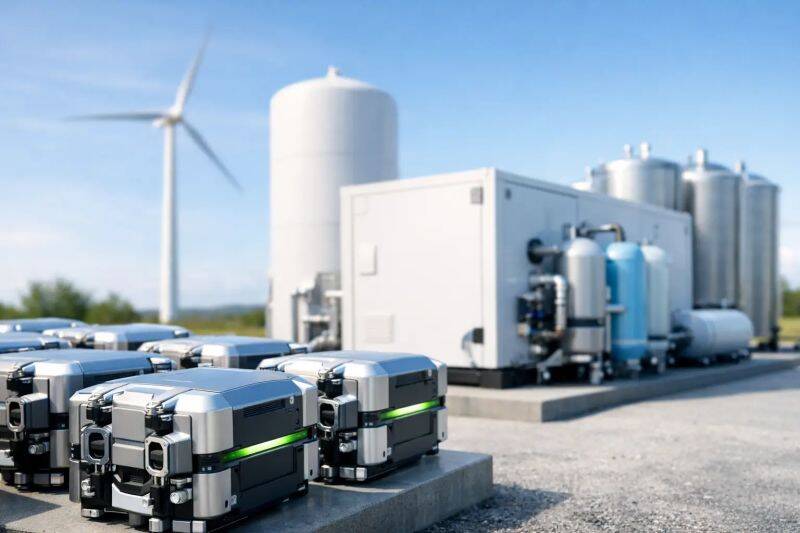
How to Integrate Hydrogen-Ready Generators Without Bottlenecks.
A hydrogen-ready generator becomes a future-proof asset only when fuel trains, combustion controls, thermal balance, electrical interfaces, and safety philosophies are engineered as one system.
For serious operators, integration is less about swapping fuel and more about redesigning plant logic to handle hydrogen’s unique flame speed, ignition, storage, and control.
1. Define Integration Boundaries Early
A practical integration pathway starts by defining the boundaries:
2. Prioritize Fuel Architecture Over the Engine Room
Evaluate the hydrogen source, purity, pressure, blending plan, and delivery continuity upstream. Fuel composition heavily impacts materials compatibility, injector design, valve selection, sealing strategies, and combustion calibration. Industrial buyers must ask the exact hydrogen range supported, under what pressure, and with what derating assumptions. Storage and pressure regulation also need early attention to ensure stable fuel delivery under transient demands.
3. Decouple Controls and Combustion
Hydrogen’s high flame speed and wide flammability range require precision. Conventional engine systems often struggle to manage fuel variability, transient power demand, and emissions compliance simultaneously. A superior integration strategy is to decouple the energy conversion core from erratic external loads wherever possible. Keeping the prime mover in a narrower, more stable thermal window makes hydrogen operation easier to control, easier to validate, and more bankable.
4. Align the Electrical and Thermal Interfaces
Generator synchronization, short-circuit contribution, harmonic behavior, and microgrid controls must align with the site architecture. If integrated into a Combined Heat and Power (CHP) setup, total system efficiency dictates the investment case. The real goal is designing an autonomous energy platform where fuel conversion, power production, and thermal delivery are coordinated as a single industrial machine.
5. Systemic Safety and Phased Deployment
Hydrogen safety requires proper hazardous area classification, purge logic, enclosure design, and leak path management. To mitigate risks, a phased deployment is highly resilient:
Phase 1: Utilize natural gas with hydrogen-compatible hardware and controls from day one.
Phase 2: Introduce a defined hydrogen blend after fuel supply and site validation are complete.
Phase 3: Move to high blend ratios or dedicated hydrogen operation once infrastructure and operating data support the shift.
At Hydro Puls Systems, this integration logic aligns with our core engineering principle: energy systems should be designed around stable conversion conditions and direct useful output, rather than the inherited limitations of conventional architectures.
hashtagHPDD hashtagHydroPulsDirectDrive hashtagHydrogenReady hashtagPowerGeneration hashtagIndustrialEngineering hashtagEnergyTransition hashtagCHP hashtagCleanTech