

Tackling the Wet Waste Bottleneck: Why High-Moisture Organics Demand Hydrothermal Architecture. Not Burning.
Across global biofuel and bioethanol hubs, from sugarcane mills in Brazil to agro-processing plants in India, producers face the same massive operational liability: high-moisture, high-volume effluents.
Two of the most challenging streams are:
Vinasse: The acidic, organic-heavy byproduct of ethanol fermentation (produced at ratios of up to 10–14 liters of vinasse per liter of ethanol).
Crude Glycerol: The viscous, low-value byproduct of biodiesel transesterification.
Conventional waste-to-energy technologies fail here for simple thermodynamic reasons:
The Drying Penalty: Thermal drying, pyrolysis, or classical gasification consume enormous amounts of energy just to evaporate water before extracting a single joule.
Corrosion & Slagging: Burning vinasse or crude organics creates severe fouling, mineral slagging, and acidic emissions (SO_x, NO_x) that destroy boilers and require costly scrubbing trains.
Biological Limitations: Anaerobic digestion requires enormous footprints, long retention times, and remains vulnerable to chemical shocks and salinity.
The HPDD Solution: Hermetic Hydrothermal Conversion (Zero-Burn)
Instead of treating water as an enemy to be evaporated, the Hydro Puls Direct-Drive (HPDD) platform uses dense-phase water as the reaction medium.
No Pre-Drying: Feedstocks are processed directly in their liquid/slurry state under high-pressure, dense-phase hydrothermal conditions.
Acoustic Cavitation & Phase Decoupling: Upstream Acoustic Cavitation (ACR) and Supercritical Fluid-Fluid Decoupling (SFFD) deconstruct viscous organics, strip corrosive volatiles, and precipitate out mineral salts/silica before high-pressure fluidic energy recovery.
Hermetic Utility Assets: The process operates without an open exhaust stack or cooling towers, generating clean base-load power, capturing distilled/potable-grade water, and isolating mineral co-products for local circular economy reuse.
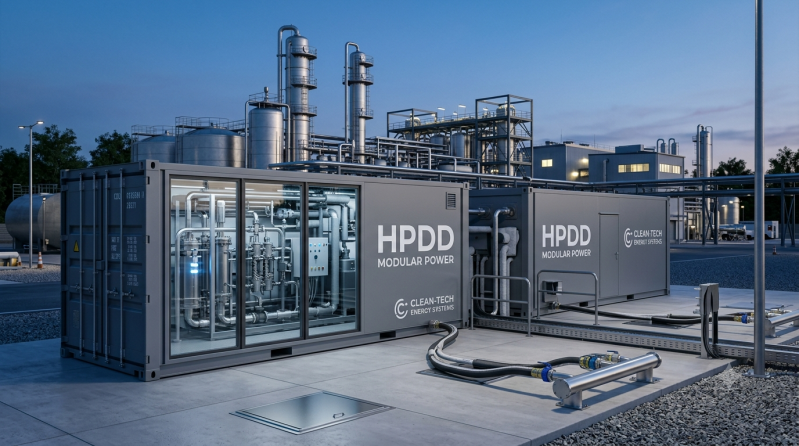
Modular, Containerized Deployment: Rather than billion-dollar civil mega-projects, containerized modules can be placed directly at ethanol distilleries and biodiesel refineries to treat effluents at the source.
The future of industrial decarbonization isn't about burning wet waste; it’s about mastering closed-loop hydrothermal physics.
#Biofuels #Vinasse #Glycerol #CleanTech #Hydrothermal #HPDD #CircularEconomy #IndustrialDecarbonization #Bioenergy #ResourceRecovery