

SAF Is an Energy-System Challenge
Aviation needs certified low-carbon molecules, but scaling Sustainable Aviation Fuel (SAF) is fundamentally an energy-system challenge. Whether via HEFA, Alcohol-to-Jet, Fischer-Tropsch, or Power-to-Liquid, every route demands reliable energy inputs and tight process control.
Operating chemical synthesis on intermittent power forces conventional equipment into cycling and throttling, backed by oversized balance-of-plant systems—an expensive way to run an industrial plant.
The Penalty of Indirect Conversion
Legacy architectures route thermal energy through rotating shafts, convert it to electricity, and convert it back into mechanical force for pumps, chillers, and compressors. In e-fuel and carbon-to-fuel plants, stacking power conversion, hydrogen compression, direct air capture (DAC), and cooling duties creates a crippling thermodynamic loss cascade.
Direct-Drive Architecture for SAF
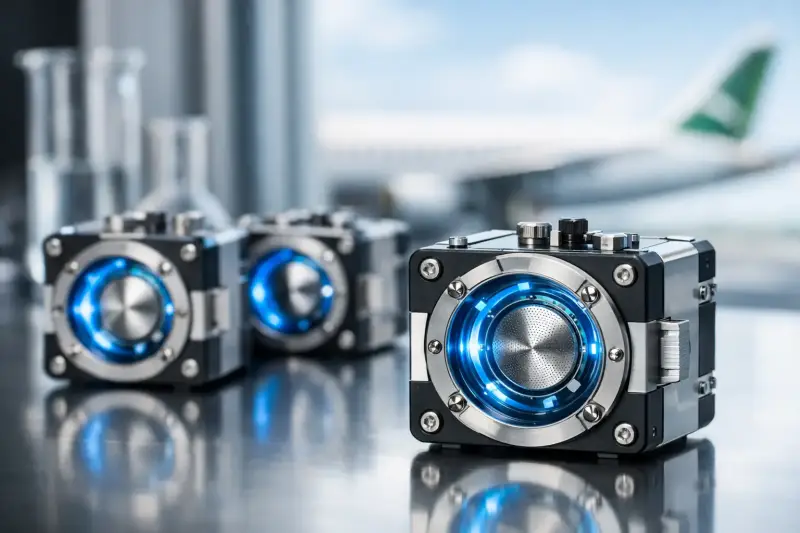
Hydro Puls Systems re-engineers this foundation. The Hydro Puls Direct Drive (HPDD) architecture decouples the energy core from load swings, replacing conventional crankshafts with pulse-based isolated combustion and direct hydraulic energy transfer.
Rather than running every industrial load through an electrical bus:
Direct Fluid Power: High-force duties, heavy pumping, compression, and fluid handling—are powered directly by hydraulic transfer, delivering high torque without conversion losses.
Steady-State Core: The primary energy core operates continuously at its thermodynamic sweet spot, insulating sensitive synthesis loops and upgrading units from external load swings.
Co-Products Decide the Economics
Evaluating SAF solely on fuel yield and electrical input ignores critical cost drivers. True profitability depends on integrating the full utility stack:
Process Heat: Supplying low- and medium-grade thermal energy directly for distillation, feedstock drying, and upgrading.
Cold Streams: Providing integrated absorption cooling to offset heavy gas-conditioning refrigeration.
Water & Carbon: Supporting electrolysis and water-recovery cycles while directly powering the intense thermal and pressure demands of point-source or direct air capture.
Plant-Level Commercial Viability
Chemistry alone will not scale aviation fuels. Projects fail when balance-of-plant parasitics and utility integration costs spiral. Treating heat, pressure, cooling, water, and mechanical work as an interconnected thermodynamic asset lowers capital intensity per gallon and protects long-term margins.
Winners in the SAF space will not simply buy more generators; they will engineer energy infrastructure directly around the physics of fuel synthesis.
#SAF #AviationFuel #ProcessEngineering #HPDD #DirectDrive #IndustrialEnergy #Decarbonization #EnergyTransition #CleanTech #SyntheticFuels