

Why Ammonia Is Actually the Safest Bet Among Major Fuels
When people think of hazardous fuels, ammonia (NH_3) often gets the worst reputation.
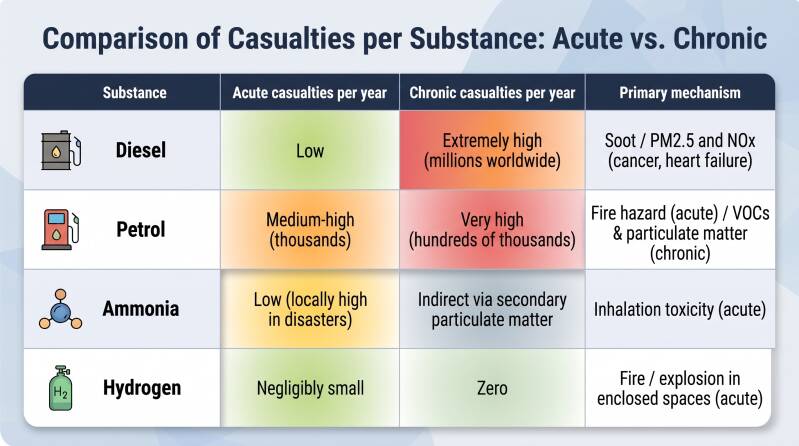
- Zero Direct Exhaust Deaths: Diesel emissions (PM_{2.5} and NO_x) cause hundreds of thousands of premature respiratory and cardiovascular deaths annually worldwide. Ammonia produces zero soot, zero particulate matter, and zero carbon emissions when utilized in clean energy pathways.
- Low Fire & Explosion Risk: Gasoline is exceptionally volatile (flashpoint ~ -40°C) and claims thousands of lives every year in vehicle fires and catastrophic transport explosions. Ammonia, by contrast, has a narrow flammability range (15–28%) and a very high ignition energy, making accidental fires extremely rare.
- Built-in Warning System: Hydrogen is odorless, colorless, and leaks easily through tiny gaps without human detection. Ammonia has an unmistakable odor threshold at just 5 ppm—long before reaching dangerous exposure levels—giving personnel immediate warning to evacuate or isolate leaks.
- Existing Global Safety Protocols: Unlike newer alternatives, ammonia has been handled, transported, and stored globally by the maritime and chemical fertilizer industries for over a century under mature, highly regulated safety frameworks.
While an acute ammonia leak demands strict industrial controls, it does not poison our urban air every single day like conventional combustion fuels do.
If we want a zero-carbon carrier that eliminates public health mortality without the volatility risks of hydrocarbons, ammonia deserves a second look.