Breaking the Ammonia Bottleneck: Pure NH_3 Conversion Without Pilot Fuel, Slip, or NO_x
While the global energy sector overwhelmingly views pure Ammonia (NH_3) as the ultimate zero-carbon fuel for heavy transport and power generation, the thermodynamic reality of traditional internal combustion engines presents a massive wall of engineering compromises.
Because of ammonia's slow flame speed and high auto-ignition temperature, traditional crankshaft engines are forced to rely on parasitic fossil "pilot fuels" to initiate combustion.
Even worse, they suffer from toxic ammonia slip caused by cold cylinder walls, and high thermal NO_x emissions that require heavy, expensive selective catalytic reduction (SCR) systems.
At Hydro Puls Direct-Drive (HPDD), we have bypassed these rigid mechanical constraints from first principles by moving entirely beyond the crankshaft.
By developing a software-defined, linear thermodynamic oscillator, we handle molecular kinetics directly at the source, unlocking a major milestone for the industry:
Zero Pilot Fuel: High-efficiency compression cycles are modulated in milliseconds via software, forcing pure NH_3 to ignite perfectly on its own without requiring diesel or hydrogen ignition support.
Zero Ammonia Slip: Thanks to our unpressurized siloxane thermal loop keeping a constant 230°C baseline, cold-boundary cylinder wall quenching is entirely eliminated. The ammonia achieves 100% complete thermal conversion.
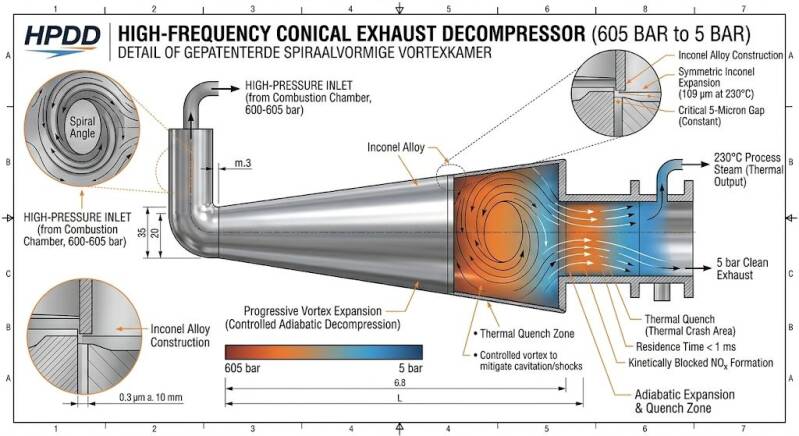
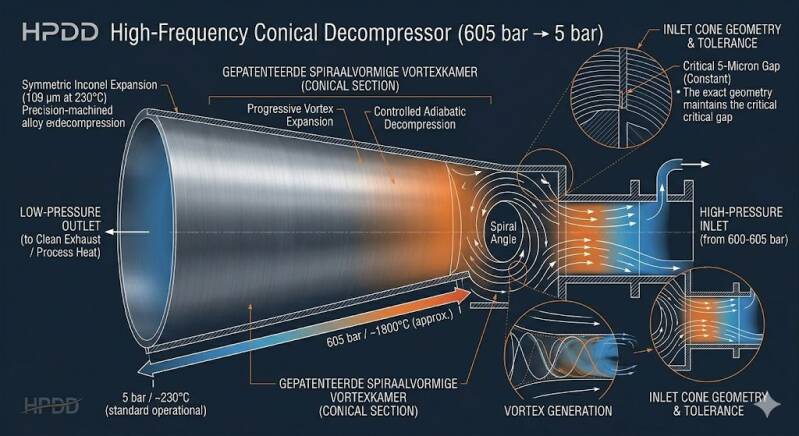
Inherent Zero NO_x: A software-defined triad of ultra-fast combustion and near-instantaneous exhaust expansion cooling freezes the molecular state, preventing thermal nitrogen oxide formation by design, completely bypassing the need for heavy SCR post-treatment.
Combined with a native +600 bar fluid baseline and our 230°C waste-heat stream for secondary energy recovery (ORC), the HPDD turns ammonia from a logistical headache into a highly efficient, economically viable reality.
The future of power generation isn't mechanical; it's software-defined.
I’m curious to hear from the experts in this group: How heavily do parasitic post-treatment systems and fuel-slip constraints impact your current deployment timelines for alternative fuels?
hashtagAmmonia hashtagEnergyTransition hashtagDecarbonization hashtagHydrogenEconomy hashtagCleantech hashtagHPDD hashtagThermodynamics
Vertaling weergeven