Transforming Maritime Sludge into Energy: Zero-Emission Onboard Processing via HPDD-ACR-VCD
Eliminating Shore Disposal OPEX While Recovering High-Grade Marine Fuel and Inert Minerals at Sea
The Maritime Challenge: A 40-Ton Monthly Liability
Under increasingly stringent MARPOL Annex VI regulations, managing shipboard waste has turned into a major logistical and financial burden. A standard 100,000 DWT container vessel running on heavy fuel oil generates roughly 30 to 40 tons of toxic, abrasive sludge every month.
- Prohibitive Offloading Costs: Shore-side disposal fees and port handling tariffs continue to escalate across global hubs.
- Decommissioned Assets: Traditional onboard incinerators are largely banned or heavily penalized due to emission limits, sitting idle as dead weight in vessel engine rooms.
- The Thermal Cracking Trap: Conventional attempts to thermally flash heavy sludge inside high-temperature coils inevitably cause severe inner-wall coking, heat-transfer degradation, and catastrophic line clogs.
The Solution: Acoustic Separation Replaces Brute-Force Heat
The HPDD-ACR-VCD (Acoustic Cavitation Reactor / Vapor Compression Distillation) platform brings the proven physics of heavy oil sands and bitumen separation directly into the marine engine room. By replacing vulnerable heated tubes with high-frequency pulse dynamics, the process mechanically breaks stubborn emulsions and isolates phases without reaching thermal cracking temperatures.
Core Process Architecture
1. Acoustic Shearing Over Thermal Shock (ACR)
Rather than relying on exterior pipe heating, the HPDD acoustic pulse generator introduces targeted high-frequency pressure waves directly into the homogenized sludge feed. Micro-cavitation implosions tear water and light fractions away from asphaltenes and coke at the molecular boundary layer, ensuring zero tube coking, zero surface hotspots, and continuous flow reliability.
2. Continuous In-Line Phase Separation (VCD)
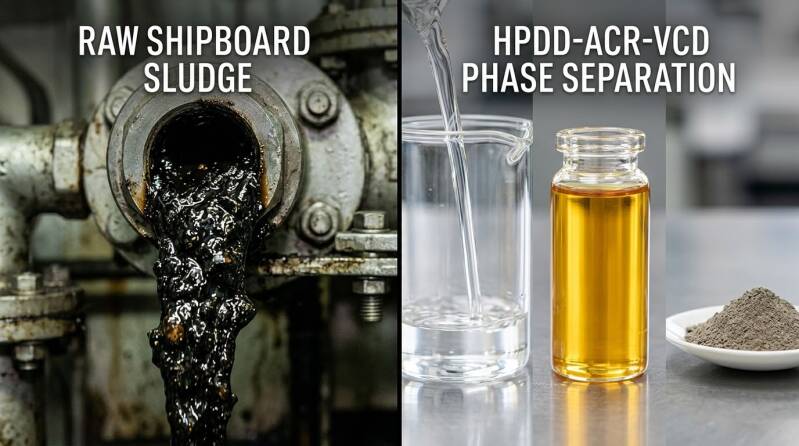
The acoustically energized mass discharges into an integrated dynamic vapor compression distillation chamber, continuously splitting the waste stream into three clean outputs:
- Recovered Marine Gas Oil: Lighter hydrocarbons vaporize and condense into usable clean fuel, routing directly back to onboard auxiliary systems.
- Clean Steam & Distillate: High-purity water vapor flashes off for engine room heat integration, boiler makeup, or clean discharge.
- Inert Mineral Powder: Heavy metals, catalytic fines (cat fines), and abrasive solids drop out as dry mineral dust, reducing 40 tons of wet sludge into a few easily handled bags for nominal offloading costs.
3. Smart Brownfield Integration
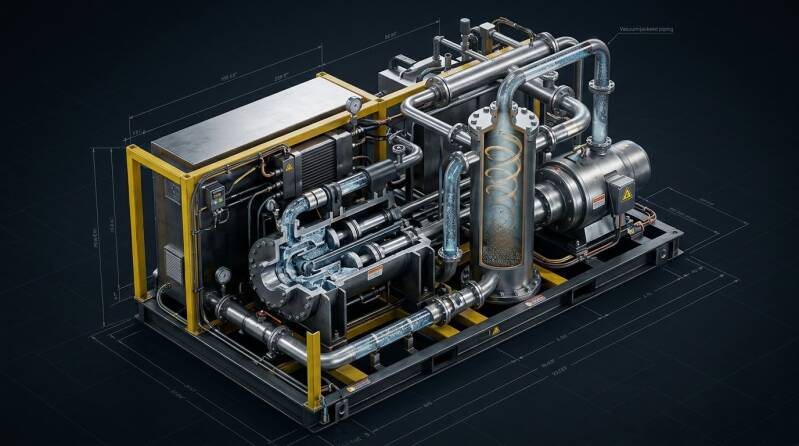
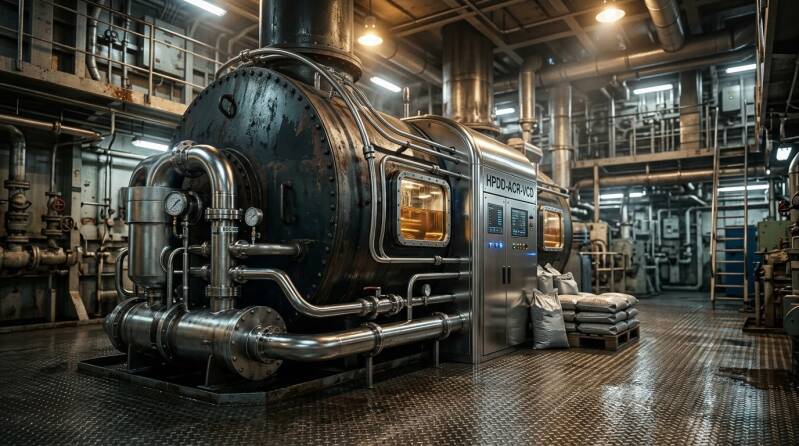
The entire HPDD-ACR-VCD module is engineered as an ultra-compact retrofit skid:
- Reuses Existing Infrastructure: Directly connects to the existing onboard sludge transfer pump and front-end homogenizer.
- Zero Structural Penalty: Mounts directly inside or alongside decommissioned incinerator housings, leveraging existing certified structural envelopes and thermal insulation.
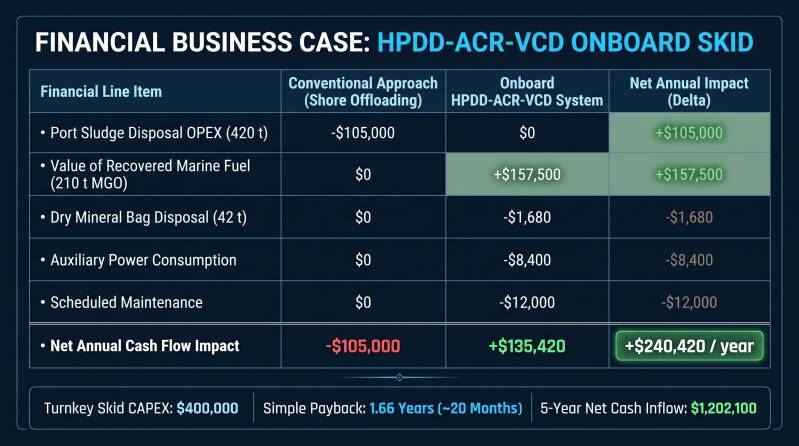
Operational & Economic Comparison
| Metric | Traditional Shore Disposal / Incineration | HPDD-ACR-VCD Onboard System |
|---|---|---|
| Sludge Handling | Paid disposal ashore (30–40 tons/month) | 100% processed continuously at sea |
| Fuel Recovery | 0% (Total operational loss) | High-yield recovery of clean, usable marine gas oil |
| Solid Waste Output | 30–40 tons of hazardous wet sludge | Minimal bags of dry, non-leaching mineral ash |
| Emissions Profile | Incinerator flue gas / Shore transport footprint | Zero open emissions; fully sealed closed-loop phase separation |
| Maintenance Profile | Severe coking risk in heated coils | Non-fouling acoustic shearing; no heated tube walls |