Primary Fuel Upgrading: Cleaner Heavy Fuel Oil & Source-Level Sludge Prevention via HPDD-ACR
Eliminate Sludge Formation Pre-Combustion, Curtail Harmful Emissions, and Optimize Engine Fuel Consumption
The Root Problem: Incomplete Combustion of Heavy Fractions
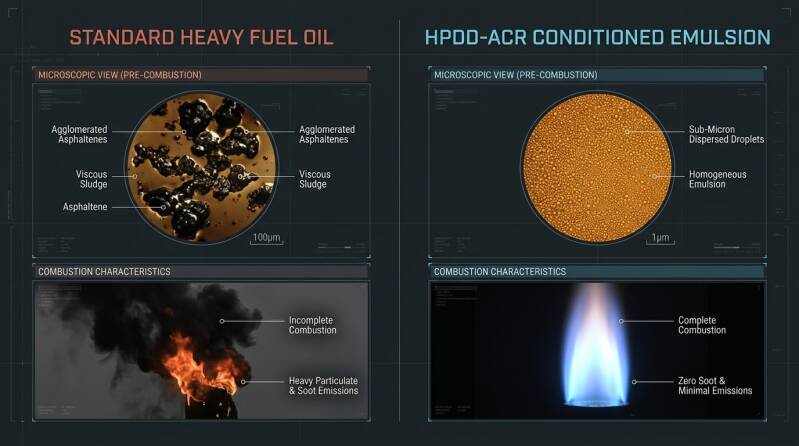
Conventional heavy fuel oils (HFO and VLSFO) carry dense concentrations of asphaltenes, heavy paraffins, and microscopic abrasive catalyst fines (cat fines). In standard fuel handling circuits, these heavy molecules agglomerate into unstable micelles:
- Massive Sludge Volumes: Unable to atomize properly, these clusters precipitate inside onboard separators and drain tanks—generating 30 to 40 tons of toxic waste every month on a typical 100,000 DWT vessel.
- High Black Carbon & Particulate Emissions: Oversized fuel droplets burn sluggishly in the cylinder core, creating heavy soot deposits, black smoke, and elevated particulate matter (PM).
- Severe Engine Wear: Abrasive aluminum and silicon particles trapped within dense hydrocarbon matrices cause ongoing scour damage to cylinder liners and piston rings.
The Primary Solution: Pre-Combustion Acoustic Cavitation (HPDD-ACR)
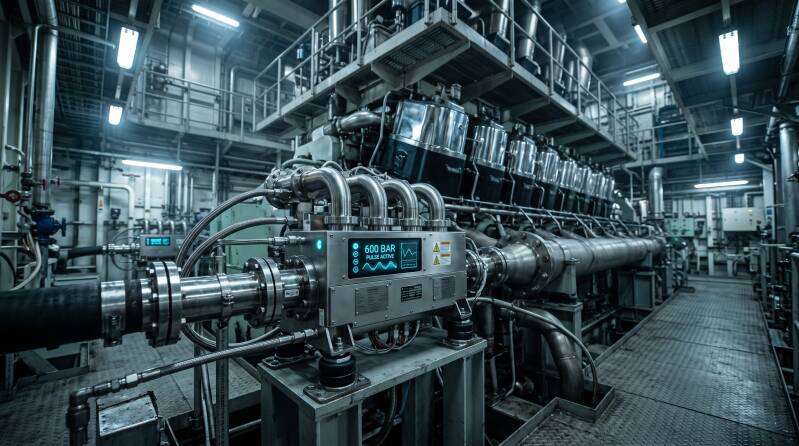
By positioning the HPDD-ACR (Acoustic Cavitation Reactor) module directly in the fuel feed line ahead of the high-pressure injectors, vessel management transitions from downstream waste handling to primary fuel conditioning. Intense acoustic pressure waves fundamentally recondition the physical state of the fuel without requiring chemical additives.
Operating Mechanisms & Technical Pillars
1. Mechanical Asphaltene De-agglomeration
High-frequency acoustic shockwaves generate extreme shear forces that dismantle the physical bonds binding asphaltene micelles together. The heavy hydrocarbon stream is transformed into an ultra-stable, homogeneous blend with lower dynamic viscosity and improved spray atomization at the injector tips.
2. Sub-Micron Emulsions & Secondary Micro-Explosions
By introducing and cavitating a small, precise fraction of recycled condensate or process water (5% to 10%), the ACR creates a tight micro-emulsion with droplet diameters under 2 microns. Upon entering the hot combustion chamber, the encapsulated water droplets flash vaporize prior to fuel ignition. This internal phase change disintegrates the surrounding oil envelope via secondary atomization, driving near-total combustion.
3. Acoustic Stripping of Abrasive Cat Fines
Dynamic cavitation pulses mechanically detach abrasive silica and aluminum fines from the viscous oil film, enabling continuous baseline separation before abrasive particulates reach high-pressure pumps and cylinder walls.
Operational & Environmental Impact
| Performance Metric | Standard Marine Fuel Treatment | With Primary HPDD-ACR Conditioning |
|---|---|---|
| Onboard Sludge Generation | 30–40 tons/month (High shore disposal costs) | 60% to 80% reduction; heavy fractions are cleanly combusted |
| Black Carbon & Particulate Matter (PM) | Elevated due to delayed core droplet burning | 40% to 60% reduction via secondary micro-explosions |
| Nitrogen Oxides (NOx) | High localized flame peak temperatures | 15% to 25% reduction through latent vaporization heat buffering |
| Specific Fuel Oil Consumption (SFOC) | Baseline reference | 2% to 4% net reduction at identical engine shaft output |
| Cylinder & Ring Wear | Continuous abrasion from cat fines and hard carbon | Substantially minimized deposits and early abrasive particulate separation |
The Closed-Loop Maritime Architecture
Combining primary conditioning with the HPDD-ACR-VCD platform establishes a fully integrated onboard fuel lifecycle:
- Primary (Pre-Combustion): HPDD-ACR treats incoming bunker fuel, lowers emissions, improves engine fuel economy, and prevents sludge from ever forming.
- Secondary (Residual Stream): Any minor residual waste stream is processed via the compact VCD skid into recoverable marine gas oil and dry, non-hazardous mineral ash.