Data centers - energy generation


HPDD v26: The Ultimate Zero-Emission Backup & Grid-Independent Power for Data Centers

Maximum Uptime, Minimum Footprint. Transition from Diesel and BESS to Green Ammonia Swarms.

Data centers are the backbone of the digital economy, but their reliance on massive diesel reserves for emergency power and multi-megawatt Battery Energy Storage Systems (BESS) for grid balancing represents a growing strategic risk, a massive capital expenditure (CAPEX), and an ecological burden.

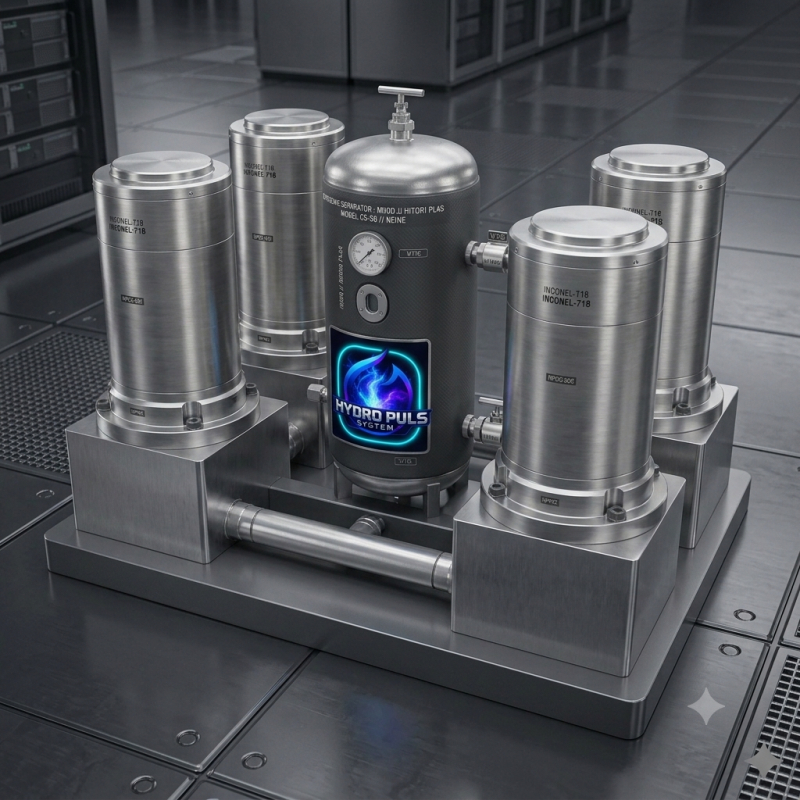
The Hydro Puls Direct-Drive (HPDD) platform offers a revolutionary alternative: a high-frequency, modular power platform that operates 100% emission-free on green ammonia or hydrogen, completely eliminating the need for both diesel generators and traditional battery parks.

🛡️ Why the HPDD v26 is the New Standard for Mission-Critical Power

  • Dynamic Swarm Scaling (The Death of BESS): Traditional infrastructure forces operators to invest in massive BESS setups simply to manage over-dimensioned, inflexible energy systems or grid volatility. The HPDD platform operates as a software-defined modular swarm. If your data center demand drops, you simply take individual containerized units offline; if it spikes, they spool back up instantly. This precise, real-time load matching is vastly cheaper, more efficient, and completely eliminates the high costs, degradation risks, and thermal runaway hazards of a giant battery park.
  • Instantaneous Response (Smart-Start): Thanks to our 600-bar hydraulic accumulators, the HPDD delivers power instantly. While the buffer bridges the initial milliseconds, the engine starts frictionlessly via our flash-heating technology. No "glow time", just immediate power security that outpaces conventional generators.
  • Infinite Life & Low Maintenance: In a data center, maintenance is a risk. The HPDD has no crankshaft, no piston rings, and no lubricating oil in the combustion chamber. The piston floats on a 620-bar nitrogen shield (25-micron gap). This ensures a system that lasts decades with a fraction of the maintenance required by traditional diesel engines.
  • Hermetic Safety (Inconel Bellows): Safety in and around the facility is priority number one. Our patented Inconel bellows guarantee a 100% leak-proof separation. Ammonia slip into the environment or technical rooms is physically impossible due to the hermetic seal.
  • Compact Density (2/3 Weight Saving): Space in a data center is premium. With our roadmap to 1000-bar hydraulics and frequencies up to 200 Hz, the HPDD v26 delivers more power per square meter than any traditional generator or massive chemical battery storage facility.

🔋 Sustainability as a Strategic Advantage

  • 62% Net Efficiency: Drastically reduce your operational expenses (OPEX). The HPDD is the most efficient converter of chemical energy into usable power currently on the market.
  • Mono-Fuel Purism: The HPDD requires no "pilot diesel." You can transition 100% away from fossil fuels and run entirely on the green ammonia value chain.
  • Waste Heat & Sub-Zero Cooling Loops: While a conventional BESS drains vast amounts of electricity just to run the HVAC systems needed to prevent its own thermal runaway, the HPDD platform does the exact opposite. It converts extreme expansion physics via integrated De Laval loops to co-generate industrial sub-zero immersion cooling down to to your data center at a parasitic load of exactly 0.0 kW. Concurrently, the 230°C residual heat from the siloxane jacket can be fed into the network via an ORC system, directly improving your PUE (Power Usage Effectiveness).
  • Net-Positive Water Generation: Data centers typically face severe regulatory backlash due to water consumption. Our clean-fuel architecture actively harvests thousands of liters of pure, technical-grade freshwater per hour through active exhaust condensation, turning the facility into a net-positive utility asset for the local region.

🛡️ Strategic Power Arguments for Data Centers:

  • The Pain: Diesel generators consume space, require frequent testing/oil changes, and emit soot. Meanwhile, heavy BESS installations add immense CAPEX, suffer from cell degradation, and drain power for their own cooling liabilities.
  • The Gain: The HPDD is virtually maintenance-free due to the absence of friction and replaces both assets with a single, modular, multi-output container swarm.
  • The Uptime: The combination of 600-bar accumulators and instant modular throttling ensures a faster load transfer, total grid independence, and infinite scalability without the burden of heavy battery storage or fossil fuels.

Frequently Asked Questions: Data Centers & Mission Critical Power

How does the HPDD ensure the "Five Nines" (99.999%) availability?

Availability is built into the architecture. Instead of relying on a single large standby generator, the HPDD uses a Modular Swarm Architecture. Multiple HPDD units operate in parallel. If one unit requires inspection, the others instantly compensate. This distributed redundancy eliminates the "Single Point of Failure" risk inherent in traditional backup systems.

Can the HPDD eliminate the environmental impact of diesel testing?

Yes. Data centers are often required to run "load bank" tests on their diesel generators, causing significant local emissions. The HPDD is Zero-Emission (on H2/NH3). Furthermore, because it is a software-defined transducer, it can perform self-diagnostic "micro-pulses" without full combustion, ensuring readiness without polluting the local environment.

How does the system handle the cooling requirements of a data center?

Data centers spend up to 40% of their energy on cooling. The HPDD is unique because it operates at an optimized temperature of 230°C. Instead of wasting this heat, the HPDD system can be integrated into Absorption Chillers. This turns the "waste heat" of the backup power process into "cooling power" for the server racks, dramatically improving the Power Usage Effectiveness (PUE).

Why is Ammonia (NH3) a better storage solution than diesel or batteries?

Diesel degrades over time and requires biocide treatments. Batteries are expensive, have a fire risk, and lose capacity. Ammonia is the ultimate long-term energy carrier. It can be stored indefinitely without degrading, has a higher energy density than batteries, and, unlike diesel, leaves no carbon residue in the engine or the atmosphere.

Is the system fast enough to replace or reduce UPS battery banks?

The HPDD is a high-frequency system capable of starting and reaching full load-bearing capacity in a fraction of the time of a traditional diesel engine. By pairing the HPDD with a small hydraulic accumulator, you can bridge the gap between grid failure and full power generation, allowing you to significantly reduce the size and cost of your Lithium-Ion UPS banks.

What are the maintenance implications for 24/7 facilities?

Traditional generators require intrusive maintenance every few hundred hours. The HPDD offers a 20,000+ hour maintenance-free interval. With no oil, no filters, and no vibrating crankshaft, the system remains in a state of "perpetual readiness" with minimal human intervention, reducing the risk of human error during maintenance windows.

Case Study Outline: HPDD-VYRON as an 'Autonomous Energy Heart' for Datacenters

1. Executive Summary

Datacenters face escalating pressure to reduce their energy consumption and carbon footprint, with cooling accounting for a massive portion of operational energy use. Traditional cooling rely on complex electrical chains that are inherently inefficient and dependent on the power grid. Furthermore, maintaining high uptime requires robust backup power systems, typically diesel generators, adding another layer of inefficiency, maintenance, and emissions.

VYRON technology offers a revolutionary alternative by integrating direct hydraulic cooling and emergency power into a single, highly efficient 'Autonomous Energy Heart.' This case study demonstrates how VYRON can significantly reduce operating expenses (OPEX), dramatically improve resource efficiency (water and energy), enhance reliability, and provide a clear pathway toward datacenter decarbonization.

2. Introduction: The Datacenter Cooling and Power Challenge

A brief overview of the current status and challenges facing datacenter infrastructure:

  • Growing Power Density: Modern IT equipment generates intense, concentrated heat, demanding increasingly aggressive cooling solutions.

  • Energy Consumption: Cooling systems represent a major operational expense and a significant portion of a datacenter's total energy budget.

  • Grid Dependency and Reliability: Dependence on the electrical grid for primary cooling power creates vulnerability, requiring extensive (and often dormant) backup infrastructure (UPS, generators).

  • Sustainability Imperatives: Operators are under intense pressure to meet sustainability goals, reduce PUE (Power Usage Effectiveness), and minimize water consumption (WUE).

3. The VYRON Solution: Direct Hydraulic Drive vs. The Traditional Electric Chain

This section details the Core Technological Shift.

A. The Traditional Electric Chain (Inefficiency by Design):

Analyze the standard process for powering heavy cooling loads (compressors and pumps), especially during backup scenarios:

  1. Grid/Backup Power: Electricity is sourced (or generated on-site by a diesel generator).

  2. Conversion (Inverter): Electricity is converted/conditioned, incurring energy losses (often 5-10%).

  3. Transmission & Transformation: Further losses occur as electricity moves through the facility.

  4. Conversion (Electric Motor): An electric motor converts electricity back into mechanical rotational energy (incurring losses, potentially 5-15%).

  5. Mechanical Load: The motor drives the compressor or pump.

Key Inefficiencies: Every conversion step (mechanical-to-electrical, electrical-to-mechanical) adds cumulative losses. Generators and electric motors are often oversized for peak loads, operating inefficiently at partial loads.

B. The VYRON Direct Hydraulic Drive (Efficiency by Simplicity):

Explain the VYRON approach as the 'Autonomous Energy Heart':

  1. Autonomous Energy Source: A high-efficiency internal combustion engine (optimized for specific fuel and constant-speed operation) or a flywheel system provides the core mechanical power.

  2. Direct Mechanical Coupling: The VYRON engine/flywheel drives a high-pressure hydraulic pump directly.

  3. Hydraulic Fluid Lines: Energy is transmitted efficiently via specialized hydraulic fluid.

  4. Hydraulic Motors: Hydraulic motors directly drive the compressors and pumps with exceptional efficiency across variable loads.

  5. Elimination of Stages: This approach completely removes the need for big inverters, large central electric motors, and the associated electrical conversion steps for these specific heavy loads.

Key Efficiency Advantages:

  • Minimized Conversion Losses: Energy remains in its most useful (mechanical/hydraulic) form for a longer duration.

  • Optimal Engine Efficiency: The primary engine can operate at its most efficient point, decoupled from the need to generate standard 50/60Hz AC electricity for the entire facility simultaneously.

  • Infinite Variable Speed Control: Hydraulic systems offer superior, energy-efficient speed control for pumps and compressors, perfectly matching cooling output to the instantaneous IT load.

  • Seamless Transition to Emergency Power: Since the cooling is driven directly by the VYRON 'heart', there is no delay or complex electrical switching required for the cooling system during a power outage. It is intrinsically redundant.

4. Synergetic Resource Recovery: Unlocking New Efficiencies

Beyond primary energy savings, the 'Autonomous Energy Heart' concept unlocks dramatic resource efficiency through simultaneous recovery:

A. Waste Heat Recovery (Thermal Energy):

Datacenters generate low-grade heat, but the VYRON engine/process can also generate high-grade waste heat.

  • Potential Applications:

    • Local District Heating: Supply heat to neighboring buildings or industrial processes.

    • Reheat for Cooling Towers: Optimize the performance of evaporative cooling towers.

    • Absorption Chillers: Potentially use high-grade heat to drive secondary cooling stages.

B. Water Vapor/Condensate Recovery (Water Resources):

Datacenter cooling, especially in humid environments, results in significant water condensate. Traditional systems often drain this water.

  • VYRON Integrated Recovery: The case study will explore technologies to efficiently capture and filter this condensate (e.g., using advanced dehumidification or recovery systems).

  • Potential Reuse Applications:

    • Makeup Water for Cooling Towers: Drastically reduce the need for external fresh water for adiabatic/evaporative cooling (aiming for up to 90% water recovery).

    • Industrial/Irrigation Reuse: Provide non-potable water for on-site or nearby needs.

5. Proposed Case Study Scope & Data Analysis

Detail the methodology and expected outcomes of the case study.

A. Facility Profile (Baseline): Describe a representative datacenter facility (size, IT load, existing cooling technology, geographical location, local utility rates).

B. System Comparison (Proposed): Provide a detailed engineering comparison of:

  1. Baseline Scenario: Traditional Chiller Plant (Air or Water-Cooled) with Diesel Generator Backup.

  2. Proposed Scenario: Integrated VYRON 'Autonomous Energy Heart' with Direct Hydraulic Cooling (Compressor/Pumps) and Waste Heat/Condensate Recovery.

C. Financial Analysis (TCO): Calculate Total Cost of Ownership (20-year horizon), including:

  • Capital Expenditure (CAPEX): Initial system costs.

  • Operational Expenditure (OPEX): Annual energy costs (fuel/electricity), water costs, and maintenance (comparing simplified maintenance of hydraulics vs. complex electrical systems).

  • Potential Revenue/Savings: Valuating recovered heat and water.

D. Resource Efficiency & Sustainability Metrics: Compare baseline vs. VYRON for:

  • PUE (Power Usage Effectiveness).

  • WUE (Water Usage Effectiveness).

  • Total Annual Carbon Emissions (scope 1 & 2).

6. Implementation Considerations

  • System Integration: Addressing the engineering challenges of integrating hydraulics into a traditionally all-electric facility.

  • Fuel Strategy: Discussing fuel choice for the VYRON engine (Natural Gas, Hydrogen, Biofuels) and its impact on PUE and carbon footprint.

  • Reliability and Maintenance: Examining the maintenance requirements and proven reliability of modern heavy-duty hydraulic and engine systems compared to electrical power electronics and switchgear.

  • Retrofit vs. Greenfield: Potential for applying the technology in existing facilities versus optimized greenfield designs.

7. Conclusion and Operator Recommendations

Summarize the key findings:

  • The VYRON 'Autonomous Energy Heart' provides a demonstrably superior path to energy efficiency for datacenter cooling by eliminating intermediate electrical conversion steps.

  • Simultaneous recovery of waste heat and condensate water dramatically reduces both PUE and WUE, addressing dual sustainability crises.

  • This approach enhances datacenter resilience by integrating cooling and emergency power.

  • Provide clear next steps for operators, including feasibility studies and pilot project identification.