


Strategic Application: High-Efficiency Desalination
The Hydro Puls Conductor (HPDD) for Reverse Osmosis (RO)
The HPDD v26 architecture serves as an ideal high-pressure source for water desalination, targeting a 40% reduction in specific energy consumption. While traditional RO systems require complex high-pressure pumps and energy recovery devices (ERDs), the HPDD operates natively at 600 bar, providing a continuous, high-intensity hydraulic stream.
Key Advantages for Desalination Plants:
-
Drastic Energy Reduction: The system targets a 40% reduction in energy demand, moving closer to the theoretical minimum energy requirement for desalination (approx. 1.1 kWh/m³).
-
Integrated Thermal Pre-heating: The HPDD’s internal heat exchangers provide "free" pre-heating of the feedwater. Pre-heated water has lower viscosity, which significantly reduces the osmotic pressure requirement and improves membrane permeability.
-
Exhaust-Derived Water Production: Beyond the desalination of seawater, the HPDD produces high-purity distilled water as a combustion byproduct from the hydrogen/ammonia oxidation in the exhaust stream, providing a secondary water source.
-
Extended Filter Longevity: The HPDD’s specific 50 Hz / 100 Hz pulsation frequency is optimized for membrane health. Controlled pressure pulses can help mitigate concentration polarization and fouling, extending the operational life of expensive RO membranes.
-
Ultra-High Pressure Capability: Unlike standard centrifugal pumps that peak at 70-80 bar, the HPDD can easily scale to higher pressures if the plant infrastructure permits. This allows for higher recovery ratios from high-salinity sources (brine mining) that are currently inaccessible to conventional technology.
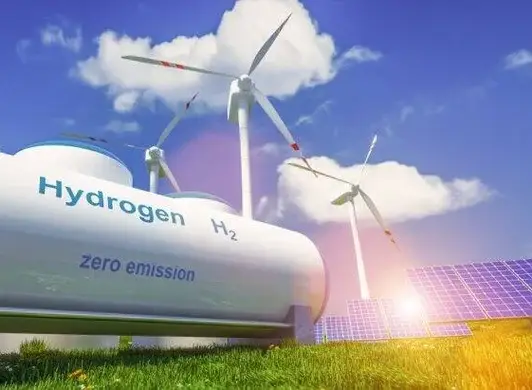
Hydrogen Mobility Reimagined: The On-Board 700-Bar Revolution
The Hydro Puls Direct-Drive (HPDD) architecture does more than just power the vehicle; it redefines the entire hydrogen supply chain. By utilizing the HPDD’s native high-pressure capabilities, the drivetrain itself acts as a primary compressor, capable of taking low-pressure hydrogen and boosting it to 700 bar on-board.
Eliminating Infrastructure Barriers
Traditional Hydrogen Refueling Stations (HRS) require multi-million euro investments in stationary high-pressure storage and cooling. The HPDD shifts this complexity to the vehicle:
-
90% Infrastructure Cost Reduction: Eliminates the need for expensive high-pressure ground station compressors.
-
Universal Accessibility: Allows for refueling from low-pressure (30-50 bar) local distribution lines or mobile tanks, making hydrogen viable in remote locations without massive infrastructure.
-
High-Speed Refueling: The HPDD-driven compression cycle is optimized for rapid gas transfer, matching or exceeding the refueling speeds of conventional 700-bar refueling stations.
Native Hydrogen Performance
While optimized for the NH3/H2 blend, the HPDD is natively hydrogen-ready.
-
Direct 700-Bar Utilization: The system’s 600-700 bar operating regime is perfectly aligned with high-density hydrogen storage standards.
-
Zero-Emission Synergy: Running on 100% green hydrogen, the HPDD provides a high-torque, ultra-efficient powertrain that outperforms both heavy-duty fuel cells and traditional internal combustion engines in power-to-weight and thermal management.

Decarbonizing the Giants: HPDD for Ultra-Class Mining Trucks
Mining operations demand relentless power under the harshest conditions. As the industry transitions toward Zero-Emission Mining, the Hydro Puls Direct-Drive (HPDD) offers a superior alternative to both battery-electric and fuel-cell powertrains for ultra-class haul trucks.
The Mining Advantage: Power without the Weight
In mining, every kilogram of battery is a kilogram of lost payload. The HPDD v26 redefines the efficiency of heavy-duty mobility:
-
65% Weight Reduction: By replacing massive diesel engines and heavy battery arrays with the compact, high-density HPDD Monolyth, we drastically increase the vehicle's effective payload and hill-climbing performance.
-
Direct Hydraulic Torque: The HPDD generates high-pressure fluid power (600+ bar) natively. This can be fed directly into hydraulic wheel motors, eliminating the energy losses of mechanical transmissions or complex DC-DC electrical conversions.
-
Rugged Longevity ($10^{11}$ Cycles): Unlike fuel cell membranes that degrade in dusty, high-vibration environments, the HPDD’s frictionless aerostatic design is built for the "24/7" reality of pit operations, targeting a 20,000-hour service life.
Solving the Infrastructure Gap
-
Self-Pressurizing Fueling: Using our on-board 700-bar compression logic, mining fleets can refuel from decentralized, low-pressure hydrogen or ammonia hubs, reducing the cost of mine-site infrastructure by 90%.
-
Thermal Resilience: Mining environments often face extreme temperatures. The HPDD’s integrated Siloxane Thermal Cascade ensures optimal cooling and heat recovery, even in deep-pit or high-altitude operations where traditional cooling systems fail.
Total Cost of Ownership (TCO) in the Pit
By switching from Diesel to an HPDD-powered NH3/H2 fleet, mine operators can expect:
-
Lower Fuel Costs: Thanks to the 62.0% LHV efficiency.
-
Zero Maintenance Downtime: No oil changes, no filter swaps, and no complex valvetrains.
-
Future-Proof Compliance: Full alignment with global "Green Mining" mandates and carbon-neutral certification.

The Future of Passenger Mobility: High-Performance, Zero-Emission, Zero-Compromise
The Hydro Puls Direct-Drive (HPDD) brings industrial-grade efficiency to the consumer driveway. For passenger vehicles, the HPDD marks the end of the compromise between environmental responsibility and daily practicality.
Why HPDD is the Ideal Powertrain for the Next Generation:
-
Unmatched Range & Rapid Refueling: Eliminate "charging anxiety." By running on a carbon-free NH3/H2 blend, you can refuel in minutes for a range of 1,000+ kilometers, matching the convenience of traditional fuels with zero emissions.
-
Revolutionary Interior Space: The compact, modular design of the HPDD Monolyth is 65% lighter and significantly smaller than a traditional combustion engine. This frees up unprecedented space for passengers and luggage by eliminating heavy transmissions and massive battery arrays.
-
Infrastructure Breakthrough: The biggest barrier to hydrogen cars is the cost of refueling stations. With on-board 700-bar compression, an HPDD-powered car can refuel from simple, low-pressure distribution points. This reduces the cost of a nationwide refueling network by 90%, making hydrogen truly accessible.
-
Maintenance-Free Ownership: No oil changes, no filter swaps, and no mechanical wear. Our frictionless aerostatic bearings ensure the powertrain outlasts the vehicle itself. Your car performs like new, year after year, with near-zero service requirements.
-
Superior Driving Dynamics: The HPDD delivers immediate hydraulic torque, providing smooth, powerful acceleration and a "zero-vibration" cabin experience previously reserved for the ultra-luxury segment.
Sustainability Without Subsidy
While Battery Electric Vehicles (BEVs) rely heavily on scarce raw materials for batteries, the HPDD utilizes sustainable, recyclable materials like Inconel and steel. Combined with a record 62% system efficiency, the HPDD offers the lowest Total Cost of Ownership (TCO) for the private driver—delivering a green solution that is economically viable even without government subsidies.

The New Standard for Long-Haul Logistics: Maximum Payload, Zero Emissions
In the world of road transport, every kilogram of drivetrain weight is a kilogram of lost profit. The Hydro Puls Direct-Drive (HPDD) transforms logistics by combining unprecedented thermal efficiency with a radical reduction in system mass.
Strategic Advantages for the Trucking Industry:
-
65% Weight Reduction: Conventional diesel engines and their complex after-treatment systems are heavy. Battery packs for long-haul trucks are even heavier (often adding 3 to 5 tons). The HPDD v26 is ultra-compact and lightweight, significantly increasing the net payload capacity of the vehicle.
-
1,000 km+ Range: With a record 62.0% LHV efficiency and the high energy density of hydrogen and ammonia, the HPDD effortlessly covers long distances. This enables international logistics without the operational constraints and charging downtime of current electric trucks.
-
On-Board 700-Bar Compression: The biggest barrier to hydrogen trucking is the lack of high-pressure infrastructure. The HPDD can compress hydrogen to 700 bar on-board. This allows transporters to refuel from simple, low-pressure depots, reducing the investment costs for dedicated refueling stations by 90%.
-
Indestructible & Low Maintenance: Designed for a 20,000-hour service life with near-zero mechanical wear (thanks to frictionless aerostatic bearings), the HPDD minimizes the Total Cost of Ownership (TCO). No oil changes, no filter swaps, and no unscheduled downtime.
-
Direct Hydraulic Torque: The HPDD delivers immediate power for heavy loads and steep gradients. Its vibration-free operation improves driver comfort and reduces structural fatigue on the chassis and components.
Bridging the Infrastructure Gap
The HPDD is not just an engine; it is a "Power-Plant-in-a-Box" ready for the transition to green ammonia and hydrogen. It provides the transport sector with a profitable, scalable pathway to full decarbonization without compromising on performance or mission readiness.


Decarbonizing Rail: The High-Power Alternative to Catenary Lines
Over 40% of the European rail network remains non-electrified, relying on heavy, CO2-emitting diesel locomotives. The Hydro Puls Direct-Drive (HPDD) offers a high-density, carbon-free propulsion system that outperforms both traditional diesel-electric and emerging battery-train technologies.
The Strategic Advantage for Rail Operators:
-
Seamless Grid Integration: The HPDD v26 provides the consistent, high-intensity power required for freight and regional passenger rail. By utilizing a carbon-free NH3/H2 blend, operators can achieve Zero-Emission targets without the extreme capital expenditure of installing overhead catenary lines.
-
Superior Energy Density: Battery-powered trains are limited by weight and charging downtime, making them unsuitable for long-haul freight or high-frequency regional lines. The HPDD’s 62.0% LHV efficiency ensures a range that matches or exceeds current diesel locomotives, with refueling times under 20 minutes.
-
Frictionless Reliability ($10^{11}$ Cycles): Rail maintenance is a major cost driver. The HPDD’s frictionless aerostatic bearings eliminate traditional engine wear. With a projected service life of 20,000+ hours, the HPDD drastically reduces "Down-Time-per-Kilometer" and operational overhead.
-
Decentralized Infrastructure (90% Cost Saving): Traditional hydrogen rail projects are stalled by the cost of 700-bar refueling stations. The HPDD’s on-board compression technology allows trains to refuel from low-pressure hydrogen depots, making decentralized branch lines economically viable for the first time.
-
Modular Power Scaling: The HPDD’s axially mirrored design (sum F = 0) allows for multi-core scaling. By parallelizing HPDD units, locomotives can scale from 1 MW to 5 MW+, providing the massive torque required for heavy-haul freight while maintaining 100% vibration-free operation.
Rail Performance Metrics (HPDD Advantage):
-
PROPELLANT: Green Ammonia / Hydrogen (Carbon-Free)
-
INFRASTRUCTURE: 90% lower cost vs. high-pressure stations
-
SERVICE LIFE: 20,000+ Operational Hours
-
MAINTENANCE: Near-zero mechanical wear
-
EMISSIONS: Zero CO2, Zero-Impact NOx (<10 ppm)

Sustainable Maritime Propulsion: High-Density Power for Global Shipping
The maritime industry faces its greatest challenge: achieving IMO decarbonization targets without sacrificing cargo space or operational range. The Hydro Puls Direct-Drive (HPDD) provides the only viable carbon-free solution for the next generation of "Green Shipping."
The Maritime Edge: Efficiency at Sea
-
Optimized for Green Ammonia (NH3): Ammonia is the maritime fuel of the future due to its superior energy density and ease of storage at sea. The HPDD is natively designed to handle NH3/H2 blends, delivering a 62.0% LHV efficiency that drastically reduces fuel consumption and operational costs.
-
Massive Payload Gains: Space is money on a vessel. The HPDD Monolyth is 65% lighter and significantly more compact than traditional low-speed two-stroke diesel engines. This weight saving allows for increased cargo capacity (TEU) or additional fuel storage for trans-oceanic routes.
-
Pure Water Production: A unique byproduct of the HPDD’s hydrogen/ammonia combustion is high-purity distilled water. This can be integrated into the ship’s freshwater systems, reducing the need for separate desalination units.
-
Frictionless Resilience in Saline Environments: Traditional engines suffer from accelerated wear in corrosive maritime environments. The HPDD’s hermetically sealed Inconel core and frictionless gas bearings ensure a 20,000-hour service life, even under continuous heavy-load conditions.
-
Zero-Vibration Hull Integrity: The HPDD’s perfectly balanced twin-core architecture (sum F = 0) eliminates the low-frequency vibrations that cause structural fatigue in hulls and discomfort for crews. This "silent" operation is ideal for passenger cruise ships and research vessels.
Bunkering Innovation: The 90% Savings
The HPDD’s on-board compression capability eliminates the need for expensive high-pressure bunkering infrastructure at ports. Vessels can refuel from existing ammonia terminals and low-pressure hydrogen storage, reducing the investment required for "Green Ports" by 90%.
Maritime Comparison Summary:
-
FUEL SYSTEM: Green Ammonia & Hydrogen (Zero Carbon)
-
ENERGY RECOVERY: Integrated Siloxane ORC for maximum waste-heat harvesting
-
WEIGHT: ~80% reduction vs. conventional marine engines
-
MAINTENANCE: Near-zero (no oil, no filters, no mechanical friction)
-
EMISSIONS: Zero CO2, Zero-Impact NOx (<10 ppm)

Aviation Excellence: High-Altitude Power without the Weight
In the aerospace sector, weight is the ultimate enemy. The Hydro Puls Direct-Drive (HPDD) architecture provides the high-density propulsion required for the next generation of zero-emission helicopters and VTOL (Vertical Take-Off and Landing) aircraft.
The Aerospace Advantage: Elevating Performance
-
Unrivaled Power-to-Weight Ratio: Traditional turboshaft engines are light, but they are inefficient and rely on fossil fuels. Battery systems for flight are crippled by their mass. The HPDD v26 offers a 65% mass reduction compared to any piston-based alternative, enabling zero-emission flight without sacrificing payload or passenger capacity.
-
Fuel Density & Range: By utilizing a carbon-free NH3/H2 blend, HPDD-powered helicopters achieve the energy density required for long-distance search and rescue, medical transport, and heavy-lift logistics—missions that are currently impossible for battery-electric flight.
-
Vibration-Free Precision: Critical for rotorcraft integrity, the HPDD’s perfectly balanced architecture ($\sum F = 0$) eliminates the low-frequency vibrations that cause fatigue in airframes and cockpit instrumentation. This results in a smoother flight and reduced maintenance for the entire rotor assembly.
-
High-Altitude Thermal Management: The HPDD’s integrated Siloxane Thermal Cascade ensures consistent performance in thin, cold air. Unlike traditional engines that lose significant efficiency at altitude, the HPDD’s 600-bar induction logic maintains a stabilized power output regardless of atmospheric pressure.
-
Failsafe Reliability: With a 20,000-hour service life and frictionless aerostatic bearings, the HPDD provides the extreme reliability required for aviation safety standards. The elimination of complex oil-lubrication systems reduces the risk of in-flight mechanical failure.
Refueling the Future of Flight
The HPDD’s on-board compression technology allows helicopters to refuel from decentralized, low-pressure hydrogen hubs at remote helipads. This eliminates the multi-million dollar investment required for high-pressure aviation refueling infrastructure, making zero-emission flight viable for regional operators.
Aviation Performance Metrics:
-
PROPELLANT: Carbon-Free Ammonia/Hydrogen
-
WEIGHT: Ultra-lightweight Inconel Monolyth architecture
-
ALTITUDE STABILITY: Stabilized 600-bar induction cycle
-
MAINTENANCE: Near-zero (no oil, no filters, no mechanical friction)
-
EMISSIONS: Zero CO2, Zero-Impact NOx (<10 ppm)
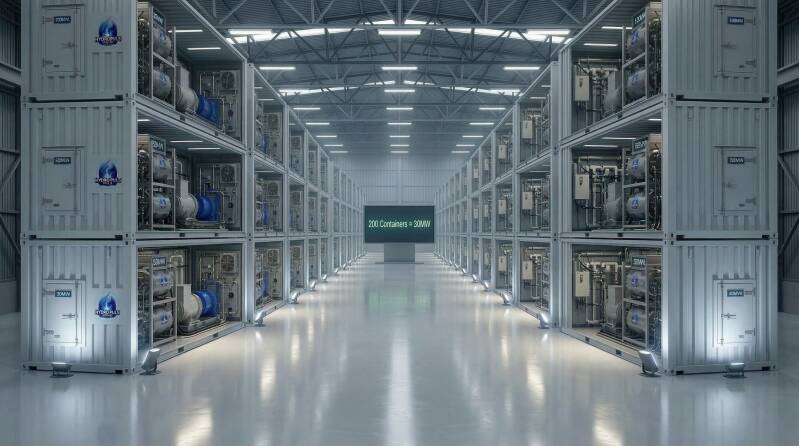
Modular Energy Containers: The "Power-Plant-in-a-Box" Revolution
The energy landscape is shifting toward decentralized, resilient, and carbon-free power. The Hydro Puls Direct-Drive (HPDD) architecture enables a massive amount of power to be packed into a standard ISO container, creating a mobile, scalable, and zero-emission utility grid.
The Modular Advantage: Grid-Scale Power Anywhere
-
Ultra-High Power Density: Because the HPDD Monolyth is 65% lighter and significantly more compact than any traditional generator set, we can fit more megawatts per square meter. A single containerized HPDD array can replace an entire building of conventional diesel generators.
-
Fuel-Flexibility for the Green Grid: Our energy containers run on a carbon-free NH3/H2 blend. This allows grid operators to store energy in the form of Green Ammonia—the most stable and energy-dense carrier—and convert it back to electricity with a record 62.0% LHV efficiency.
-
Zero-Vibration Urban Deployment: Traditional generators produce noise and ground vibrations that limit their use in residential or hospital environments. The HPDD’s perfectly balanced architecture ($\sum F = 0$) is virtually silent and vibration-free, allowing for "invisible" deployment in the heart of the city.
-
Instant Load Response: For grid stabilization (Peak Shaving), response time is everything. The HPDD’s high-frequency 100 Hz operation allows for sub-millisecond adjustments to power output, providing the rapid frequency response needed to balance volatile renewable energy sources like wind and solar.
-
Autonomous & Maintenance-Free: Designed for 20,000+ hours of operation with near-zero maintenance. The frictionless aerostatic bearings and the absence of an oil-lubrication system make these containers ideal for remote, unmanned locations (off-grid mining, islands, or telecommunications hubs).
Infrastructure Breakthrough: 90% Cost Reduction
Each HPDD energy container features integrated 700-bar compression logic. This means the container can be refilled from simple, low-pressure hydrogen or ammonia tanks. There is no need for multi-million dollar high-pressure pumping stations at the deployment site, making decentralized power economically viable for the first time.
Energy Container Performance Profile:
-
CONFIGURATION: Scalable 1 MW to 10 MW+ arrays per container
-
EFFICIENCY: 62.0% Net System Efficiency (LHV)
-
START-UP TIME: Ultra-fast cold start for emergency backup
-
MAINTENANCE: Remote monitoring, near-zero physical intervention
-
EMISSIONS: Zero CO2, Zero-Impact NOx (<10 ppm)

Heavy Construction & Earthmoving: Industrial Power Without the Downtime
The next generation of excavators and bulldozers requires more than just clean energy—they require relentless torque and 24/7 availability. The Hydro Puls Direct-Drive (HPDD) is engineered to outperform traditional diesel engines while eliminating the weight and infrastructure barriers of battery-electric machinery.
The Construction Advantage: Native Hydraulic Performance
-
Direct High-Pressure Hydraulics: Excavators and bulldozers are hydraulic machines. The HPDD generates high-pressure fluid power (600+ bar) natively. By eliminating the need for a separate engine-to-pump conversion, the system reduces energy losses and provides instantaneous, massive breakout force.
-
Payload & Balance: Every kilogram saved on the powertrain is a kilogram added to the lifting capacity. The HPDD’s 65% mass reduction allows for a more compact machine design with a lower center of gravity, improving stability on steep gradients and soft terrain.
-
Frictionless Resilience in Dust and Grit: Construction sites are brutal. While fuel cells are sensitive to air quality and batteries struggle with vibration, the HPDD’s hermetically sealed Inconel core and frictionless gas bearings are immune to external dust and high-impact vibrations.
-
20,000-Hour Service Life: Mining and earthmoving equipment must work around the clock. The HPDD targets a 20,000-hour lifespan with near-zero maintenance. No oil changes, no fuel injectors to clog, and no complex valvetrain to fail.
-
Zero-Emission Urban Operation: Meet increasingly strict "Green Zone" city requirements without sacrificing power. The HPDD delivers a record 62.0% efficiency using carbon-free NH3/H2, with a noise and vibration profile significantly lower than any diesel equivalent.
On-Site Refueling Revolution: 90% Infrastructure Savings
Logistics are the biggest challenge on a job site. The HPDD’s on-board 700-bar compression logic allows heavy machinery to refuel from simple, low-pressure mobile hydrogen tanks. This eliminates the need for multi-million dollar high-pressure refueling stations at the construction site, making zero-emission operation practical and affordable.
Heavy Machinery Performance Profile:
-
POWER SOURCE: Carbon-Free Ammonia & Hydrogen
-
SYSTEM INTEGRATION: Native high-pressure hydraulic output
-
UPTIME: Rapid <10 minute refueling
-
DURABILITY: Frictionless design built for high-vibration impact
-
INFRASTRUCTURE: 90% cost reduction via low-pressure refueling

Tactical Superiority: High-Density Power for the Modern Battlespace
Modern military operations require a shift toward high-energy autonomy and reduced thermal signatures. The Hydro Puls Direct-Drive (HPDD) provides a rugged, zero-emission power platform that enhances the stealth and logistical footprint of armored vehicles, mobile command centers, and unmanned platforms.
The Defense Advantage: Power Under Fire
-
Low Thermal & Acoustic Signature: Survival depends on remaining undetected. The HPDD’s perfectly balanced twin-core architecture ($\sum F = 0$) eliminates low-frequency vibrations, while the Siloxane Thermal Cascade ensures that exhaust exit temperatures are kept significantly lower than traditional internal combustion engines, drastically reducing the vehicle's infrared (IR) signature.
-
Logistical Freedom (Refuel Anywhere): The HPDD’s on-board 700-bar compression logic is a strategic breakthrough. Military units can refuel from decentralized, low-pressure hydrogen or ammonia sources. This eliminates the vulnerability of high-pressure fueling convoys and reduces the cost of forward-base infrastructure by 90%.
-
Rugged Reliability & No Maintenance: In the field, downtime is a liability. The HPDD’s frictionless aerostatic bearings and hermetically sealed Inconel core are immune to sand, dust, and extreme vibrations. With a 20,000-hour service life and zero oil requirements, the logistics chain for lubricants and filters is entirely eliminated.
-
Extreme Power Density for Directed Energy: Modern defense systems—including high-power radar and directed-energy equipment—demand massive, instantaneous electrical or hydraulic surges. The HPDD v26 delivers a record 62.0% efficiency, providing the high-density energy required for advanced electronic warfare without the bulk of a traditional power plant.
-
Silent Watch & Instant Response: The 100 Hz operating frequency and piezo-electric control allow for nearly instantaneous power ramps. This enables "Silent Watch" capabilities with rapid transition to full combat mobility, all while maintaining the highest energy density currently available in a zero-emission platform.
Multi-Domain Deployment
-
Land: Armored Personnel Carriers (APCs) and Main Battle Tanks (MBTs) with increased payload and reduced noise.
-
Sea: Unmanned Surface Vessels (USVs) and stealth littoral craft with vibration-free hull integrity.
-
Air: Heavy-lift VTOL drones and tactical helicopters with superior power-to-weight ratios.
Tactical Performance Profile:
-
FUEL SOURCE: Carbon-Free Ammonia/Hydrogen (Non-flammable storage options)
-
STEALTH: Significantly reduced Thermal (IR) and Acoustic signatures
-
DURABILITY: Frictionless Inconel architecture; Infinite-life HCF (10^{11} cycles)
-
LOGISTICS: 90% reduction in refueling infrastructure footprint
-
MAINTENANCE: Zero oil, zero filters, zero field-service requirements