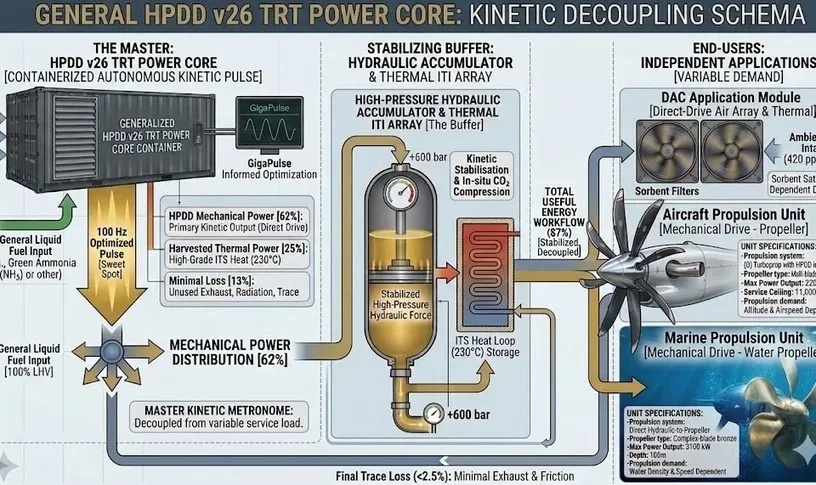
Why the HPDD never has to "hunt" for its sweet spot.
⚙️ One of the most frequent questions we receive is:
"How does the HPDD react to the fluctuating demands of a hydrogen pump, a battery, or a generator?"
The answer is simple, yet revolutionary: It doesn’t.
There is a fundamental aspect of our architecture that is often misunderstood, but it is the secret behind our record-breaking 61.3% mechanical efficiency: the total decoupling of generation and consumption.
The Hydraulic Accumulator: Our 'Liquid Battery'
In a traditional system, the engine must react instantly to the load.
This leads to massive efficiency losses, wear and tear, and thermal stress.
The HPDD architecture changes the game:
Constant Optimum: The HPDD module ALWAYS operates at its ideal peak-performance point (the perfect RPM and pressure).
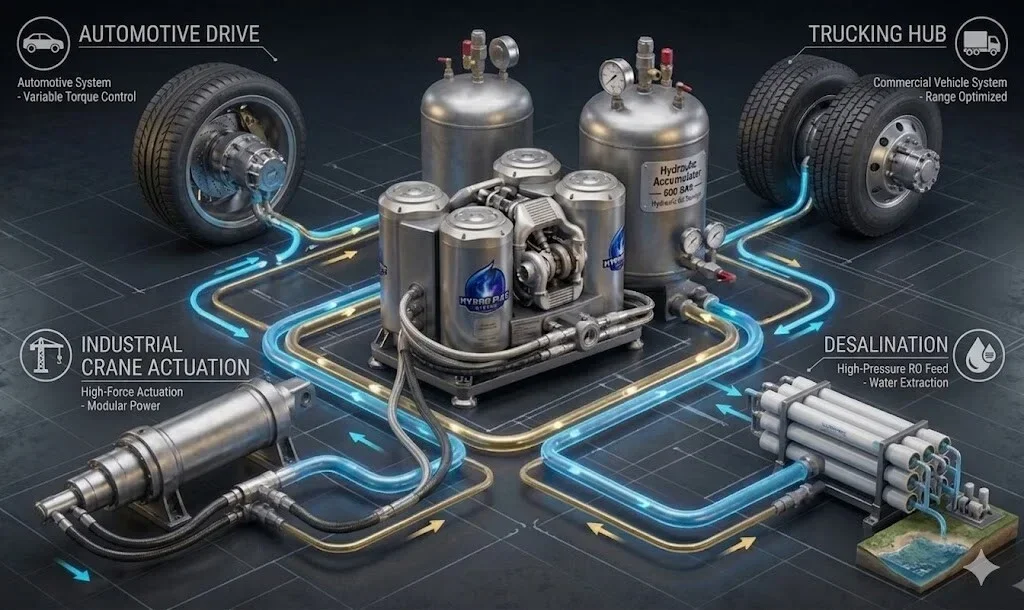
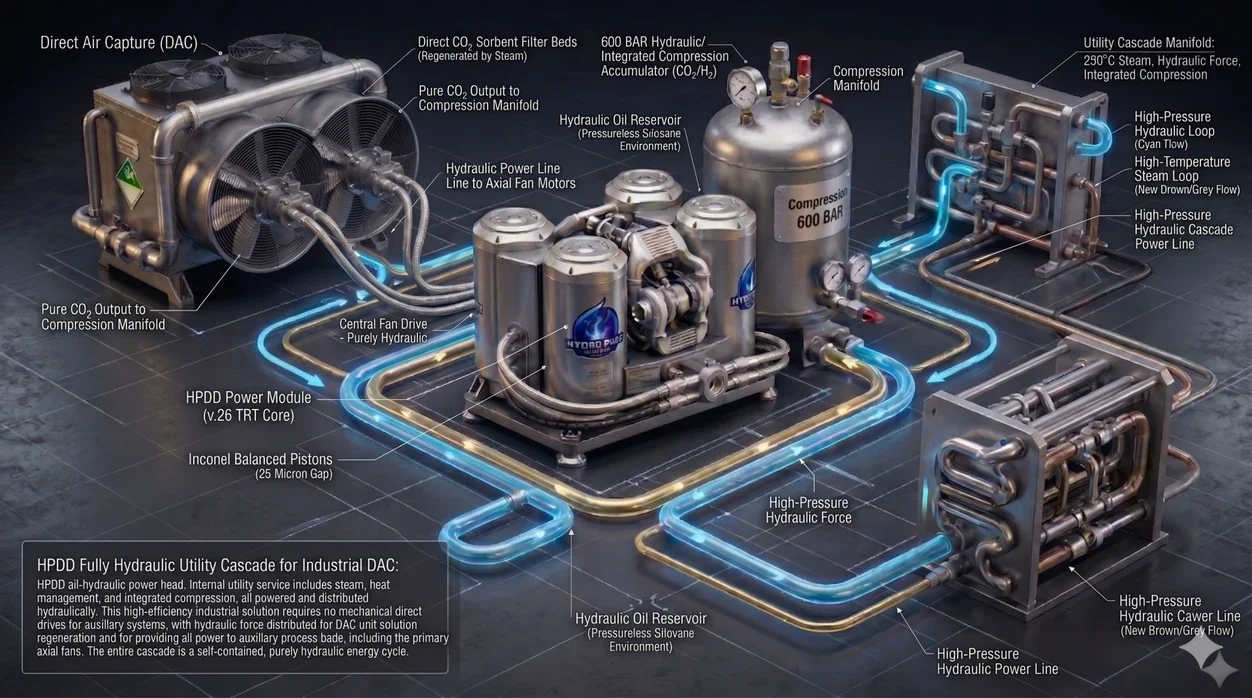
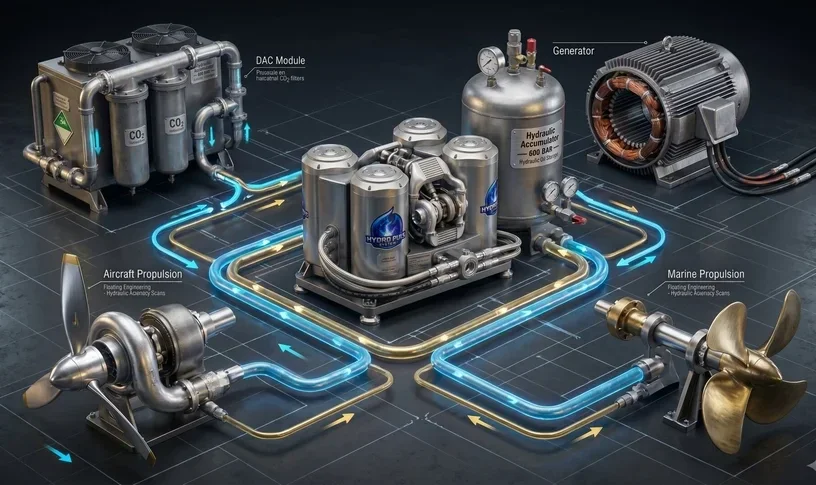
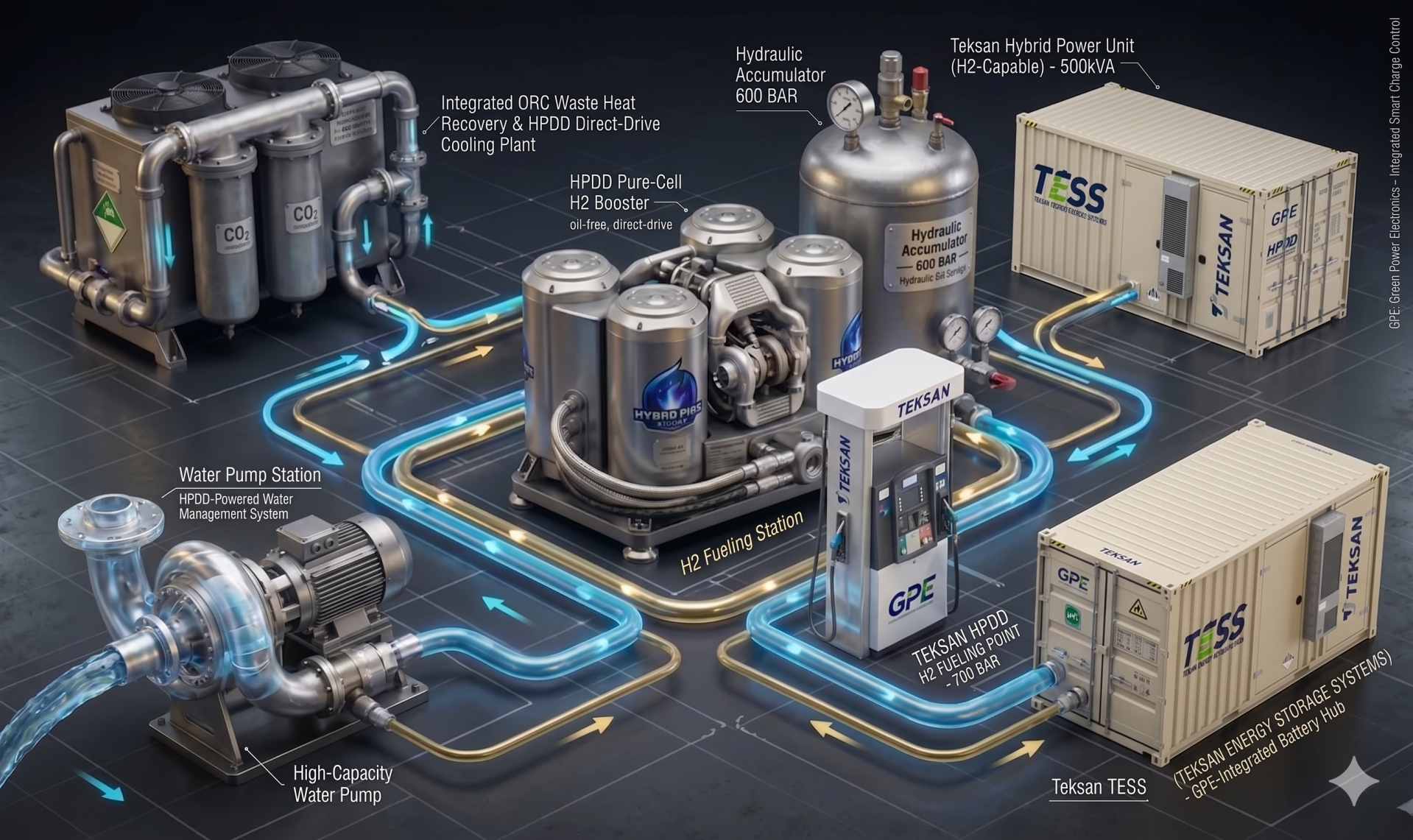
The Accumulator as the Interface: The module pumps its energy into an integrated 600-bar hydraulic accumulator.
This acts as a high-density buffer of "liquid energy."
Independent Consumers: Whether a water pump is active, a battery is being charged via GPE electronics, or a truck is refueling with 700-bar hydrogent, they all draw their energy from the accumulator, not directly from the HPDD.
Why this is a 'Game Changer' for the Industry:
✅ Zero Partial-Load Losses: The motor never runs inefficiently just because demand is low.
✅ Instant Power: The accumulator provides immediate pressure. No "spinning up" required.
✅ Multi-Utility Versatility: Because of this central buffer, we can power multiple applications (H2, electricity, water management) simultaneously without compromising the efficiency of the source.
The HPDD is not a traditional engine; it is a Liquid Energy Hub.
By separating the source from the consumer, we eliminate the greatest enemy of efficiency: variable load.
The future of energy isn't about working harder, it’s about buffering smarter.
💧⚡Have questions about how this hydraulic decoupling works for your specific application? Let’s connect!
#HPDD #Innovation #Hydraulics #Efficiency #EnergyTransition #Engineering #HydrogenEconomy #CleanTech #HydroPulsSystems #DecoupledPower