Technical Dossier: Project "Hydro-Pulse Aero"
Purpose: This dossier serves as the foundation for certification and advanced R&D of the Hydro-Pulse Aero engine. It is specifically engineered for the aviation sector, where weight-to-power ratio, thermal efficiency, and redundancy are the critical success factors.
Concept: Crankshaft-less Fluid-Elastic engine with integrated Waste Heat Recovery (ORC).
Application: Aviation (eVTOL, Cargo Drones, Light Sport Aircraft).
Status: Design Freeze / Prototype Phase 1.
1. System Architecture & Operating Principle
The Hydro-Pulse engine represents a radical departure from traditional internal combustion engines by replacing all rotating and friction-prone components (piston rings, crankshafts, connecting rods) with a fluid-elastic system.
1.1 The Primary Cycle (Combustion)
- Core: A hermetically sealed Inconel 718 bellows.
- Process: Direct injection of HVO100 (or Hydrogen/SAF) into the bellows. The explosive expansion forces the bellows into a linear movement (pulse).
- Advantage: Zero mechanical friction; 100% containment of combustion gases; extremely high fatigue limit.
- 1.2 The Secondary Cycle (Thermal Harvesting)
- Medium: Siloxane (D5) in a closed Organic Rankine Cycle (ORC).
- Function: The siloxane jacket encapsulates the bellows, absorbing waste heat (reducing Delta T from 800°C to 230°C).
- Output: The resulting vapor drives a micro-turbine, generating electrical power for onboard systems or providing an electric "top-up" for the propulsion unit.
- 1.3 The Tertiary Cycle (Hydraulic Output)
- Medium: Synthetic fire-resistant ester.
- Pressure: Nominal 350 bar (with roadmap to 1,000 bar).
- Mechanism: The bellows pulse displaces the fluid through ceramic high-speed valves into a central nitrogen accumulator.
TECHNICAL DOSSIER: AIRBUS A320 HYDRO PULS GEN1 ULTRA
The Transformation of Aviation Toward Thermodynamic Perfection
1. CORE ENGINE ARCHITECTURE: THE HYDRO PULS PRINCIPLE
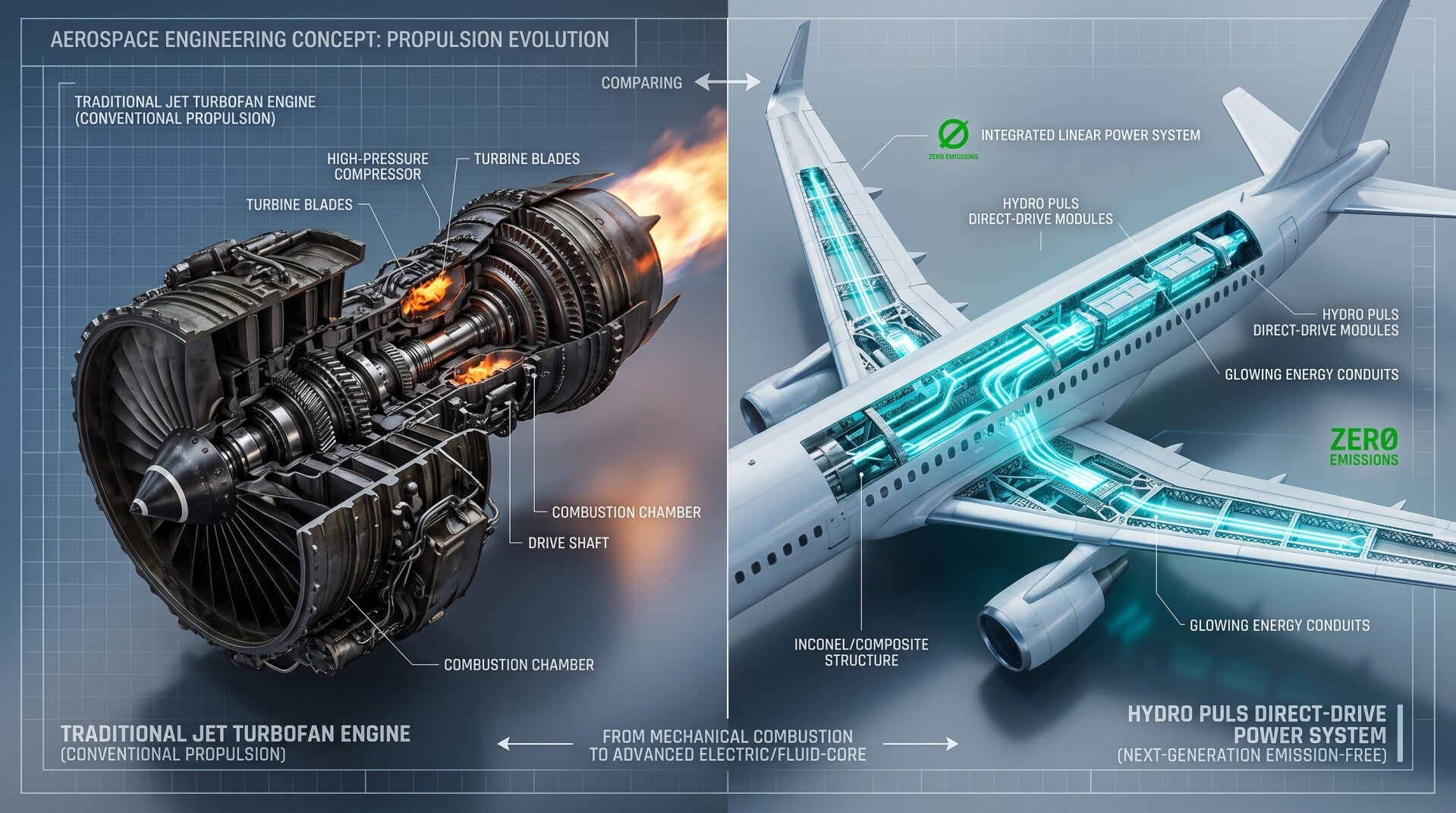
The system is built on the modular 120/160/240 Gen1 unit, replacing traditional combustion turbines with a direct-interface fluidic motor.
- Combustion Chamber (40 mm): Utilizing Plasma technology with a 1/22 compression ratio. The 20 mm thick walls serve as a thermal buffer for the Organic Rankine Cycle (ORC).
- The Piston (40 mm): A hollow, ultra-lightweight piston with labyrinth sealing, transferring combustion pressure to a nitrogen cushion.
- The Inconel Bellows Interface (160 mm): A multi-layer Inconel 718 bellows separates the nitrogen gas from the siloxane fluid. In this pressure-balanced configuration (350 bar on both sides), the bellows operate as a frictionless separator, ensuring a maintenance-free lifespan of 20,000 hours.
- Efficiency: Integrating an ORC turbine (block heat harvesting) and an exhaust heat pump results in a total system efficiency of >80%.
2. AIRCRAFT INTEGRATION & AERODYNAMICS
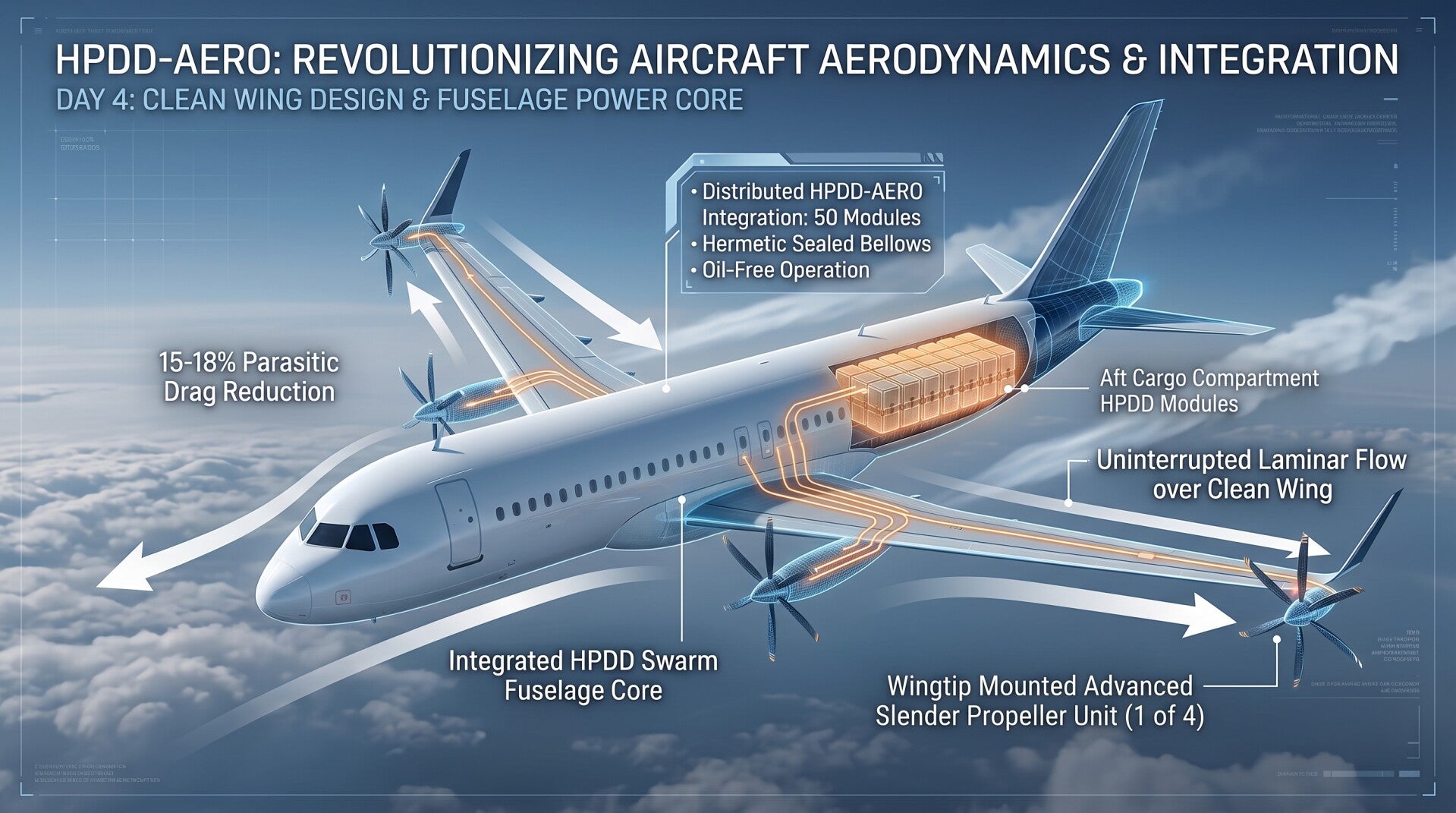
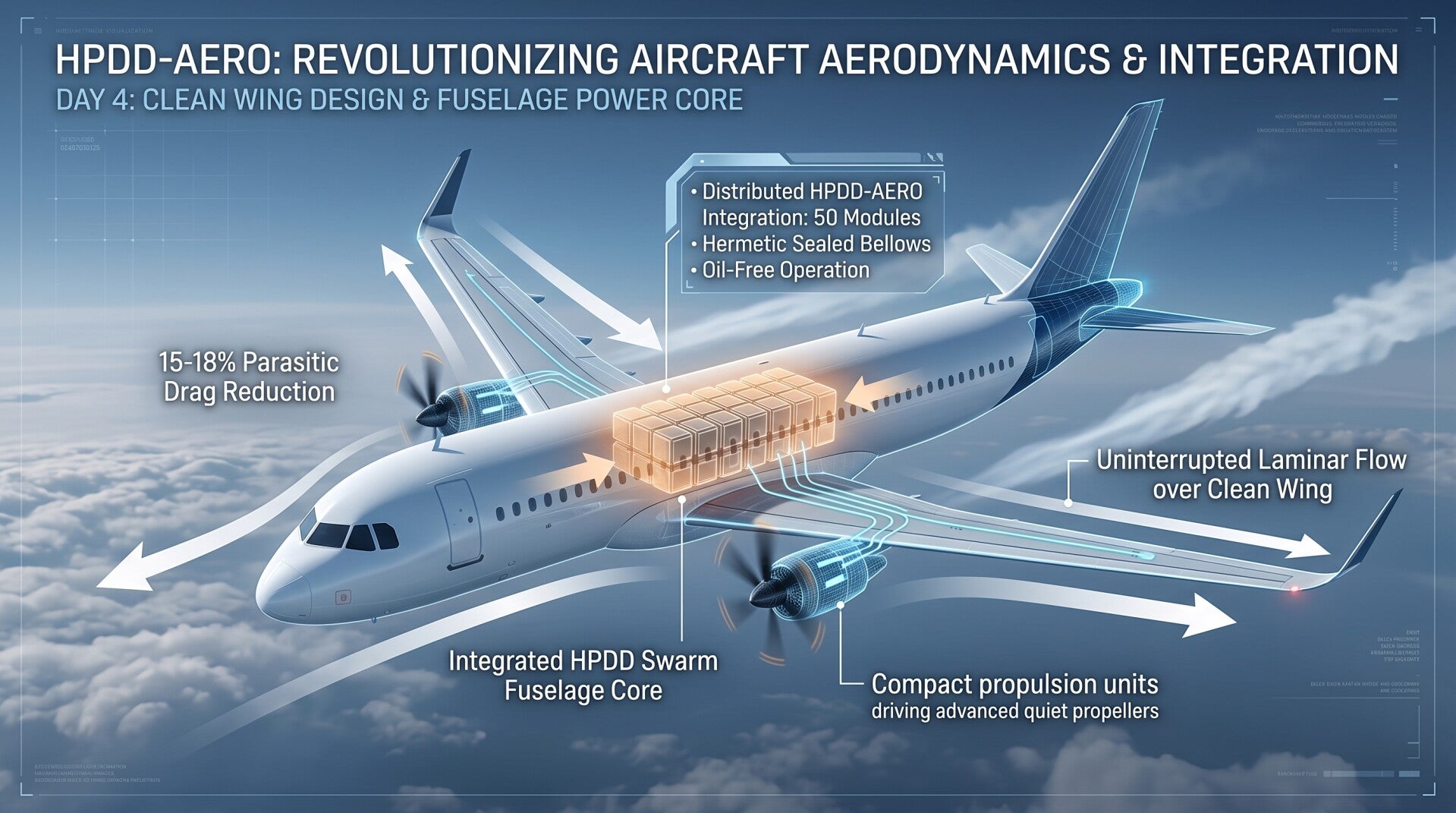
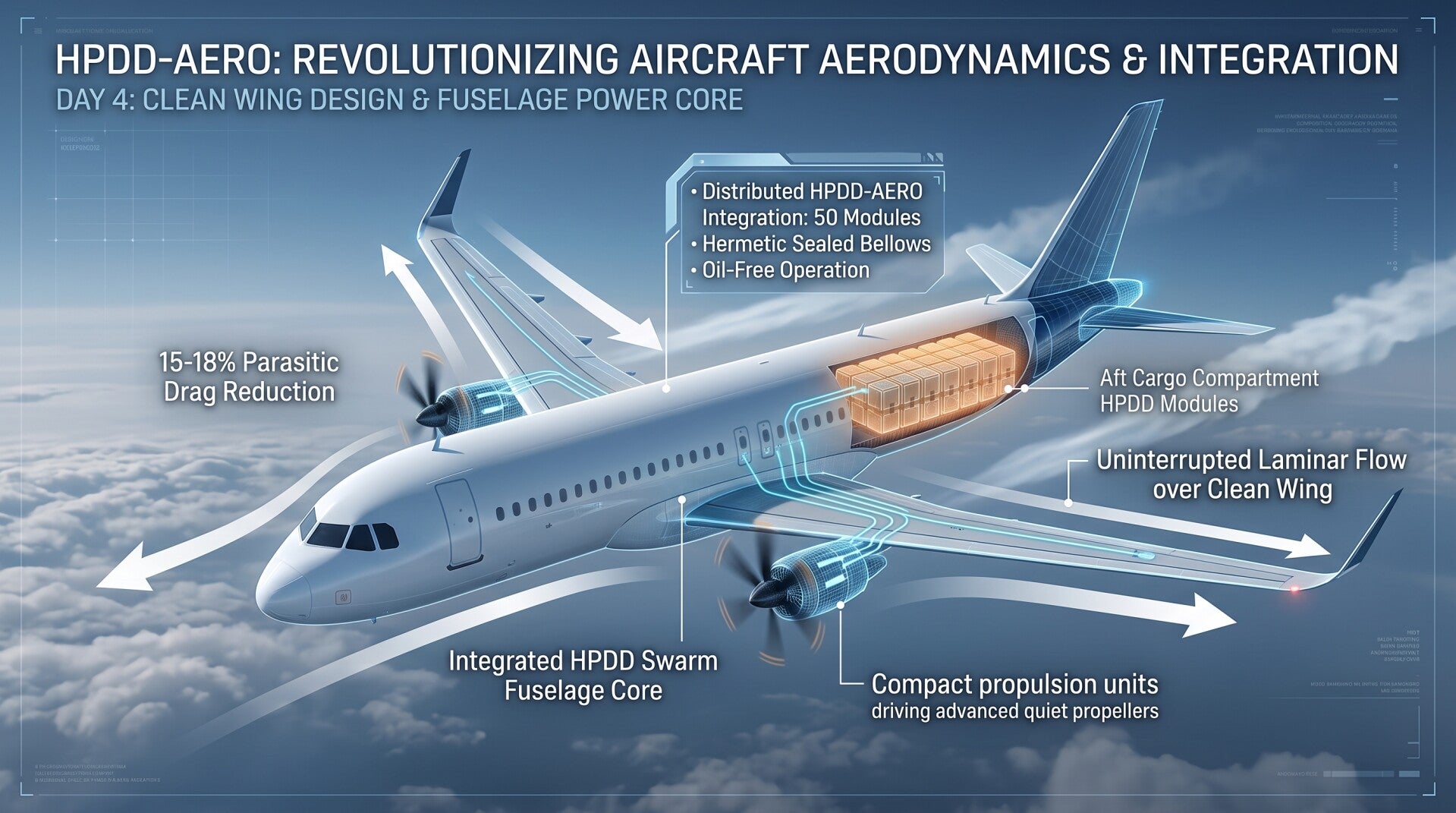
- By relocating the engines from the wings to the fuselage, the airframe undergoes radical optimization.
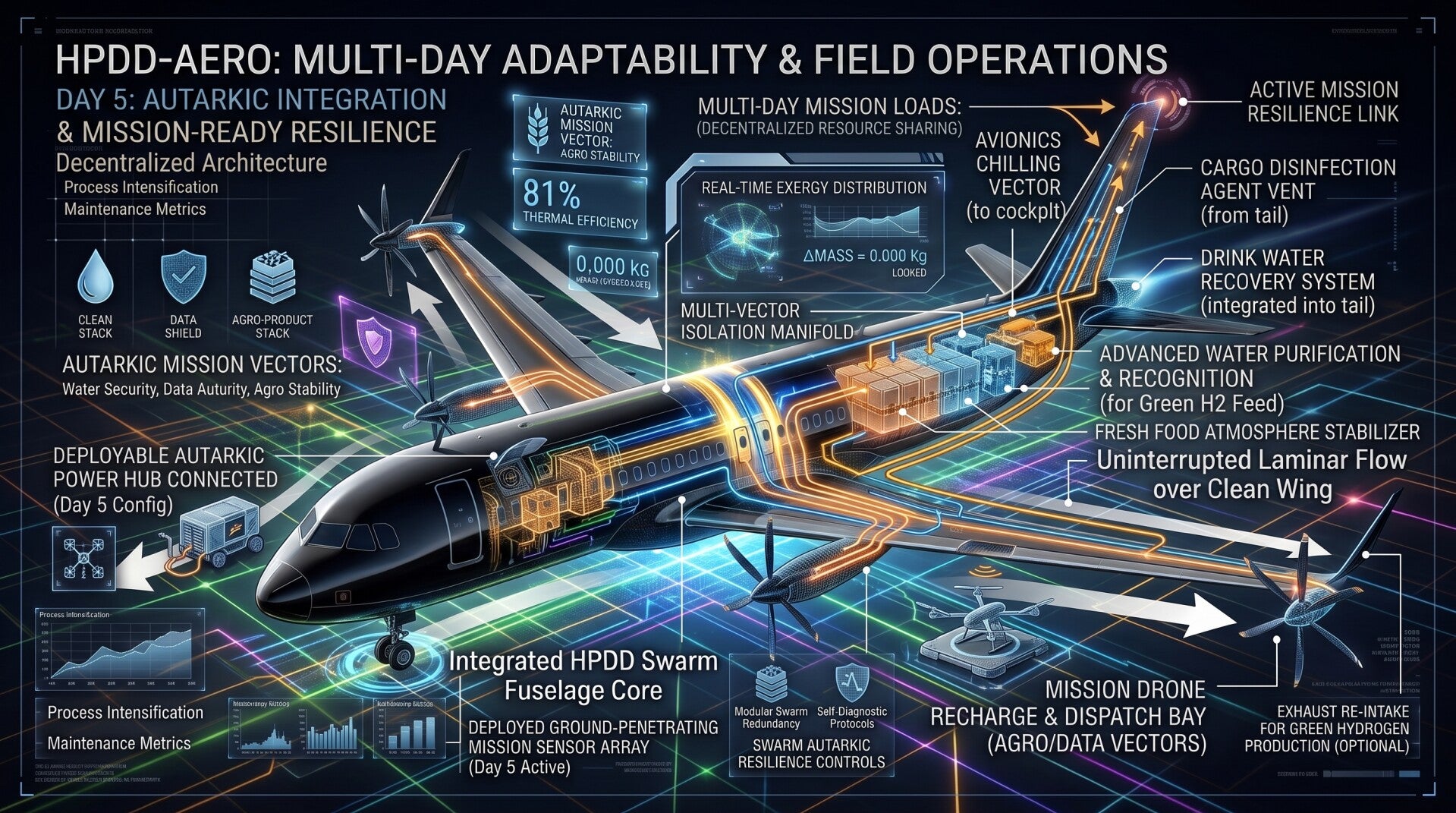
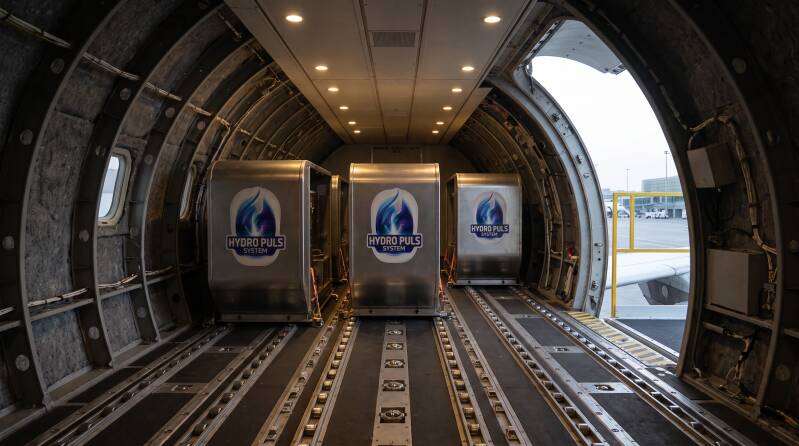
- Fuselage Installation: 50 modular units are integrated into the fuselage. Hydraulic power is transmitted via a siloxane network to oil plunger motors in the wings (propellers) and landing gear.
- Clean Wing Design: Eliminating massive engine nacelles (e.g., LEAP-1A) and pylons reduces aerodynamic drag by 15-18%.
- Weight Cascade:
- Savings: Engines, nacelles, APU, heavy cabling, and water tanks: -10,500 kg.
- Investment: 106 units, 20 stabilization accumulators, and wheel motors: +6,400 kg.
- Net Result: The aircraft is ~4.1 tons lighter than a conventional A321.
3. OPERATIONAL SUPERIORITY
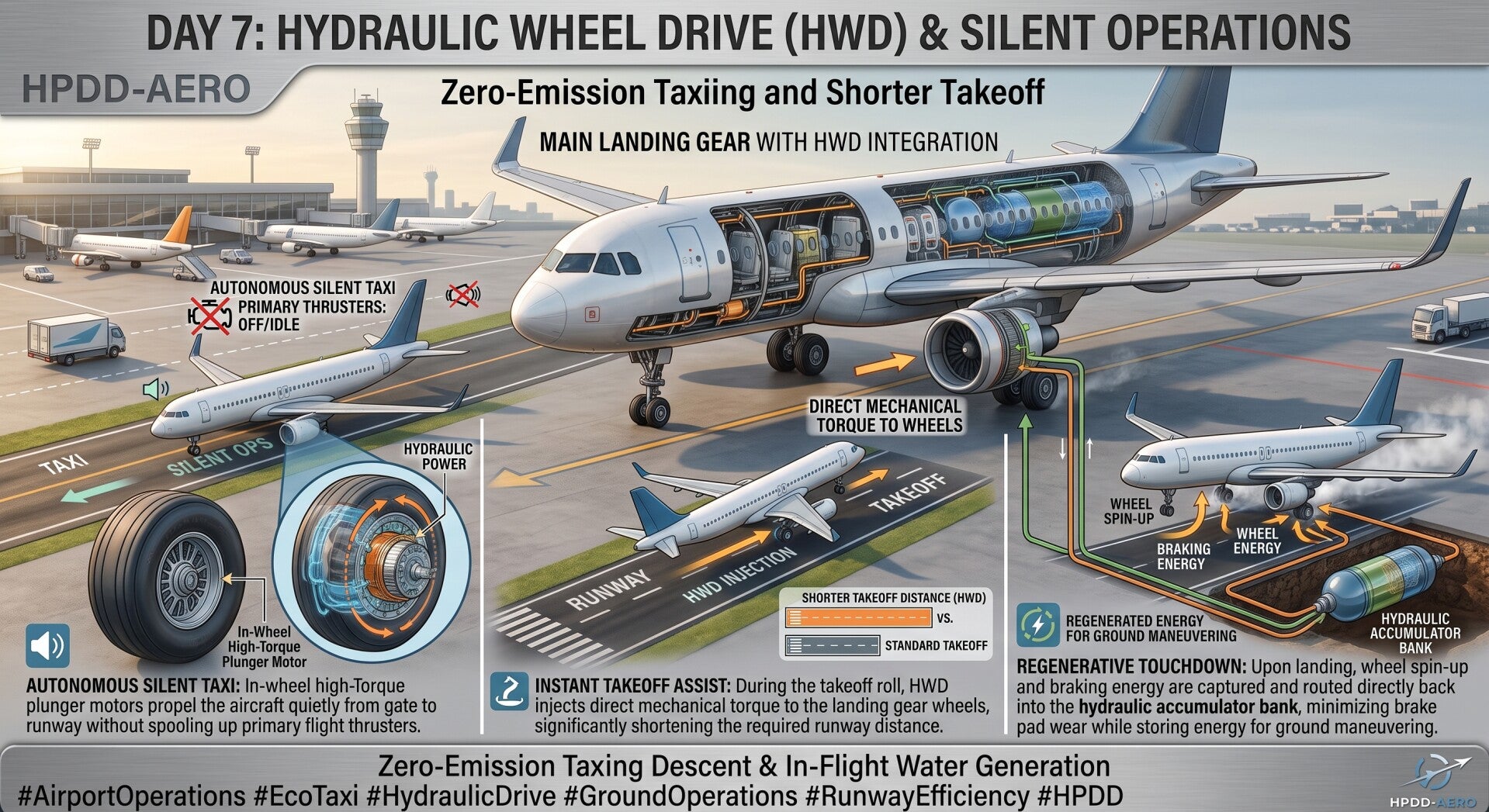
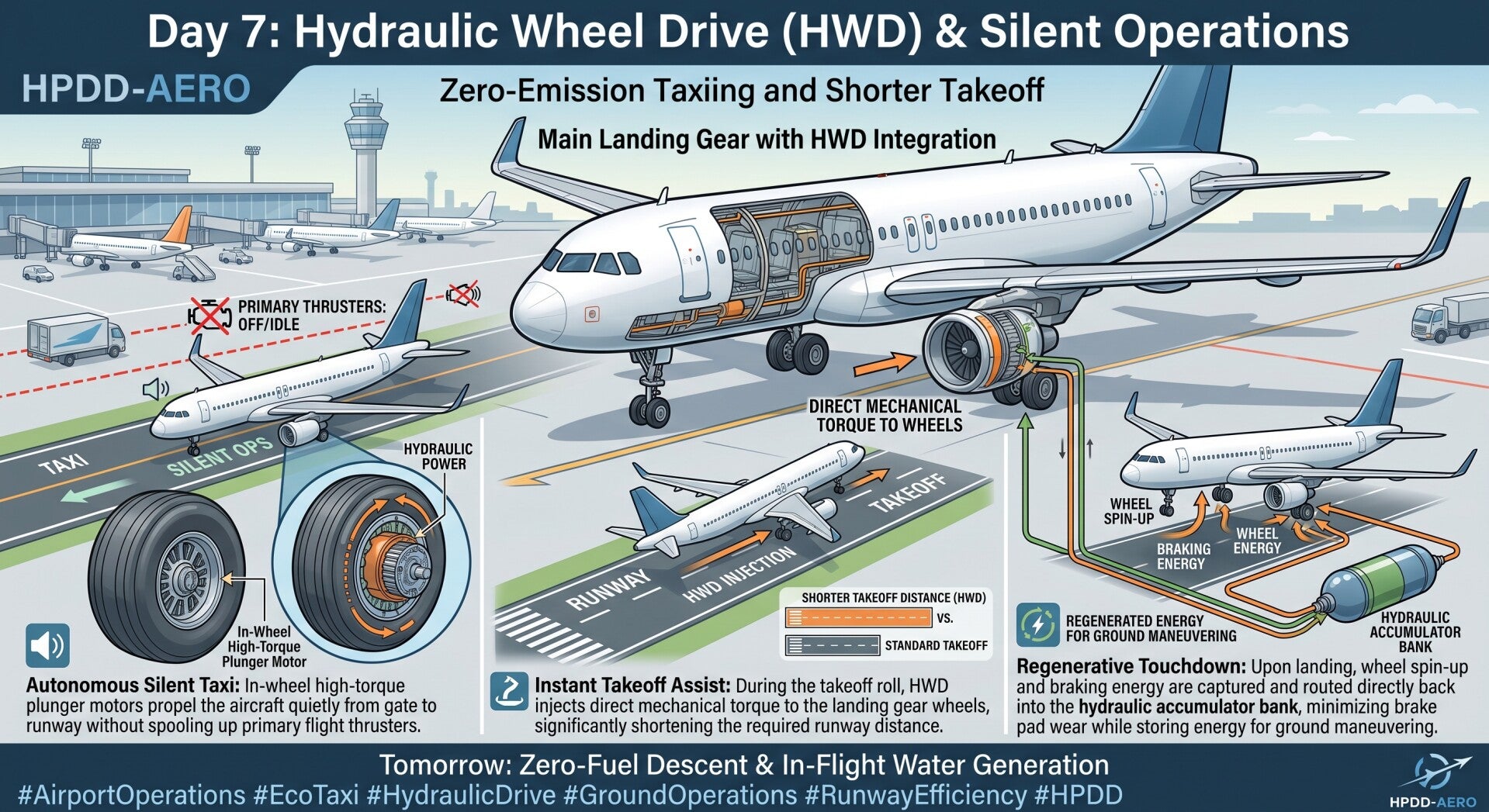
- Hydraulic Wheel Drive (HWD): In-wheel plunger motors enable autonomous, silent taxiing. During takeoff, they provide instant torque, shortening runway requirements. During landing, they regenerate energy into the accumulators, saving brakes and enabling a "ready-for-immediate-takeoff" state.
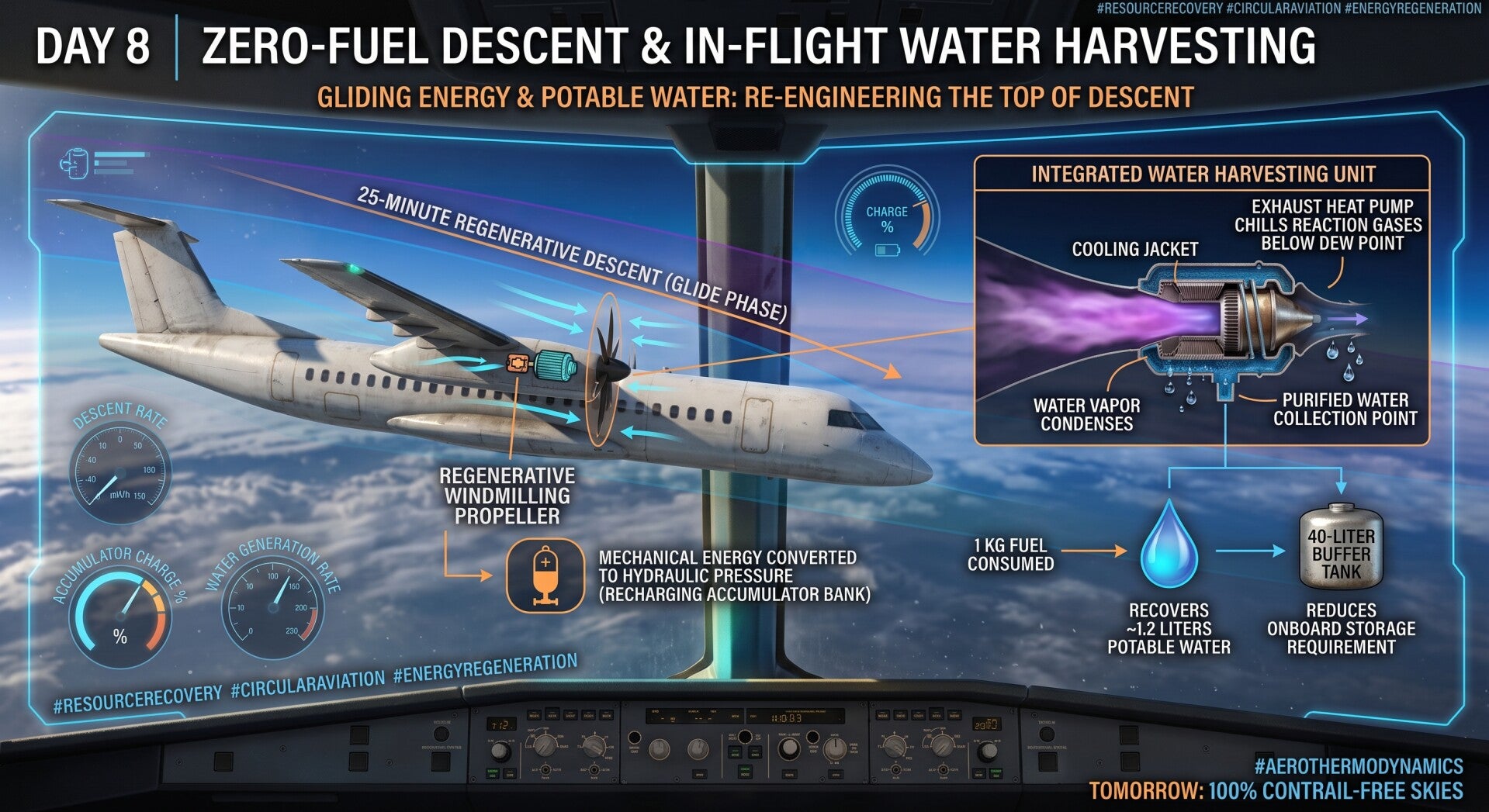
- Zero-Fuel Descent: During the ~25-minute descent, 50 units are deactivated. Propellers act as wind turbines, recharging hydraulic accumulators via regenerative braking.
- In-Flight Water Harvesting: The heat pump cools exhaust gases below the dew point. The aircraft produces approximately 1.2 liters of potable water per kg of fuel, reducing the required on-board water tank to a mere 40-liter buffer.
- 4. SAFETY & REDUNDANCY: THE 50-UNIT ADVANTAGE
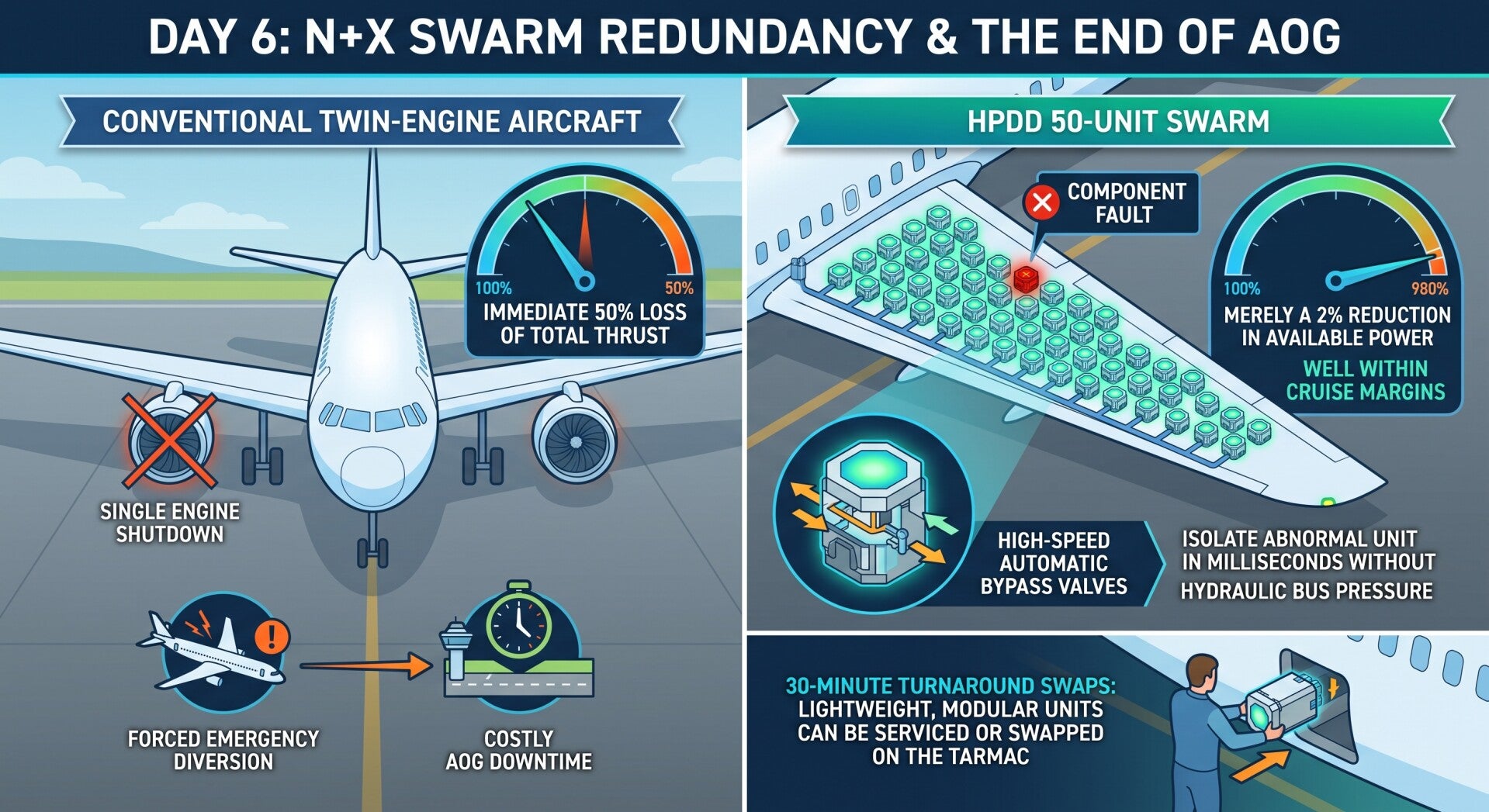
- Extreme Redundant Reliability: While losing one of two turbines means a 50% power loss and an emergency landing, a Hydro Puls failure results in only a 2% power loss.
- "Indicator Maintenance": Faulty units are swapped during a 30-minute gate stop. The risk of Aircraft On Ground (AOG) due to engine failure is virtually eliminated.
- 5. ENVIRONMENTAL IMPACT: "CLEAN SKY" STATUS
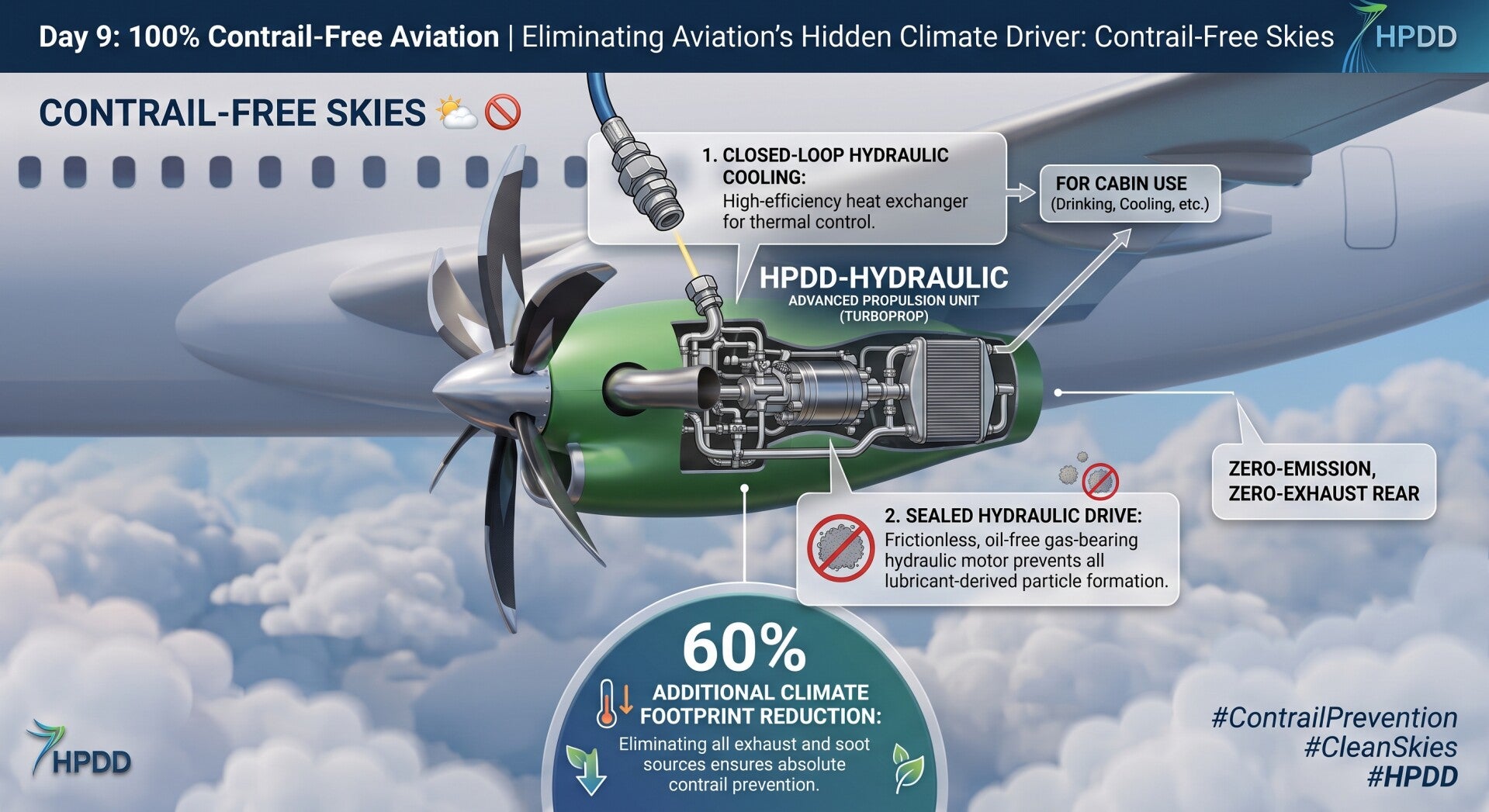
- Contrail-Free Flight: By harvesting exhaust water vapor, the aircraft emits only dry air. Condensation trails (contrails) are eliminated, reducing climate impact by an additional 60%.
- Noise Abatement: No "jet-whine." The aircraft is near-silent during taxiing, descent, and landing.

DOSSIER: Hydro Puls v26 –
The Revolutionary Future of Aviation
Case Study: Airbus A320 "Zero-Emission & High-Efficiency" Edition
This dossier summarizes the complete transformation of the Airbus A320, powered by Hydro Puls Gen1 Ultra technology. By integrating 106 modular units into the fuselage and utilizing an intelligent hydraulic-thermal network, this aircraft sets the new global standard for the 21st century.
1. Core Technology: Hydro Puls v26
The propulsion is based on the proprietary 120/160/240 configuration:
- Combustion Chamber (40 mm): Utilizing Plasma (or alternative media) combustion at a peak pressure of 605 bar and a compression ratio of 1:22. The 20 mm wall thickness serves as a thermal battery for the ORC system.
- Piston (40 mm): A lightweight, hollow piston transferring force via labyrinth sealing to a nitrogen cushion.
- Interface (160 mm): A multi-layer Inconel 718 bellows providing a hermetic seal between the nitrogen and the hydraulic siloxane. Simulated operational life: 20,000 hours.
- System Efficiency: By combining direct hydraulic work, an ORC turbine, and an exhaust heat pump, a total system efficiency of >80% is achieved.
2. Aircraft Architecture: Centralized Power
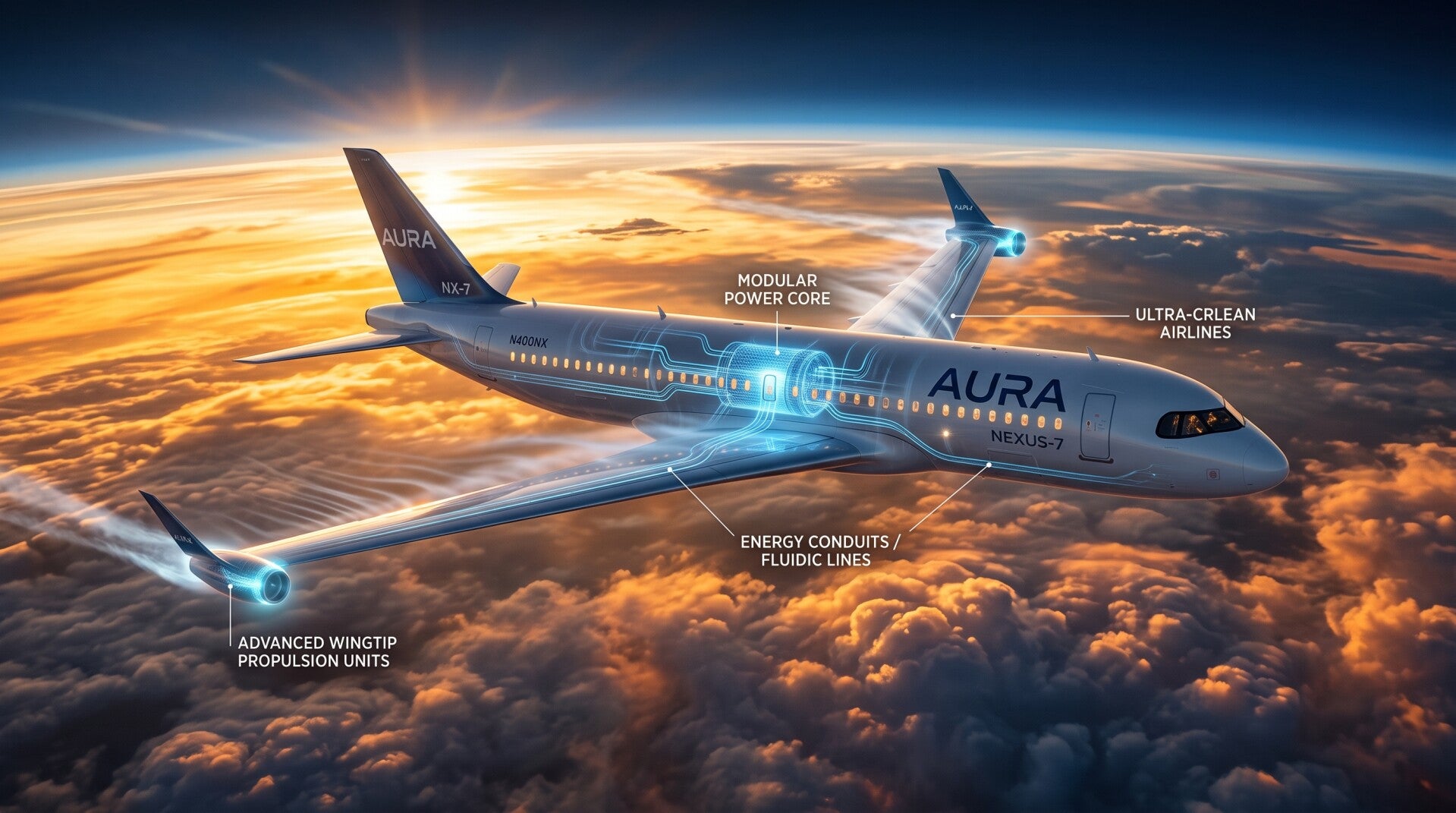
The Airbus A321 is entirely redesigned around a centralized fuselage power system:
- Propulsion: 50 modular fuselage units drive wing-mounted propellers via high-pressure oil plunger motors.
- Aerodynamics: A "Clean Wing" design, free of engine nacelles and pylons, reduces aerodynamic drag by 15-18%.
- Weight Cascade Optimization:
- Reduction: 2 Turbofans, nacelles, and pylons: -8,700 kg
- Reduction: APU and heavy electrical subsystems: -1,500 kg
- Reduction: Water tank (replaced by exhaust harvesting): -160 kg
- Addition: 106 Units + 20 Accumulators: +6,200 kg
- Net Weight Gain: ~4,160 kg lighter (excluding fuel weight savings).
3. Operational Innovations
- Hydraulic Wheel Drive (HWD): In-wheel oil plungers enable silent taxiing without propellers and provide a torque boost during the takeoff roll.
- Zero-Fuel Descent: During the 25-minute descent, 50% of the units are switched OFF. Propellers act as turbines (windmilling), recharging accumulators via regenerative braking.
- Thermal Management: Wing de-icing and cabin heating are powered entirely by waste heat from the return-line oil.
4. Environmental Impact: The "Green Sky" Revolution
- Contrail Elimination: By extreme cooling of exhaust gases for water harvesting and energy recovery, air leaves the aircraft dry. This halts the formation of condensation trails (which normally account for 60% of aviation's climate impact).
- E-Diesel & Carbon Neutrality: With 80% efficiency, synthetic E-fuels become economically viable, making flights 100% CO2-neutral.
- Noise Abatement: Eliminating "jet-whine" through HWD and standby-descent modes makes the aircraft virtually silent for airport communities.

Frequently Asked Questions: Aviation & Aerospace
How does the HPDD solve the "Weight Penalty" of electric flight?
Batteries are too heavy for long-distance flight. The HPDD offers the power-to-weight ratio required for aviation while using high-energy-density fuels like Liquid Hydrogen or Ammonia. This allows for zero-emission flight with a payload and range that current battery technology simply cannot match.
Can the HPDD eliminate harmful contrails?
Yes. Traditional jet engines emit soot and particles that form ice crystals (contrails), which trap heat in the atmosphere. The HPDD’s unique high-frequency combustion process is soot-free. When running on Hydrogen, it produces only water vapor, which can be managed to significantly reduce or eliminate the formation of persistent contrails.
Is the system safe for high-altitude operations?
Safety is engineered into the core. The HPDD uses Inconel alloys that maintain structural integrity at extreme temperatures ($230°\text{C}$ and beyond). With no rotating crankshaft or complex oil systems, the risk of mechanical "catastrophic failure" is dramatically reduced compared to traditional turbine or piston engines.
What are the maintenance requirements for aircraft?
In aviation, "Time Between Overhaul" (TBO) is a major cost driver. The HPDD is designed for a 20,000+ hour maintenance-free lifespan. This is a quantum leap over traditional piston engines (2,000h TBO) and even turboprops, allowing for much higher aircraft utilization and lower operating costs for regional airlines.
How does the HPDD power the propellers?
The HPDD acts as a "Core Power Processor," converting fuel into high-pressure hydraulic energy. This energy drives ultra-lightweight hydraulic motors at the propellers or fans. This distributed propulsion allows aircraft designers to place propellers anywhere on the wing (DP - Distributed Propulsion) to optimize lift and efficiency without heavy mechanical driveshafts.
Can the HPDD operate on sustainable aviation fuels (SAF)?
Absolutely. While optimized for Hydrogen and Ammonia, the HPDD is fuel-agnostic. It can run on any sustainable liquid fuel, providing a versatile bridge for airlines transitioning from carbon-based fuels to a completely emission-free future.