

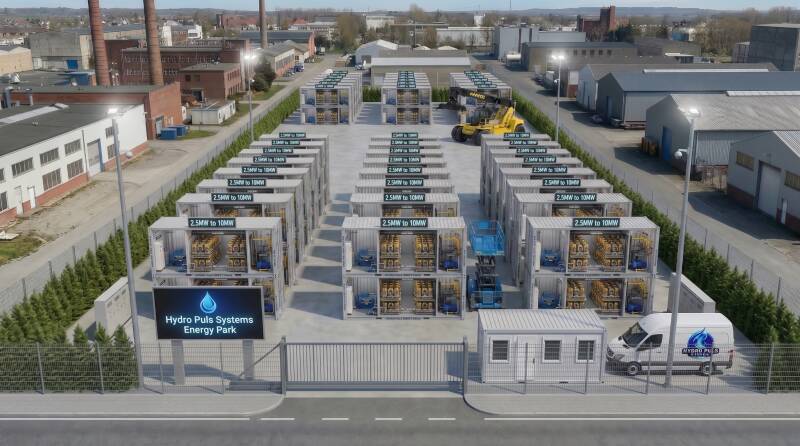
The Rise of the Energy Container: Shifting from Fixed Assets to Liquid Asset Classes 🔋🌐
The way we finance large-scale infrastructure is on the verge of a fundamental shift. Until now, a power plant, a desalination facility, or a ship’s propulsion system was a "Fixed Asset": a massive building or a bolted-down engine, locked in for 30 years with high depreciation, zero flexibility, and almost no resale value.
That model is officially obsolete.
With the introduction of the Standardized Energy Container (powered by the HPDD v.26.TRT), we are introducing a new asset class. We are moving away from stationary infrastructure toward a world of modular, mobile, and liquid assets.
Why this changes the world of project finance:
-
The Standardized ‘Utility Core’: Whether it’s a land-based power plant, a desalination factory, an energy raft in a seaport, or a massive cargo ship—they all use the exact same energy container. The output is standardized liquid energy (hydraulics at 600 bar).
-
From Fixed to Floating Assets: Thanks to extreme maintenance intervals (20,000 hours) and standardized housing, these units are perfectly interchangeable and globally sellable. This drastically lowers the risk profile for financiers: the asset is no longer tied to a single location or a single project.
-
Extreme Scalability (CapEx Efficiency): An energy company no longer needs to invest $500M upfront in a building. They can start with 5 containers and organically expand capacity as demand grows. This enables "Just-in-Time" energy infrastructure.
-
High Residual Value & Exit Strategy: Because an energy container from a ship can be seamlessly redeployed to an energy raft in a harbor, the market value of the asset is preserved. This creates a secondary market for energy assets that was previously unimaginable.
The Conclusion: We are no longer building structures around technology. We are building networks around standardized containers. This makes energy infrastructure not only more efficient but, more importantly, faster and easier to finance.
The transition to Net Zero doesn't need more concrete; it needs a liquid, scalable asset class.
HPDD: The Pulse of the New Energy Economy.
#SustainableFinance #AssetManagement #EnergyTransition #Infrastructure #FinTech #NetZero #HPDD #ModularEnergy