sCO2 Marine Damping System
Building upon our core HPDD v26 architecture, I have prepared a breakthrough conceptual addition for our upcoming development and patent phase.
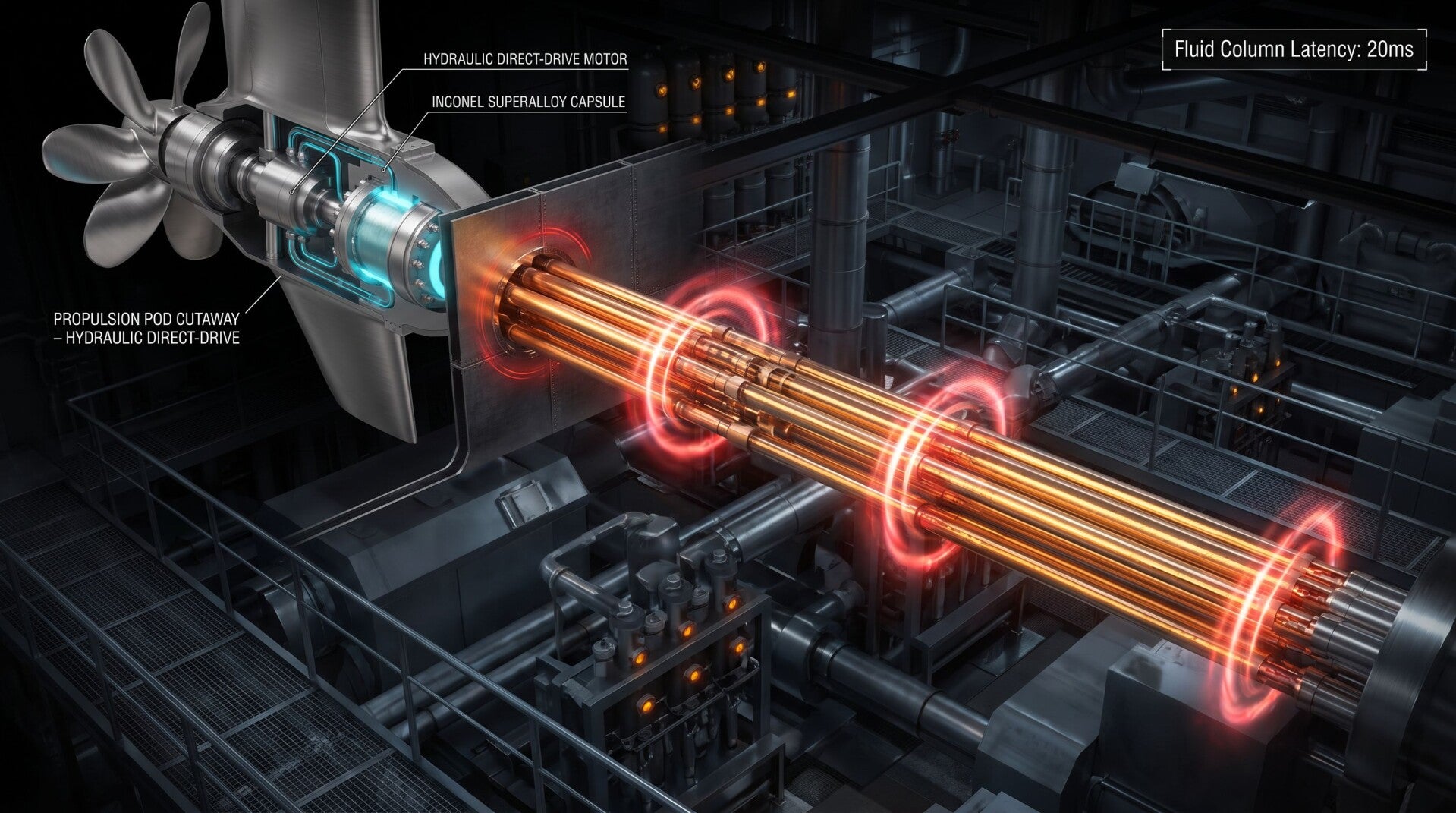
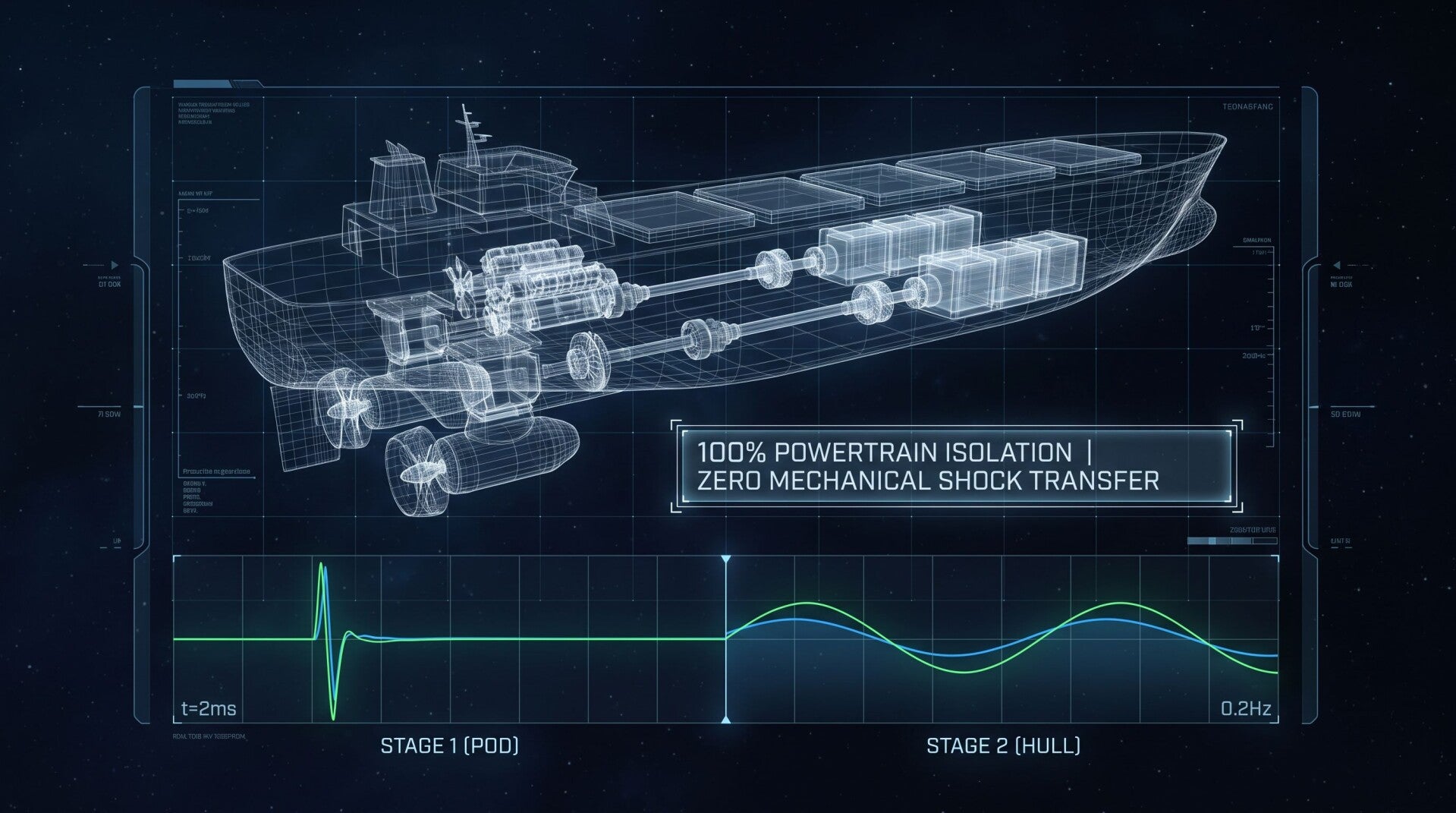
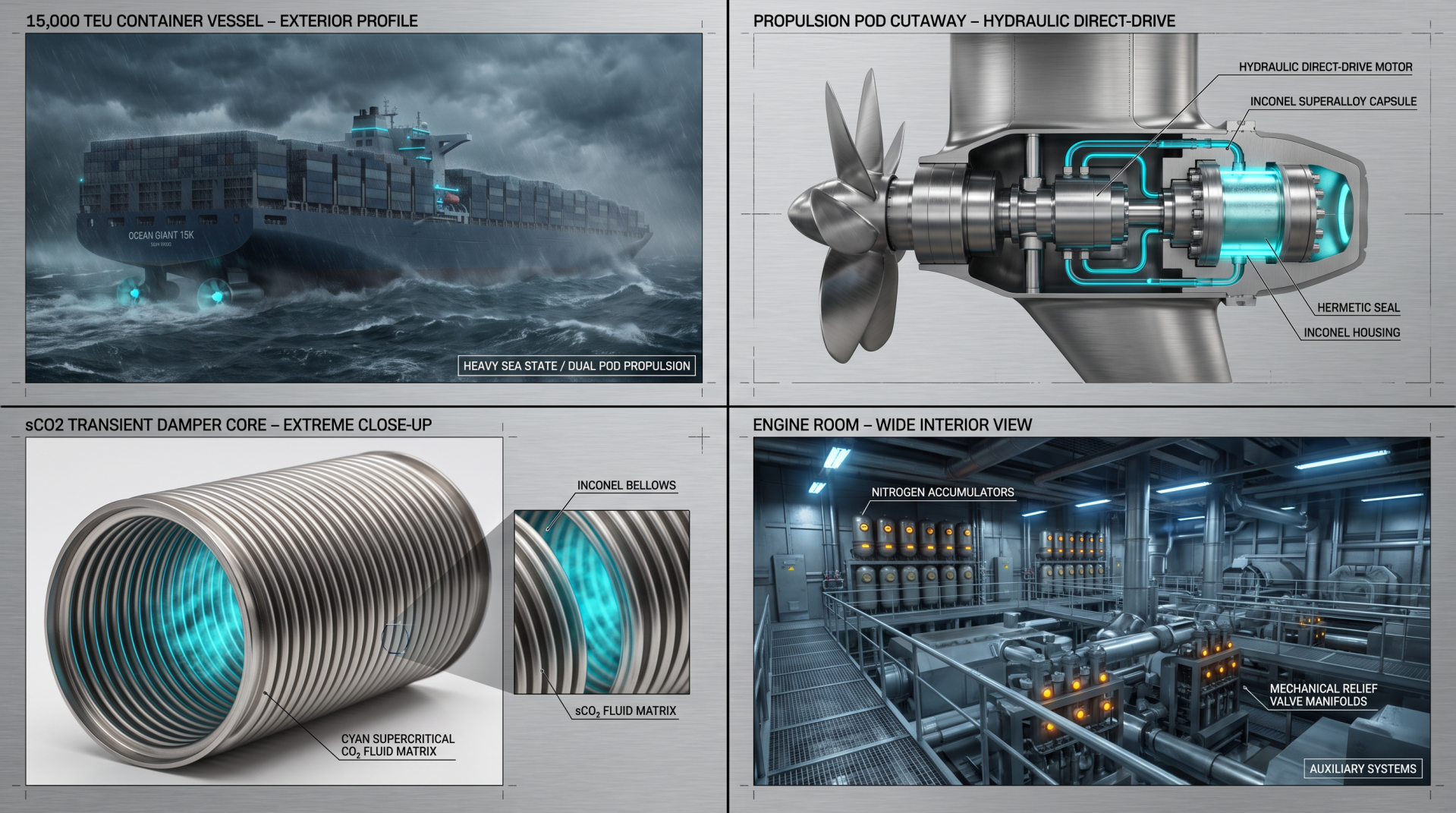
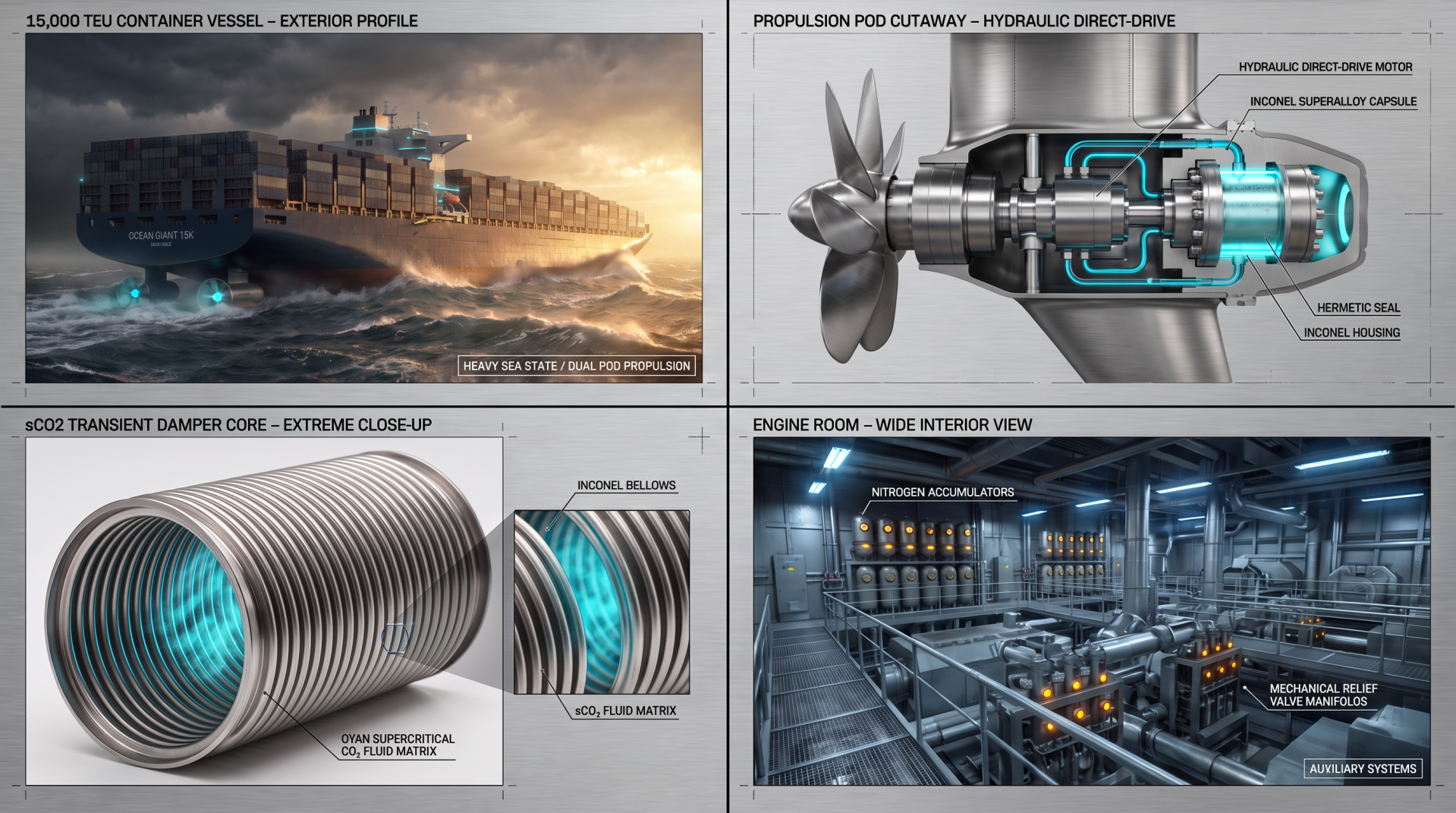
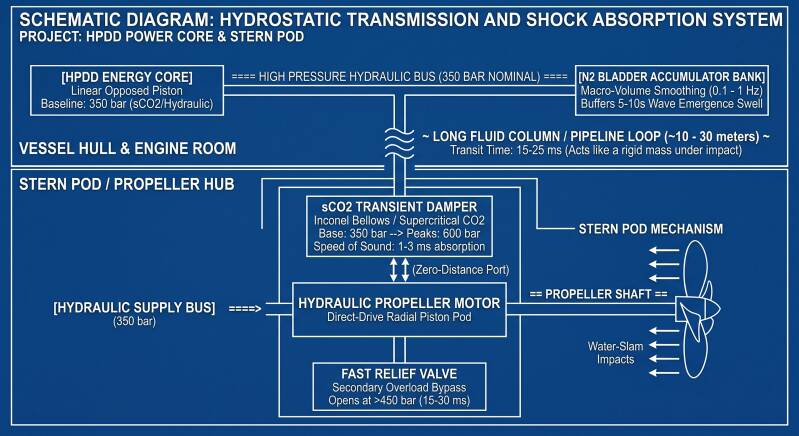
We are introducing a Supercritical CO2 Dynamic Energy Buffer — a specialized cryogenic-assisted kinetic and thermal energy accumulator designed to seamlessly handle extreme transient loads, sudden hydrodynamic shocks from propeller cavitation, and emergency zero-delay reversals without stressing our 5-micron gas-gap geometry.
Technical Architecture and Working Principle
1. Background and Objective
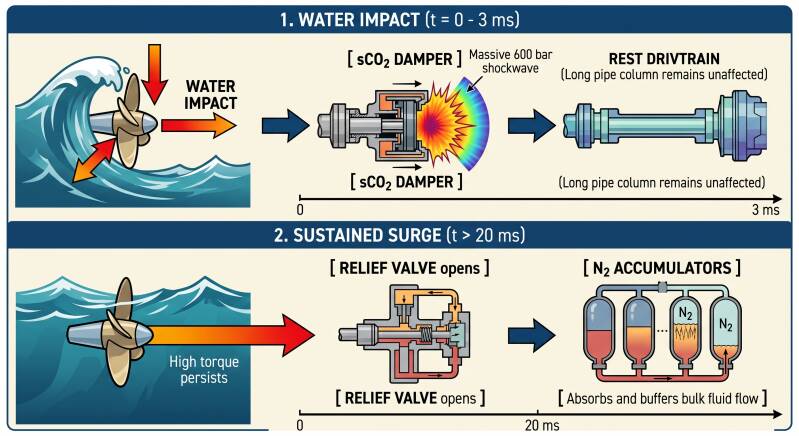
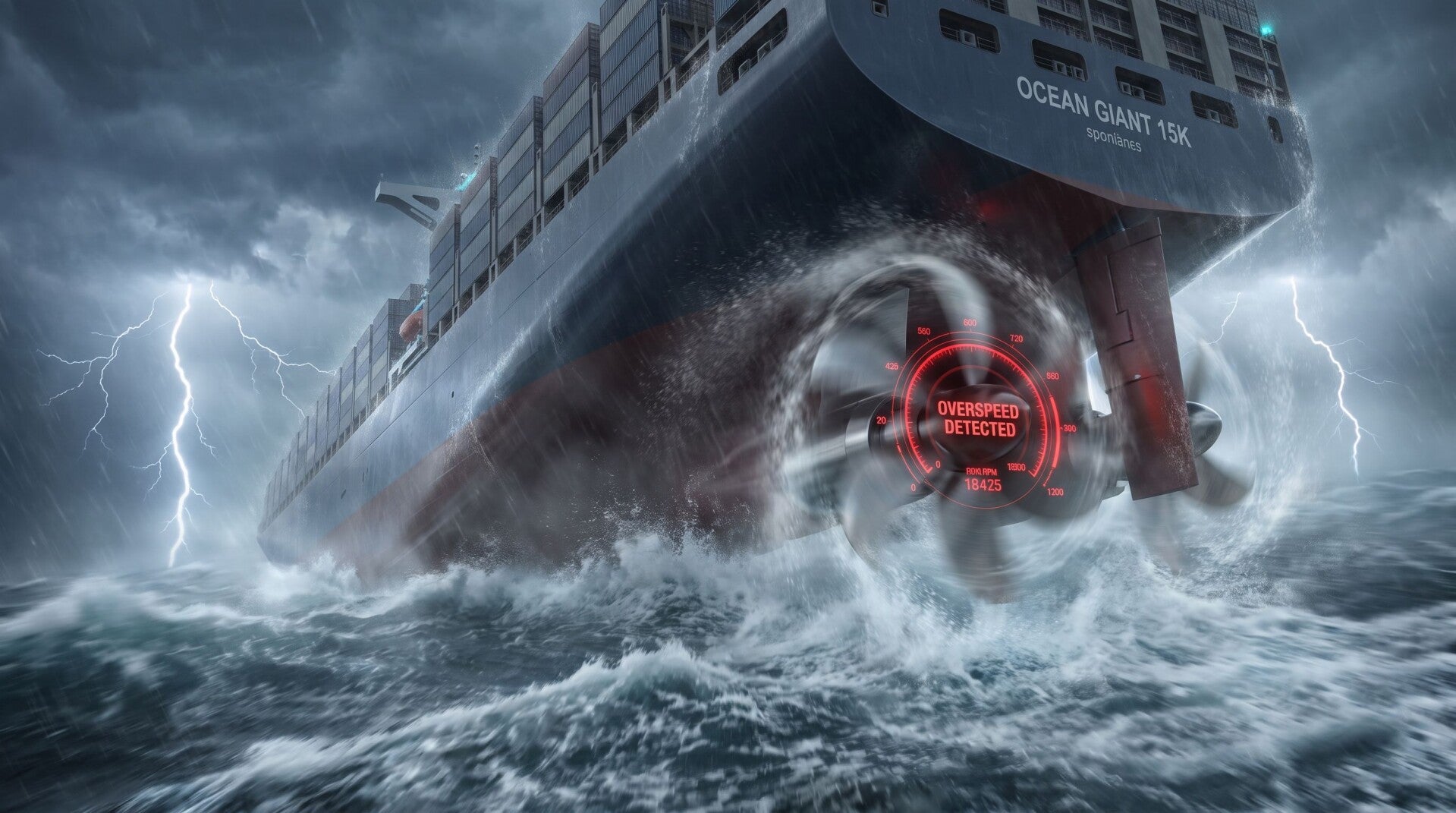
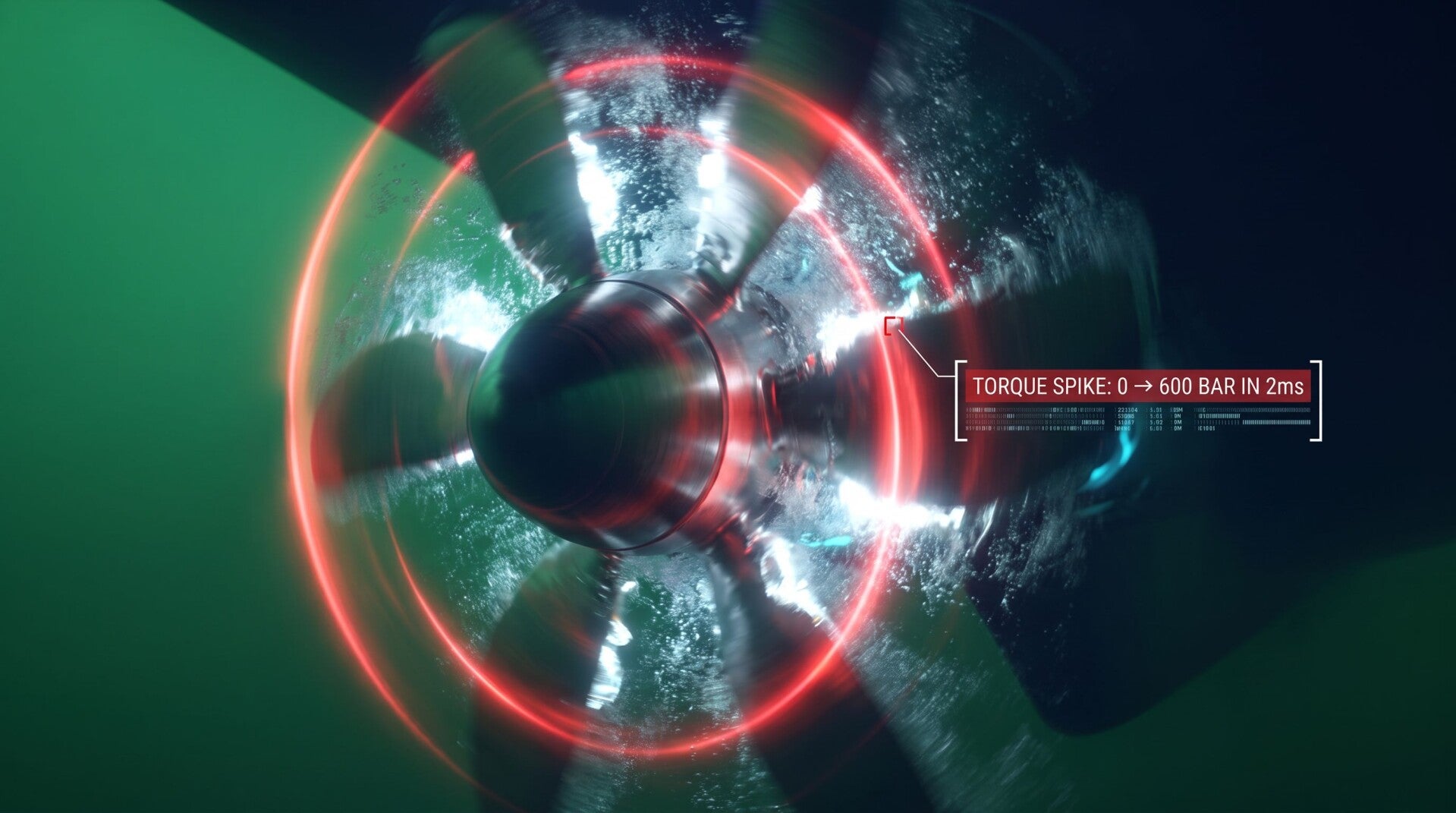
In extreme operating modes of the marine propulsion unit (emergency reversal, sudden load application or shedding during storm-induced propeller emergence from water), the hydrodynamic circuit experiences step-like pressure overloads. We need a standard physical buffer that smooths out these peaks without overloading the rodless, non-contact Inconel 718 piston-liner pairs, ensuring absolute compliance with our 0.8% stability paradigm (operating at a stable 600-bar baseline instead of traditional 18,000% combustion shocks).
2. Physical Principle Near the Critical Point
Supercritical carbon dioxide (sCO2) at parameters slightly above the critical point (pressure >7.39 MPa, temperature >31.1C) possesses the high density of a liquid and the high mobility of a gas, demonstrating a colossal coefficient of volumetric expansion without phase transition (completely avoiding two-phase water-hammers and cavitation).
3. Step-by-Step Operational Cycle
Standby Phase (Nominal Mode):
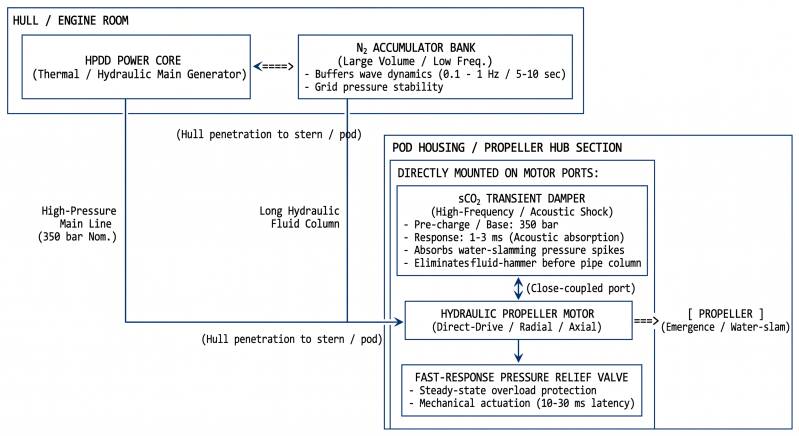
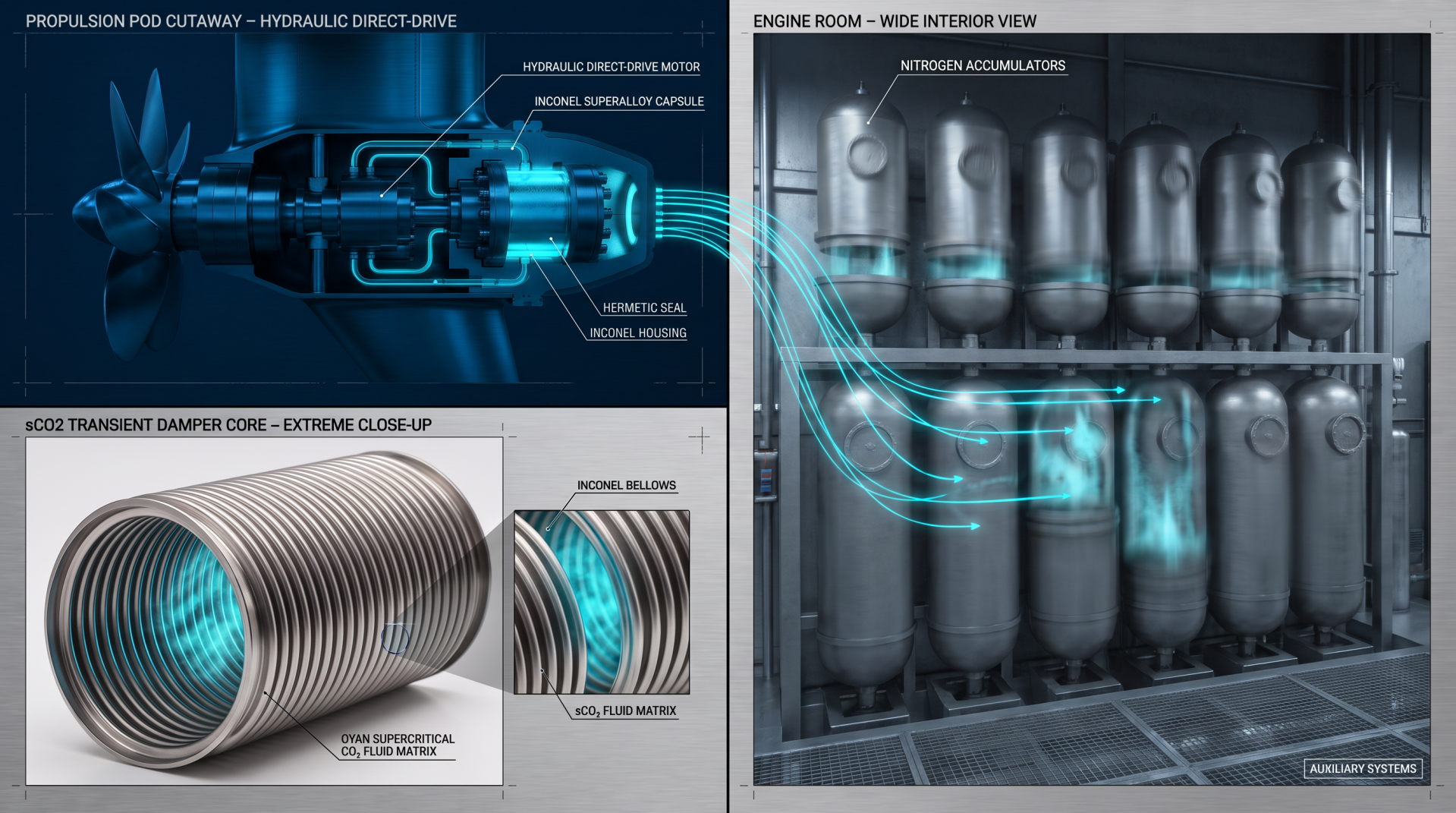
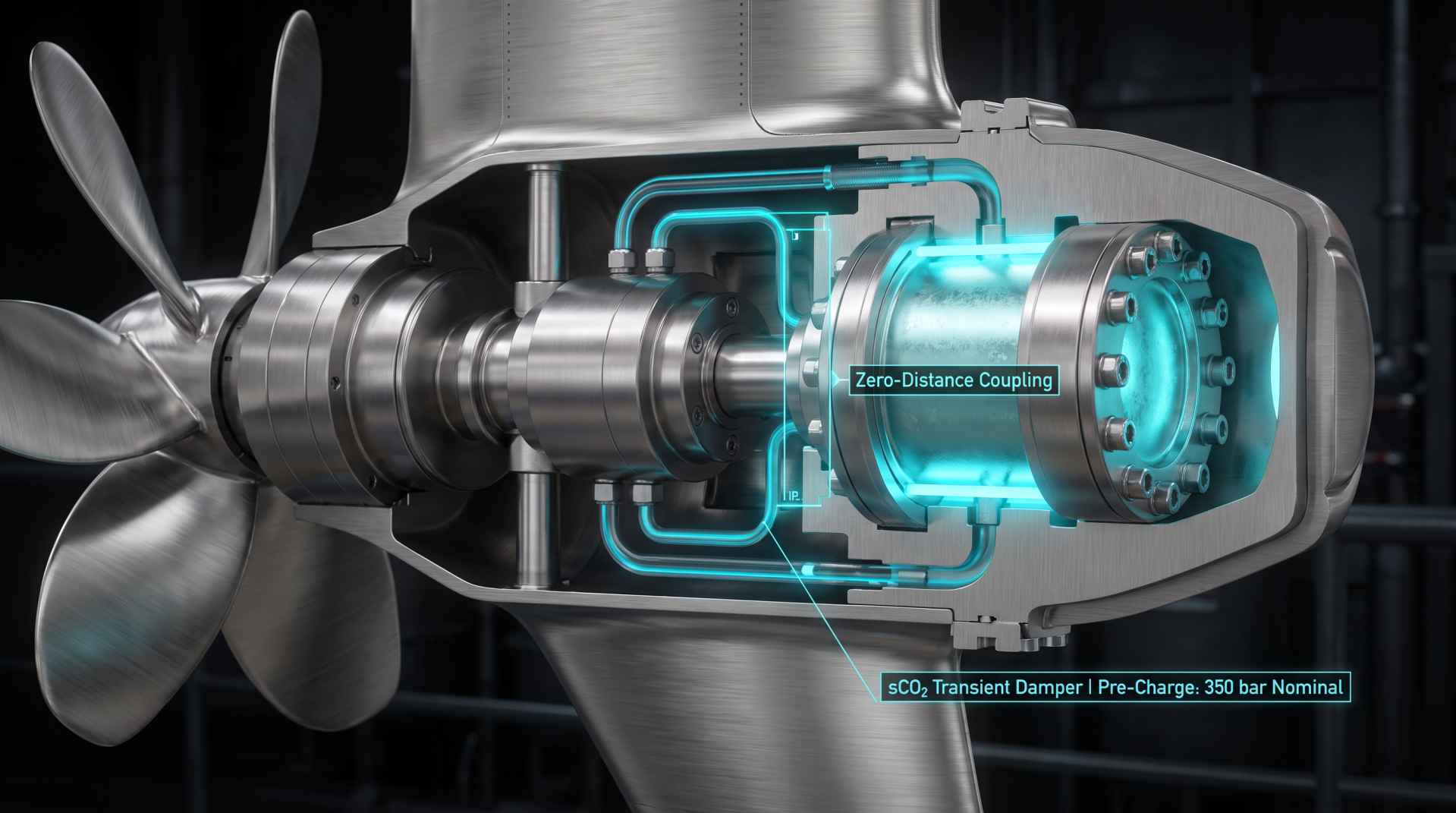
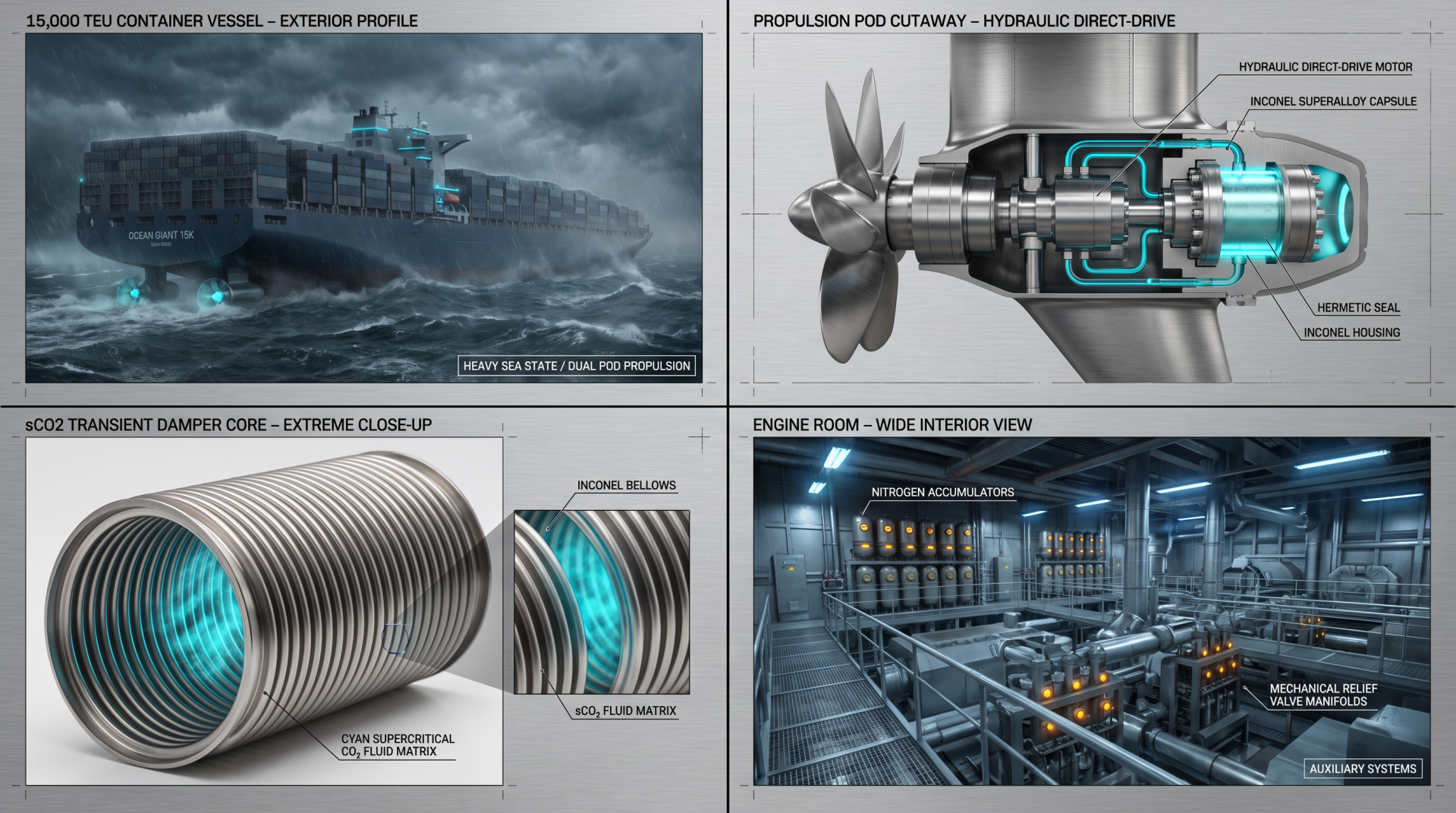
The accumulator is a sealed high-pressure capsule-receiver integrated into the sCO2 power circuit. The system is in thermodynamic equilibrium, ensuring stable preloading of working media through metal bellows without the use of flammable hydraulic oils.
Absorption Phase (Damping Peak Pressures):
When the propeller is abruptly braked by oncoming water flow or an emergency power drop occurs:
The peak pressure spike is intercepted and instantly cushioned within the buffer receiver volume.
Due to the compression of sCO2 near its critical point, excess energy is instantly accumulated as potential energy of the medium.
This protects the precise gas-dynamic clearances of the non-contact Inconel pairs from extreme overloads, preserving the ideal non-contact operation mode.
Pulse-Return Phase (Instantaneous Thrust Delivery):
When an emergency acceleration or instant reversal is required:
The accumulated sCO2 energy is fed into the working circuit via fast-acting valves.
The supercritical medium instantly forms a powerful power pulse on the counter-moving pistons of HPDD, providing a reaction within milliseconds without delays for turbine spool-up or pump pressure buildup.
4. Synergistic Engineering Effects for HPDD v26
Protection of Clearance Geometry: Elimination of the slightest deformations and oil starvation in the non-contact Inconel "piston-liner" pairs (Ra < 0.1m surface finish) during extreme transient processes.
Absolute Ecological Safety: Complete absence of oils, hydraulic fluids, and sparking electrical elements. The working fluid is inert, non-flammable sCO2.
Instant Response: The ultra-high dynamics of the medium give the vessel a maneuverability unattainable by any classical diesel engines or electric drives.
Cold Utilization: Part of the waste cold from sCO2 expansion in the buffer can be directly redirected into the refrigeration supply system or the general recovery cascade, further boosting overall system efficiency above the baseline 61.3%.
Full Autonomy: The system requires no external power sources for damping, operating entirely on thermodynamic laws while maintaining a 99.999% availability class (Swarm Uptime).
Let's review this comprehensive concept and evaluate how best to incorporate and legally protect this node within our framework. Looking forward to your thoughts.