HPDD v26 TRT: Modular Containerized Power Swarms
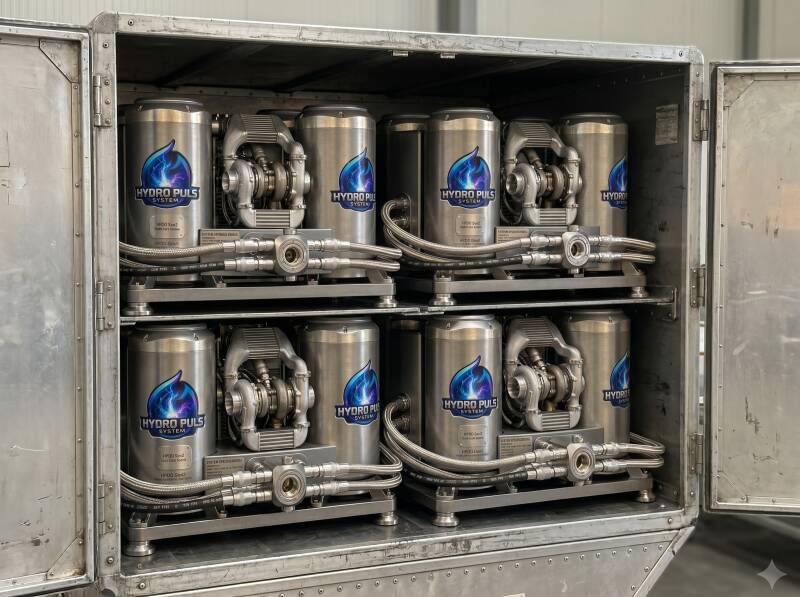
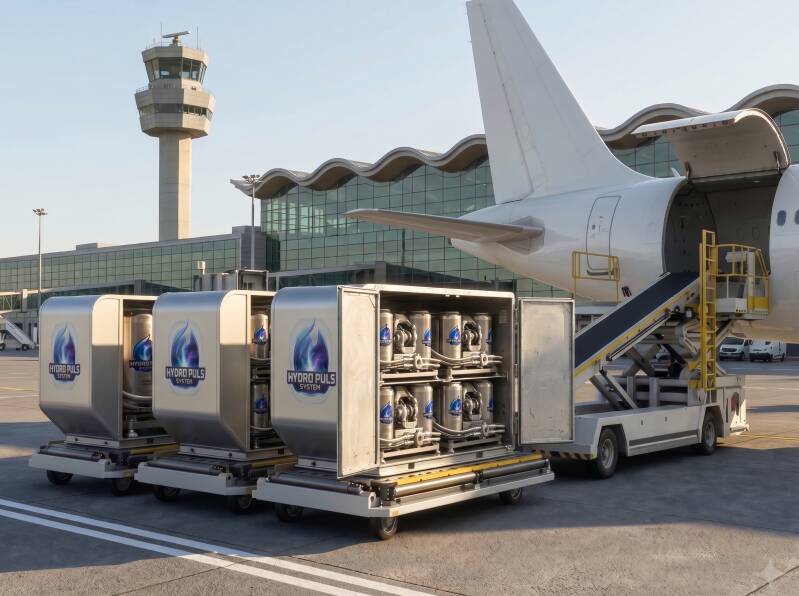
The modular architecture of the Hydro Puls Direct-Drive (HPDD) v26 TRT system reaches its highest degree of operational flexibility through integration into standardized air cargo containers, such as the LD3 (AKE) type. This configuration transforms aircraft propulsion from a static installation into a dynamic, interchangeable energy ecosystem that fits seamlessly within existing aviation logistics infrastructure.
Technical Specifications and Capacity
A standard LD3 container has a compact footprint of approximately 156 x 153 cm at the base and a height of 163 cm. Despite this limited volume of circa 4.5 m³, each container houses a "Power Swarm" of HPDD modules with unprecedented energy density:
-
Current Performance (100 Hz): A single container delivers 1,640 kW (1.64 MW) of power.
-
Future Scaling (200 Hz Roadmap): By increasing the oscillation frequency, the output scales to 3,280 kW (3.28 MW) per container unit.
For a standard narrow-body aircraft like the Airbus A320, which provides 7 LD3 positions in the lower deck, this represents a potential available power of over 11.4 MW at current standards, rising to nearly 23 MW in the near future. This capacity is more than sufficient to fully replace traditional turbines while significantly reducing total aircraft weight.
Operational and Strategic Advantages
Utilizing standardized containers offers fundamental advantages over centralized turbine propulsion:
-
Plug-and-Play Maintenance: Aircraft downtime is drastically reduced. A container housing a faulty module can be exchanged for a fresh unit in less than 15 minutes by two personnel, requiring no specialized tools or lengthy engine overhauls.
-
Extreme Redundancy: Instead of relying on two mission-critical engines, power is distributed across dozens of independent modules. The statistical probability of catastrophic power loss is reduced to near zero (99.999% safety rating).
-
Weight and Balance Optimization: Containers can be strategically distributed between the forward and aft cargo holds to perfectly trim the aircraft’s Center of Gravity (CG). This minimizes "trim drag" and optimizes fuel efficiency throughout the flight.
-
AOG Elimination: "Aircraft on Ground" (AOG) situations due to engine failure are virtually eliminated, as the modular redundancy allows the aircraft to remain operational even if individual modules require service.
Economic and Financial Impact
The transition to modular container units enables a "Pay-per-hour" financial model. Airlines no longer carry the risk of expensive engine inventory; instead, the HPDD supplier guarantees uptime based on the modules' extreme 20,000-hour lifespan. For large aircraft like the A380, removing four heavy turbines and their associated pylons can save up to 40 tons in weight, enabling airlines to offer the most competitive ticket prices in the market due to drastically lower operational expenditures.