

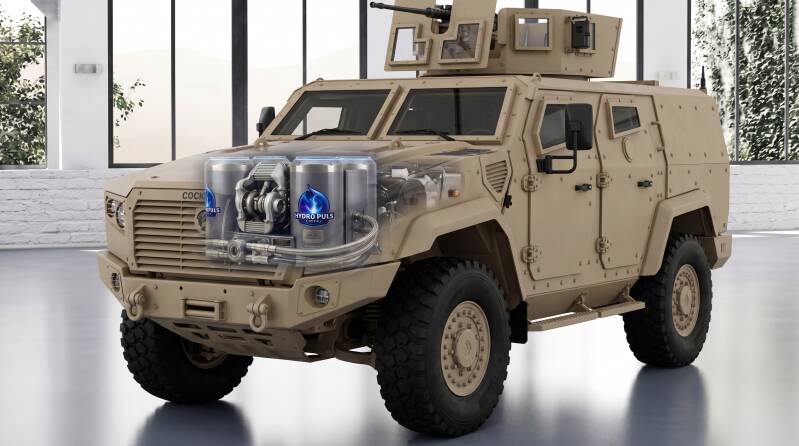
HPDD v26 in Defense: Redefining Tactical Mobility and Stealth
In modern warfare, the technical superiority of a vehicle is directly linked to its survivability. The integration of the Hydro Puls Direct-Drive (HPDD) v26 marks a fundamental shift in military engineering: the transition from vulnerable mechanical drivetrains to a robust, software-defined power station.
Tactical Stealth and Signature Management
Traditional internal combustion engines (ICE) are easy targets for acoustic sensors and thermal detection (IR) due to their mechanical vibrations and massive heat signatures. The HPDD v26 eliminates the crankshaft and complex cooling systems, resulting in an extremely low acoustic and thermal footprint. This enables Silent Watch operations, allowing a vehicle to remain undetected for extended periods while providing vital energy to electronics, drone swarms, and weapon systems without needing to idle a loud main engine.
Resilience and Battlefield Redundancy
Mechanical driveshafts and gearboxes are critical single points of failure; a single hit can immobilize a vehicle. The HPDD platform converts fuel directly into 600-bar hydraulic energy, transported via flexible, armored conduits to hydraulic motors in the wheels or tracks. This offers unprecedented design freedom, allowing the power core to be placed in the most protected section of the chassis. In the event of combat damage to a single line, the system can redistribute pressure, ensuring the vehicle maintains mobility under the most extreme conditions.
Logistical Independence
The HPDD v26 is entirely fuel-agnostic and optimized for Green Ammonia (NH3). Ammonia provides a strategic advantage over diesel or hydrogen: it is stable during long-term field storage and significantly less explosive upon impact. Furthermore, by eliminating the need for frequent mechanical servicing—boasting a maintenance-free interval of 20,000+ hours—the HPDD drastically reduces the logistical burden on field maintenance units and maximizes the operational readiness of the fleet.
The Mobile Power Plant
An HPDD-equipped vehicle is more than just transport; it is a High-Density Mobile Power Plant. Capable of generating megawatts of clean electricity on demand, a single unit can power a field hospital, a command center, or a battery of energy-intensive defense systems (such as directed-energy weapons or advanced radar). This eliminates the need for heavy, noisy towed generators and simplifies the energy footprint of tactical units in the field.
With the HPDD v26, defense forces gain a platform that not only meets today's requirements but is engineered for the autonomous and energy-intensive warfare of tomorrow.
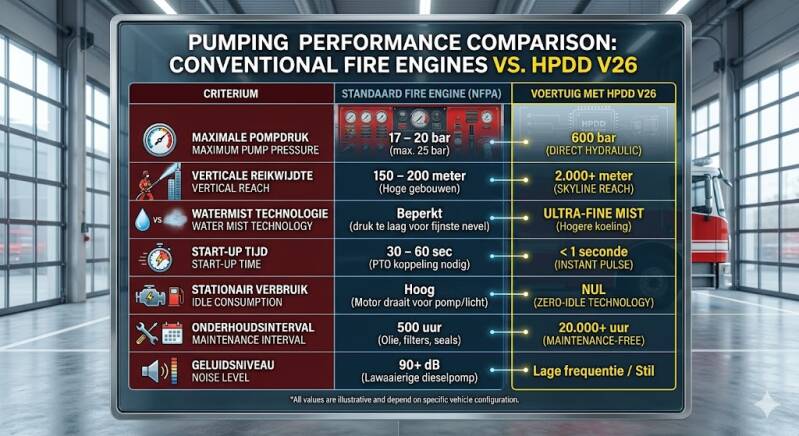
HPDD v26 in Firefighting: High-Pressure Reliability When Every Second Counts
In emergency response, equipment failure is not an option. The Hydro Puls Direct-Drive (HPDD) v26 is engineered to provide the next generation of firefighting vehicles with unprecedented pumping power, mobility, and operational endurance.
Instant High-Pressure Pumping
Modern firefighting, especially in high-rise buildings or industrial complexes, requires massive water pressure to overcome gravity and distance. The HPDD v26 is a native hydraulic powerhouse, capable of delivering 600-bar pressure instantly. Unlike traditional trucks that require complex Power Take-Off (PTO) systems to transfer engine power to water pumps, the HPDD generates high-pressure flow directly. This allows for "Surgical Firefighting," where high-velocity water or mist can be injected into structures with far greater force and precision.
Zero-Idle Readiness
Emergency vehicles often spend hours at a scene with their engines running just to power lights and auxiliary equipment. This leads to massive fuel waste and toxic emissions in the heart of the rescue zone. With Zero-Idle technology, the HPDD core remains silent and consumes no fuel when power isn't actively required. The moment a hose is opened or a hydraulic tool is activated, the system pulses into action with full torque, providing an environmentally clean and quiet environment for first responders.
Ruggedized for Extreme Heat
Firefighting equipment must operate in the most hostile environments on Earth. While standard engines struggle with cooling in high-ambient temperatures, the HPDD is designed to operate at an optimized internal temperature of 230°C. Constructed from aerospace-grade Inconel, the core is immune to thermal shock and external heat radiation. This ensures that the vehicle remains operational even when positioned close to intense wildfires or structural infernos.
Maintenance-Free Missions
A fire truck that is in the shop for an oil change or filter replacement is a truck that isn't saving lives. The HPDD offers a 20,000+ hour maintenance-free interval. By eliminating the crankshaft, oil systems, and mechanical friction, we ensure that the vehicle is in a state of "perpetual readiness." Whether it sits in a station for a month or runs for 48 hours straight during a disaster, the HPDD performs flawlessly without the risk of mechanical fatigue.
Safe Fueling in Disaster Zones
Logistics during large-scale disasters are often compromised. The HPDD is fuel-agnostic, optimized for Green Ammonia (NH3). Ammonia is a superior fuel for emergency services because it is easy to transport in liquid form, has a high energy density, and—crucially—is much less flammable than gasoline or diesel in the event of a vehicle accident or debris impact. It provides the long-range endurance needed for multi-day operations where electric charging infrastructure is non-existent.
Why this resonates with Emergency Services:
-
High-Rise Capability: The ability to pump water higher and faster than ever before.
-
Acoustic Environment: Reducing engine noise allows first responders to communicate more effectively at the scene.
-
Uptime: The "set-and-forget" nature of the 20,000-hour lifespan is the ultimate insurance policy for city planners.
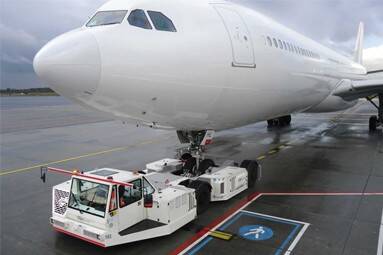
HPDD v26 in Aviation GSE: Powering the Zero-Emission Airside
De transitie naar duurzame luchthavens stopt niet bij het vliegtuig. De grondvloot—van baggage tractoren tot de zwaarste vliegtuig-pushbacks—is cruciaal voor een tijdige afhandeling. De Hydro Puls Direct-Drive (HPDD) v26 biedt een krachtig alternatief voor zowel vervuilende diesels als beperkte batterijvloot, door industriële kracht te combineren met absolute duurzaamheid.
Eliminating Idle Waste: Zero-Idle Technology
GSE-voertuigen brengen een groot deel van hun tijd stationair door, wachtend op de volgende gate-activiteit. Traditionele dieselmotoren verspillen hierbij brandstof en stoten onnodige emissies uit in de gevoelige luchthavenomgeving. Met de Zero-Idle technologie van de HPDD verbruikt de machine nul energie wanneer deze stilstaat. De kracht is echter onmiddellijk beschikbaar: zodra de operator gas geeft of de hydrauliek activeert, levert de v26-kern direct de volledige 600-bar druk voor maximale tractie of hefvermogen.
Unmatched Tractive Effort for Heavy Pushbacks
Het verplaatsen van een volbeladen wide-body vliegtuig vereist een enorm koppel vanaf stilstand. Waar elektrische motoren bij extreme belasting kunnen oververhitten, is het hydraulische vermogen van de HPDD hier in zijn element. De v26 levert een constant, hoog koppel zonder mechanische slijtage. Dit maakt de HPDD bij uitstek geschikt voor de zwaarste Main Deck Loaders en Pushback Tractors, waarbij precisie en brute kracht hand in hand gaan.
24/7 Availability without Charging Downtime
Batterij-elektrische GSE-voertuigen vereisen lange laadtijden en een kostbare laadinfrastructuur op het platform. De HPDD v26, geoptimaliseerd voor Groene Ammoniak (NH3) of Waterstof, kan in slechts enkele minuten worden getankt. Dit garandeert een 24/7 inzetbaarheid, zelfs tijdens piekuren. Dankzij de energiedichtheid van ammoniak kan een voertuig meerdere shifts draaien zonder de noodzaak om terug te keren naar een laadstation, wat de operationele flexibiliteit van grondafhandelaars maximaliseert.
Simplified Maintenance in a High-Pressure Environment
Onderhoud op de luchthaven (airside) is logistiek complex en duur. De HPDD v26 reduceert de onderhoudslast tot een minimum met een onderhoudsvrije interval van 20.000+ uur. Zonder motorolie, koelvloeistof of kwetsbare transmissies is het risico op vloeistoflekkage op het platform (FOD - Foreign Object Debris) vrijwel geëlimineerd. Dit resulteert in een hogere "uptime" en lagere Total Cost of Ownership (TCO) voor luchthavenbeheerders en afhandelingsbedrijven.