

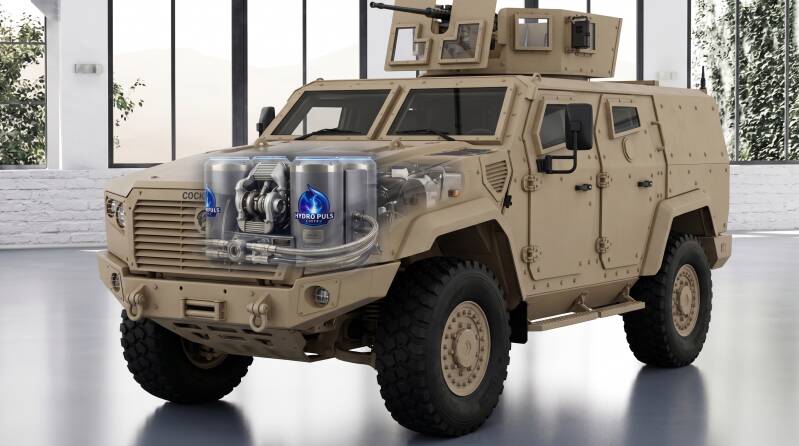
HPDD v26 in Defense: Redefining Tactical Mobility and Stealth
In modern warfare, the technical superiority of a vehicle is directly linked to its survivability. The integration of the Hydro Puls Direct-Drive (HPDD) v26 marks a fundamental shift in military engineering: the transition from vulnerable mechanical drivetrains to a robust, software-defined power station.
Tactical Stealth and Signature Management
Traditional internal combustion engines (ICE) are easy targets for acoustic sensors and thermal detection (IR) due to their mechanical vibrations and massive heat signatures. The HPDD v26 eliminates the crankshaft and complex cooling systems, resulting in an extremely low acoustic and thermal footprint. This enables Silent Watch operations, allowing a vehicle to remain undetected for extended periods while providing vital energy to electronics, drone swarms, and weapon systems without needing to idle a loud main engine.
Resilience and Battlefield Redundancy
Mechanical driveshafts and gearboxes are critical single points of failure; a single hit can immobilize a vehicle. The HPDD platform converts fuel directly into 600-bar hydraulic energy, transported via flexible, armored conduits to hydraulic motors in the wheels or tracks. This offers unprecedented design freedom, allowing the power core to be placed in the most protected section of the chassis. In the event of combat damage to a single line, the system can redistribute pressure, ensuring the vehicle maintains mobility under the most extreme conditions.
Logistical Independence
The HPDD v26 is entirely fuel-agnostic and optimized for Green Ammonia (NH3). Ammonia provides a strategic advantage over diesel or hydrogen: it is stable during long-term field storage and significantly less explosive upon impact. Furthermore, by eliminating the need for frequent mechanical servicing—boasting a maintenance-free interval of 20,000+ hours—the HPDD drastically reduces the logistical burden on field maintenance units and maximizes the operational readiness of the fleet.
The Mobile Power Plant
An HPDD-equipped vehicle is more than just transport; it is a High-Density Mobile Power Plant. Capable of generating megawatts of clean electricity on demand, a single unit can power a field hospital, a command center, or a battery of energy-intensive defense systems (such as directed-energy weapons or advanced radar). This eliminates the need for heavy, noisy towed generators and simplifies the energy footprint of tactical units in the field.
With the HPDD v26, defense forces gain a platform that not only meets today's requirements but is engineered for the autonomous and energy-intensive warfare of tomorrow.