Cementindustry (CAAS)
HPDD Introduces: Cement As A Service (CAAS)
From CAPEX to OPEX: The Radical Decentralization of Cement Production
The traditional cement industry has historically been defined by gargantuan capital expenditures (CAPEX). Building a monolithic cement plant with a permanent, massive rotary kiln costs hundreds of millions of dollars, takes years to construct, and locks companies into a rigid, inflexible production capacity for decades.
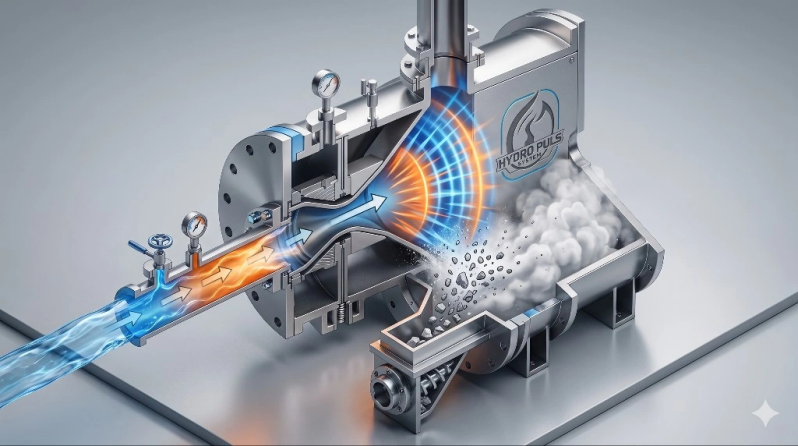
Thanks to the Hydro Puls Direct-Drive (HPDD) platform and its groundbreaking containerized 1.5-second flash calcination framework, the traditional legacy cement kiln is officially obsolete. Because this technology is entirely modular and highly mobile, HPDD introduces a revolutionary business model: Cement As A Service (CAAS).
With CAAS, the industry's financial barrier completely shifts from heavy balance-sheet investments (CAPEX) to flexible, operational expenditures (OPEX).
How the CAAS System Works
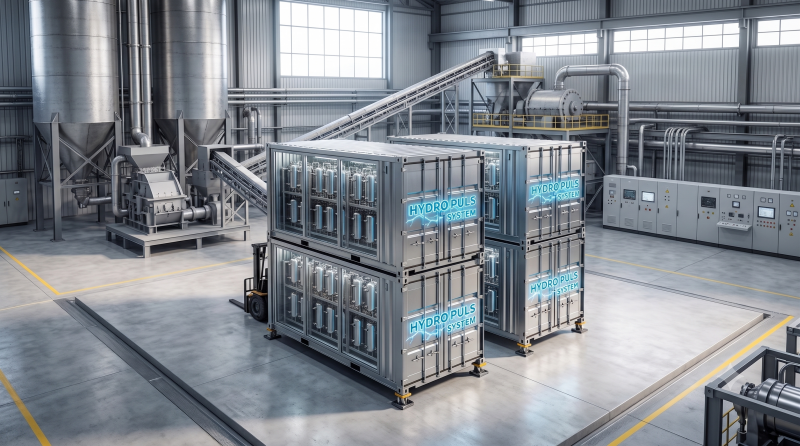
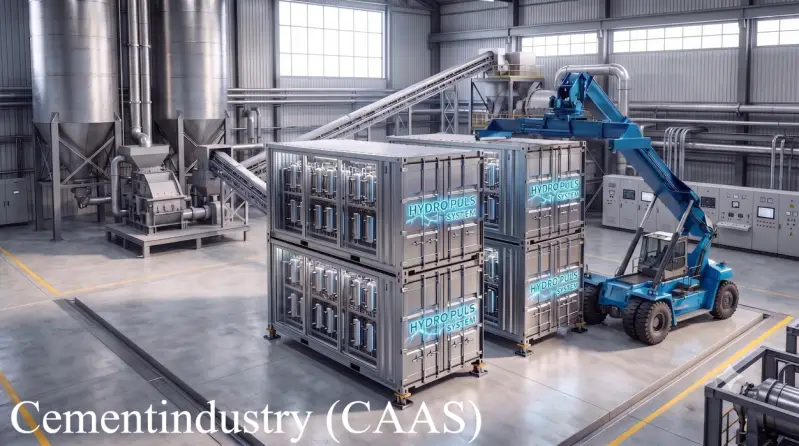
Instead of purchasing and building a fixed, turnkey facility, companies lease or rent standardized HPDD containers. These mobile modules are deployed directly onto a flat concrete pad at the target site and plugged in for immediate operation. Companies only pay for the operational service, the leased capacity, or per metric ton of cement produced. Need extra capacity? Simply stack or place additional containers (e.g., stacked in pairs). Does demand drop? The containers can be easily disconnected, loaded up, and redeployed elsewhere.
Crucial Advantages for the Industry:
1. Unprecedented Scalability and Agility
With CAAS, your production capacity becomes as elastic as the market itself. While a traditional kiln suffers massive efficiency losses the moment it runs below full capacity, the HPDD matrix scales linearly up and down. By dynamically adding or pausing individual container modules, the facility instantly mirrors the required volumes of the moment.
2. Seamless Management of Seasonal Demand
The construction sector—and consequently, cement demand—is highly seasonal. Production lines often sit inefficiently idle during winter months, only to face severe capacity shortages during the spring rush. The CAAS model absorbs this volatility effortlessly: producers can rent additional modules during peak months and return them during seasonal slumps, eliminating the burden of costly, permanent overcapacity.
3. Maximum Risk Mitigation for New Entrants
For start-ups, local aggregate operators, or innovative recycling firms, the cement market was previously impenetrable due to astronomical barriers to entry. The CAAS leasing model allows new players to enter the market with zero capital risk. They can lease the exact number of containers they need, validate their local raw materials or market demand, and organically scale their operations once off-take agreements are secured.
4. Ultimate Mobility and Geographical Flexibility
Raw material deposits (such as localized limestone reserves or industrial waste streams) eventually deplete, and major infrastructure projects (like dams, bridges, or ports) are inherently temporary. CAAS modules sit on a basic concrete foundation and are engineered for seamless transit. Once a project is completed or a site is no longer viable, the containers can be relocated to the next logistical hotspot within days. No capital destruction, no stranded assets, and no abandoned industrial ruins.
Conclusion: The Sustainable, Risk-Free Future
Cement As A Service (CAAS) transforms cement from a rigid, heavy infrastructure asset into a dynamic, modular utility. It empowers the industry to react instantly to market fluctuations, achieve carbon reduction targets with zero financial risk, and deploy capital with unprecedented efficiency.
HPDD CAAS: Flexible capacity. Minimal risk. Maximum impact.