

HPDD Architecture Scalability: Validating Series Hybrid Propulsion for Long-Endurance Aerospace Applications
At Hydro Puls Systems, our clean-sheet, first-principles approach to thermodynamics isn't limited to heavy ground infrastructure and marine systems. The core philosophy of the Hydro Puls Direct-Drive (HPDD) collapsing complex energy chains by functionally decoupling power generation from mechanical output, is a universal architectural platform.
We are proud to share a successful R&D milestone conducted within our aerospace division by researcher Sam Rodrigues, under the mentorship of our founder, Gerd Van Driessche. The newly published paper, "Design and Performance Analysis of Hybrid Electric-Fuel Propulsion Systems for Long-Endurance Loitering UAVs", applies the HPDD data-modeling approach to the next generation of tactical flight.
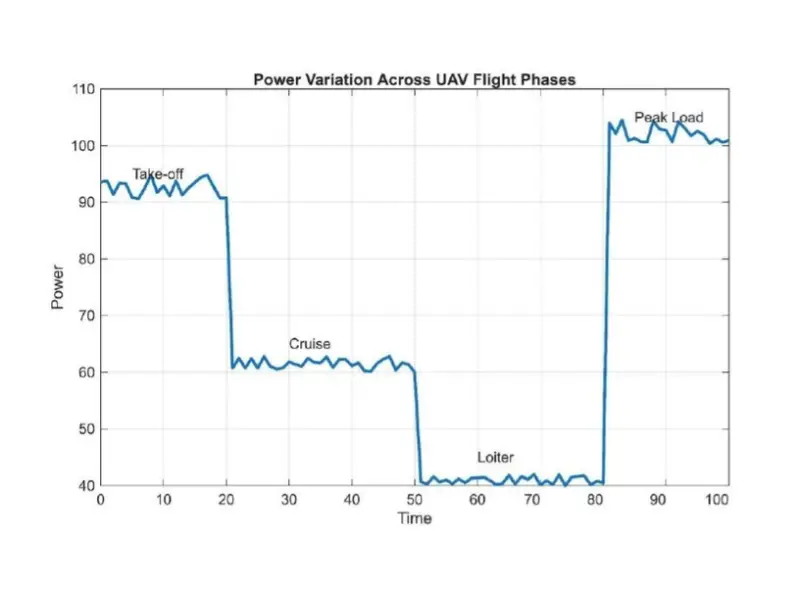
Using a custom MATLAB computational framework, the study evaluates a series hybrid energy cascade: running a thermal core at its absolute peak operating point (eta_{engine} = 0.3 ) to feed an electrical distribution matrix, completely decoupled from propeller dynamics.
The simulation results successfully validate a massive performance leap, extending continuous flight endurance to over 5 hours, compared to the 1-hour baseline of traditional pure-electric setups.
This research represents a vital step forward in demonstrating how software-defined linear power loops can eliminate conversion losses, minimize thermal signatures, and maximize mission duration in the air just as effectively as they do on the ground.