HPDD System Cascading: Optimizing Exergy and Efficiency in Alberta's Oil Sands.
Idea from: Thomas Cheney
Traditional bitumen extraction from oil sands is one of the most energy-intensive and thermodynamically inefficient industrial processes in the world.
Currently, massive amounts of gas are burned simply to generate low-pressure steam and process heat.
From a systems-engineering standpoint, this represents a severe destruction of exergy: high-grade combustion temperatures are instantly downgraded to heat without extracting any primary mechanical or electrical work.
The Hydro Puls Direct-Drive offers a revolutionary paradigm shift by introducing an optimized thermodynamic cascade tailored specifically for heavy industrial mining and extraction sites.
Shifting the System Boundary: The Triple-Asset Cascade
Instead of burning fuel solely for thermal liquefaction, a modular HPDD Utility Core extracts maximum value from every single chemical bond before the thermal energy ever reaches the tar sands:
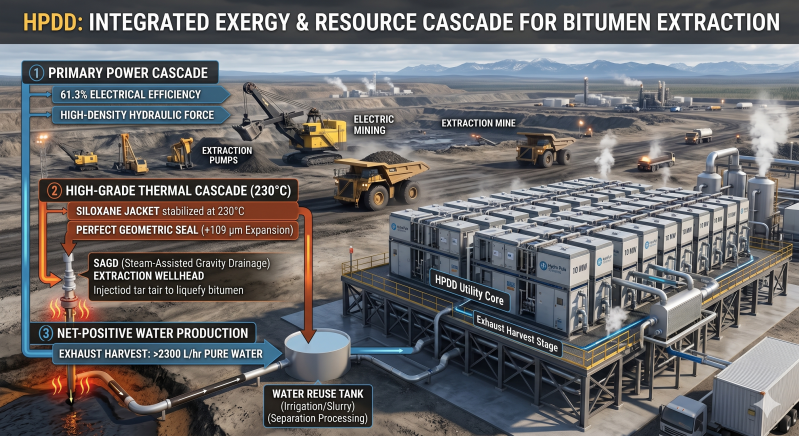
Primary Mechanical & Electrical Power: Operating at an industry-leading 61.3% primary mechanical/electrical efficiency, the HPDD pulse core (regulated at 1051°C) generates the high-density electrical power and direct hydraulic force required to run heavy mining equipment, extraction pumps, and site infrastructure.
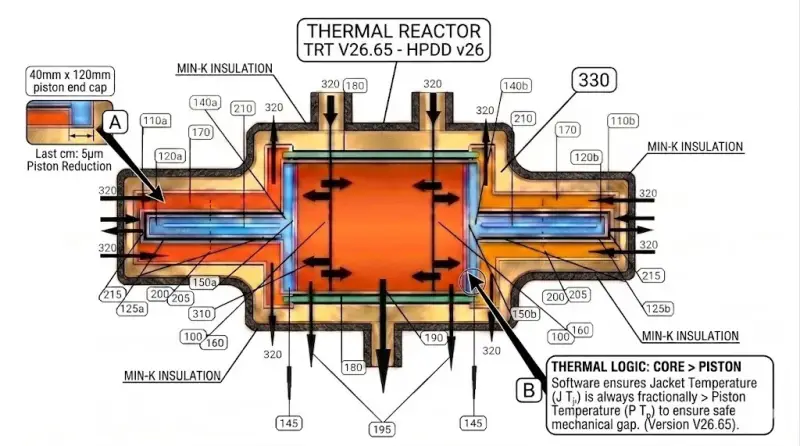
High-Grade Thermal Cascading (230°C): The engine jacket is stabilized at 230°C using an unpressurized siloxane medium, allowing the Inconel cylinder boring and opposed piston pairs to expand symmetrically by exactly 109 µm for a perfect geometric seal.
This massive, continuous stream of high-grade process heat is subsequently diverted to the thermal separation loops, providing the exact caloric energy needed to lower the viscosity of the thick bitumen and liquefy the tar from the sand.
Net-Positive Water Production: Tar sand processing is notoriously water-intensive, heavily straining local ecosystems. The HPDD core completely flips this dynamic.
Through its advanced Exhaust Harvest Stage, the system condenses combustion moisture to produce over 2,300 liters of pure, unpressurized condensate water every single hour (based on a standard 10 MW configuration).
This instantly provides a predictable, on-site freshwater source for the extraction slurry without requiring external environmental sourcing.
Conclusion
By transitioning from a primitive "burn-for-heat" baseline to an integrated HPDD ecosystem, oil sands operations can dramatically lower their carbon intensity per barrel. The HPDD platform proves that industrial extraction doesn't have to choose between mechanical power and thermal processing, it delivers electricity, immense hydraulic force, and pure water, all while channeling the remaining thermal load as a "free" asset to liquefy the target product.
#OilSands #EnergyTransition #Thermodynamics #CleanTech #HeavyIndustry #Exergy #HPDD #PowerGeneration #IndustrialInnovation #SustainableMining #AlbertaEnergy #Engineering