

HPDD v26: The Direct-Drive Revolution for Sustainable Desalination
Fresh Water from the Ocean. Maximum Efficiency, Zero Emissions. The shortest path from Hydrogen or Green Ammonia to Clean Water.
Global demand for fresh water is at an all-time high, but the energetic and ecological costs of conventional desalination remain a massive barrier. The Hydro Puls Direct-Drive (HPDD) architecture breaks this barrier. By converting liquid green ammonia or hydrogen directly into high-pressure fluid power, the HPDD completely redefines the economics of potable water production.
💧 Why the HPDD v26 Transforms the Desalination Market
- Direct-Drive Efficiency (Zero Conversion Losses): Traditional Reverse Osmosis (RO) plants convert fuel to electricity, and then electricity back into pump pressure. Every step bleeds energy. The HPDD delivers direct hydraulic pressure precisely matched to industrial requirements, achieving an industry-leading 61.3% primary mechanical efficiency. You drive the osmosis membranes directly from the core, eliminating the electric motor and generator from the chain.
- Mono-Fuel Green Ammonia: Desalination plants are often located in remote coastal areas. Green Ammonia (NH_3) is the ideal fuel vector. Operating at a stabilized core combustion temperature of 1051°C, the HPDD runs 100% emission-free, eliminating diesel logistics and ensuring zero NO_x or N_2O baseline drift.
- The Dual-Water Dynamic (Ontzilting + Waterproductie): The HPDD completely flips the traditional water-negative footprint of heavy utilities. Not only does it drive the high-pressure seawater desalination loop, but through its advanced Exhaust Harvest Stage, the system continuously condenses and captures the moisture generated within its own combustion loop. A standard 10 MW configuration yields over 2,300 liters of pure, unpressurized freshwater every single hour, feeding the site footprint with zero natural resource drain.
- Contactless Micro-Geometry for Remote Operations: Off-grid stations must operate autonomously. The HPDD features zero mechanical crankshaft connections, removing all high-wear interfaces. The opposed piston pairs (2 pairs in opposition) float on a contactless gas bearing shield within a permanent 25-micron gap.
- Hermetic Thermal Management: By stabilizing the engine jacket at a constant 230°C using an unpressurized siloxane medium, our Inconel cylinder boring and pistons expand symmetrically by exactly 109 µm. This locks in a perfect geometric seal under extreme operating pressures up to +600 bar, completely eliminating the risk of oil contamination or ammonia slip in the process water.
🌡️ Combined Water & Power (CWP) Orchestration
The HPDD operates as a multi-asset thermodynamic cascade, turning what traditional systems treat as waste into predictable infrastructure-level assets. The constant 230°C residual heat from the siloxane jacket can be channeled directly to:
-
Thermal Desalination (Multi-Stage Flash / Pre-heating): Feed the waste heat directly into the intake loops to pre-heat seawater, drastically reducing the viscosity and increasing membrane permeation efficiency.
-
Organic Rankine Cycle (ORC) Integration: Convert excess thermal energy into on-site electricity to power the facility's auxiliary systems and automated controls.
🛡️ Strategic "Water-to-Life" Architecture
- The Pain: High grid-dependency and steep electricity costs make desalinated water prohibitively expensive, while conventional pumping systems suffer from massive mechanical conversion drag.
- The Gain: The HPDD is the high-pressure pump. By utilizing a software-defined linear fluid matrix, you strip out the heavy capital overhead of intermediate electrical drivetrains.
- The Autonomy: Total infrastructural independence. Produce high-volume drinking water in locations completely devoid of a power grid, requiring nothing but the delivery of hydrogen or ammonia.
Stop optimizing old, inefficient baselines. Shift your thermodynamic system boundaries with a platform that delivers power, heat, and water simultaneously.
Frequently Asked Questions: High-Efficiency Reverse Osmosis
How does the HPDD improve the energy efficiency of desalination?
The largest cost in Reverse Osmosis is the electricity required to drive high-pressure pumps. Traditional pumps lose significant energy through mechanical friction and conversion. The HPDD delivers the required pressure (typically 60–80 bar for seawater) with an electrical-to-hydraulic efficiency of up to 62%. By eliminating the crankshaft and using a frictionless 5-micron gap, we drastically reduce the energy footprint per cubic meter of clean water.
Can the HPDD handle the corrosive nature of seawater?
Seawater is incredibly destructive to standard steel pumps. The HPDD utilizes aerospace-grade Inconel for its core components. Inconel is virtually immune to salt-water corrosion and pitting. Combined with our hermetically sealed architecture, the system’s internals are protected from the harsh environment, ensuring long-term reliability where traditional pumps fail.
What is the advantage of the HPDD’s "Pulse Technology" for membranes?
Traditional RO systems suffer from "fouling" (clogging) of the membranes. The HPDD is a high-frequency transducer. The ultra-fine pressure pulses it generates can be software-tuned to create a "micro-vibration" in the water flow. This helps keep the membranes cleaner for longer periods, reducing the frequency of expensive chemical cleaning cycles and extending membrane life.
How does the maintenance-free claim benefit remote coastal areas?
Many desalination plants are in remote or arid regions where specialized technicians are scarce. The HPDD offers a 20,000+ hour maintenance-free interval. With no oil to change, no mechanical seals to replace, and no belts to monitor, the system provides a "set-and-forget" solution that is ideal for decentralized water production in isolated communities.
Can the HPDD scale for large municipal water plants?
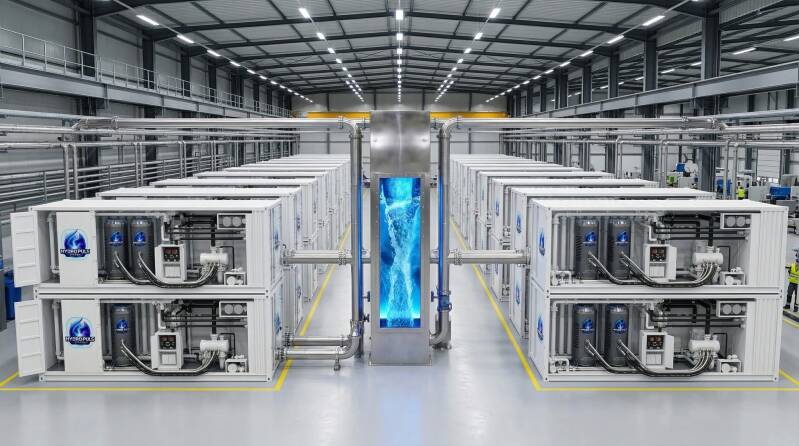
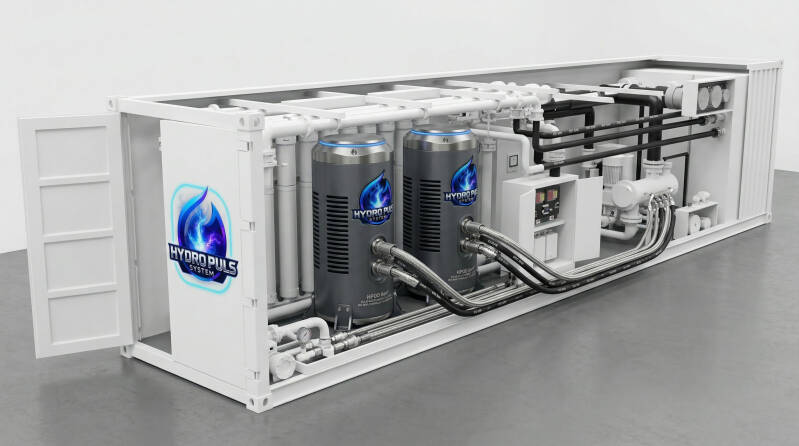
Yes. Through our Modular Swarm Architecture, we can deploy hundreds of HPDD modules in parallel within a single facility. This provides massive scalability and, more importantly, unparalleled redundancy. If one module requires inspection, the plant continues to produce water at near-full capacity, eliminating the risk of a total city-wide water shutdown.
Is the system compatible with renewable energy sources?
The HPDD is the perfect partner for solar and wind-powered desalination. Because it is a software-defined system, it can instantly adjust its output to match the available energy from renewable sources. When the sun shines or the wind blows, the HPDD ramps up production; when energy is low, it scales back seamlessly without the "startup wear" that damages traditional mechanical pumps.